Antelope canyon arizona
1344×768 · AVIF · CC BY 4.0
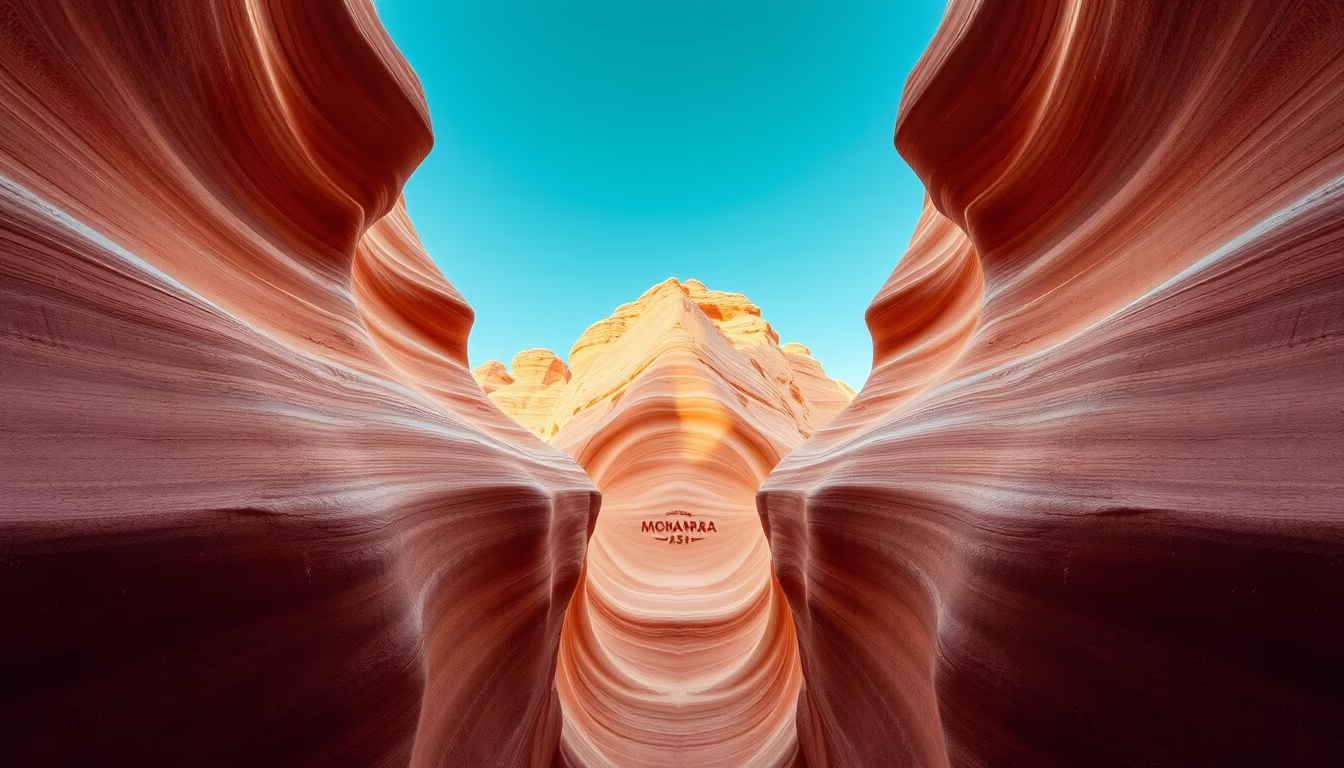
Antelope Canyon in Arizona is a sandstone slot canyon carved by flash floods and wind, renowned for its smooth curves and vibrant light beams.
About this subject
Antelope Canyon is located on Navajo land near Page, Arizona. Formed over millions of years by erosion of Navajo Sandstone, the canyon actually consists of two separate sections: Upper Antelope Canyon and Lower Antelope Canyon. The Upper is more accessible and famous for light beams that penetrate the narrow slots, especially during summer months. The Lower, in contrast, requires climbing ladders and is less crowded, but equally impressive with its sinuous formations.
The area was once a shallow seafloor, with sand layers compacted into sandstone. Tectonic uplift later raised the region, and rainwater and flash floods carved the narrow corridors and fluid curves. The reddish color of the walls comes from iron oxide in the sandstone, varying in hue depending on light and moisture.
Culturally, Antelope Canyon is sacred to the Navajo people, who call it "Tsé bighánílíní," meaning "the place where water runs through the rocks." The canyon lies within the Navajo Nation, and visits are managed by authorized tribal guides. Photography is popular but requires special permits for commercial use. A tragic accident in 1997, when a flash flood killed 11 tourists, led to stricter safety measures and weather warnings.
Interestingly, Antelope Canyon is one of the most photographed canyons in the world, frequently appearing in wallpapers and magazine covers. Its ephemeral beauty depends on light conditions, which change throughout the day and seasons, creating a unique natural spectacle. Visitors should book well in advance, as the site is highly sought after, and the monsoon season (July, September) increases flood risk, requiring caution.
Frequently Asked Questions
What causes the vibrant colors in Antelope Canyon?
The colors come from iron oxide in the sandstone, reflecting reddish and orange tones as sunlight hits the walls.
Do I need a guide to visit?
Yes, all visits to Antelope Canyon must be accompanied by authorized Navajo Nation guides, whether for the Upper or Lower Canyon.
What is the best time to see the light beams?
The beams are most visible from March to October, especially around noon when the sun is highest and enters the narrow slots.
Direct URL
https://pub-c7d6a6ea828543ac903a74a341ccb2e1.r2.dev/imagens/antelope-canyon-arizona-architectural-photography-p6.avifHow to credit
Include a visible link back to UtilizAí. Copy one of the snippets below:
<a href="https://xn--utiliza-eza.com/en/midia/imagens/antelope-canyon-arizona-architectural-photography-p6">Antelope canyon arizona</a> by <a href="https://xn--utiliza-eza.com">UtilizAí</a>, licensed under <a href="https://creativecommons.org/licenses/by/4.0/">CC BY 4.0</a>.
[Antelope canyon arizona](https://xn--utiliza-eza.com/en/midia/imagens/antelope-canyon-arizona-architectural-photography-p6) by [UtilizAí](https://xn--utiliza-eza.com), CC BY 4.0
License: CC-BY-4.0