Anchor large rusty
1344×768 · AVIF · CC BY 4.0
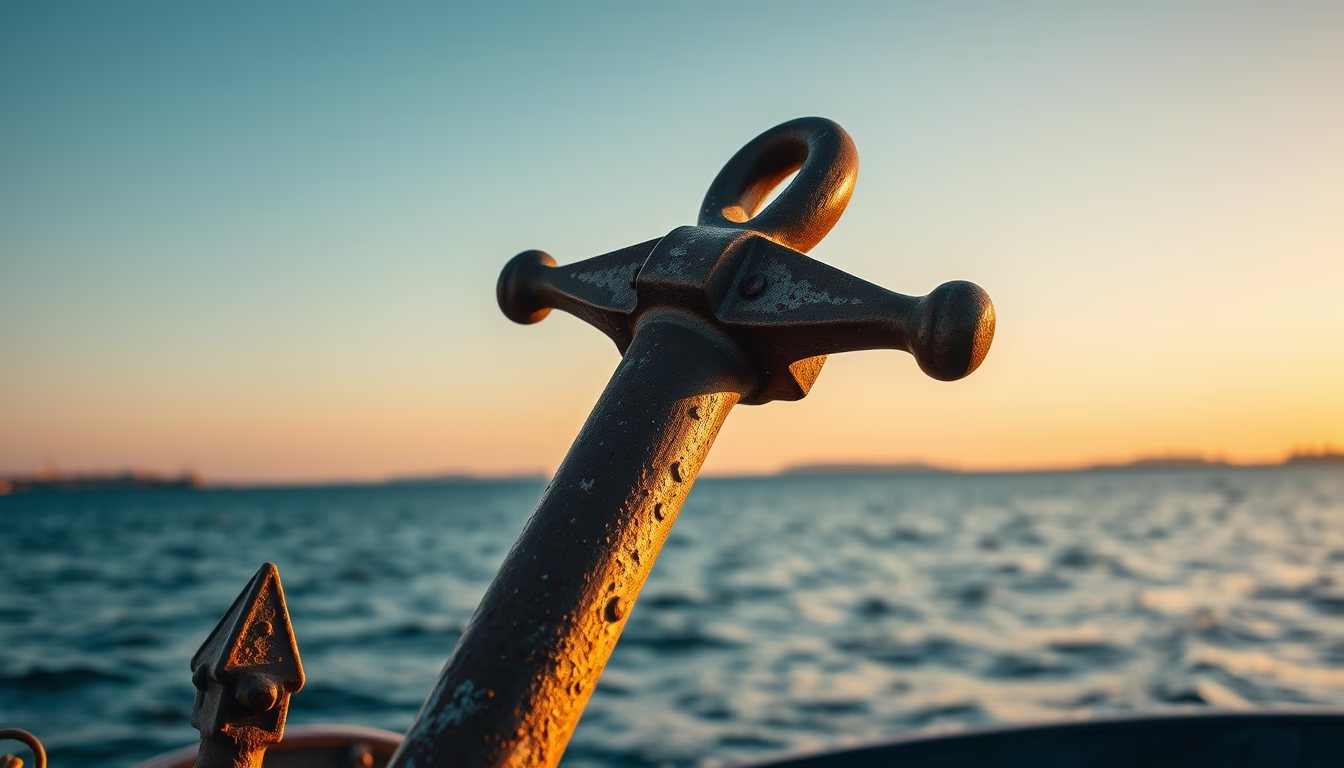
A large rusty anchor, a central piece of maritime vessels, carries centuries of history and symbolism in ports worldwide.
About this subject
The anchor is one of the oldest navigation tools, used since antiquity to secure vessels to the seabed. Early models were stones tied with ropes, but they evolved into wooden and metal pieces. With the advent of steel ships, anchors began to be forged from iron and steel, reaching weights that can exceed 30 tons on large vessels such as container ships and oil tankers.
Modern anchors, such as the admiralty anchor and the stockless anchor, use a system of flukes that dig into the ocean floor. Holding power depends on the type of bottom, sand or mud, and the anchor's weight. However, corrosion is a constant challenge: saltwater accelerates oxidation, forming the rust layer that characterizes anchors exposed on docks or as decorative pieces.
Culturally, the anchor symbolizes safety, hope, and steadfastness, adopted by navies worldwide in their coats of arms. In Brazil, old anchors are common in squares of port cities like Santos, Rio de Janeiro, and Salvador, often recovered from shipwrecks or donated from decommissioned ships. Rust, far from being a defect, tells the story of voyages and storms endured.
Technically, anchor maintenance requires periodic inspections for wear and corrosion. In decorative anchors, the rust patina is often preserved as an aesthetic element, while in active use they are painted with anticorrosive coatings. The image of a large rusty anchor evokes the passage of time and the brute strength needed to tame the seas.
Frequently Asked Questions
What is the average weight of a large ship anchor?
Large vessels like container ships and oil tankers typically have anchors weighing between 10 and 30 tons, with some exceeding 30 tons. Weight is proportional to the ship's size.
How does rust affect an anchor's strength?
Rust reduces metal thickness, compromising structural strength if not controlled. Active anchors are painted with anticorrosive coatings and inspected regularly to ensure safety.
Why are old anchors often displayed in port cities?
They symbolize local maritime history, often recovered from shipwrecks or donated from decommissioned vessels. They serve as monuments connecting the community to the nautical past.
Direct URL
https://pub-c7d6a6ea828543ac903a74a341ccb2e1.r2.dev/imagens/anchor-large-rusty-travel-photography-p2.avifHow to credit
Include a visible link back to UtilizAí. Copy one of the snippets below:
<a href="https://xn--utiliza-eza.com/en/midia/imagens/anchor-large-rusty-travel-photography-p2">Anchor large rusty</a> by <a href="https://xn--utiliza-eza.com">UtilizAí</a>, licensed under <a href="https://creativecommons.org/licenses/by/4.0/">CC BY 4.0</a>.
[Anchor large rusty](https://xn--utiliza-eza.com/en/midia/imagens/anchor-large-rusty-travel-photography-p2) by [UtilizAí](https://xn--utiliza-eza.com), CC BY 4.0
License: CC-BY-4.0