Anchor large rusty
1344×768 · AVIF · CC BY 4.0
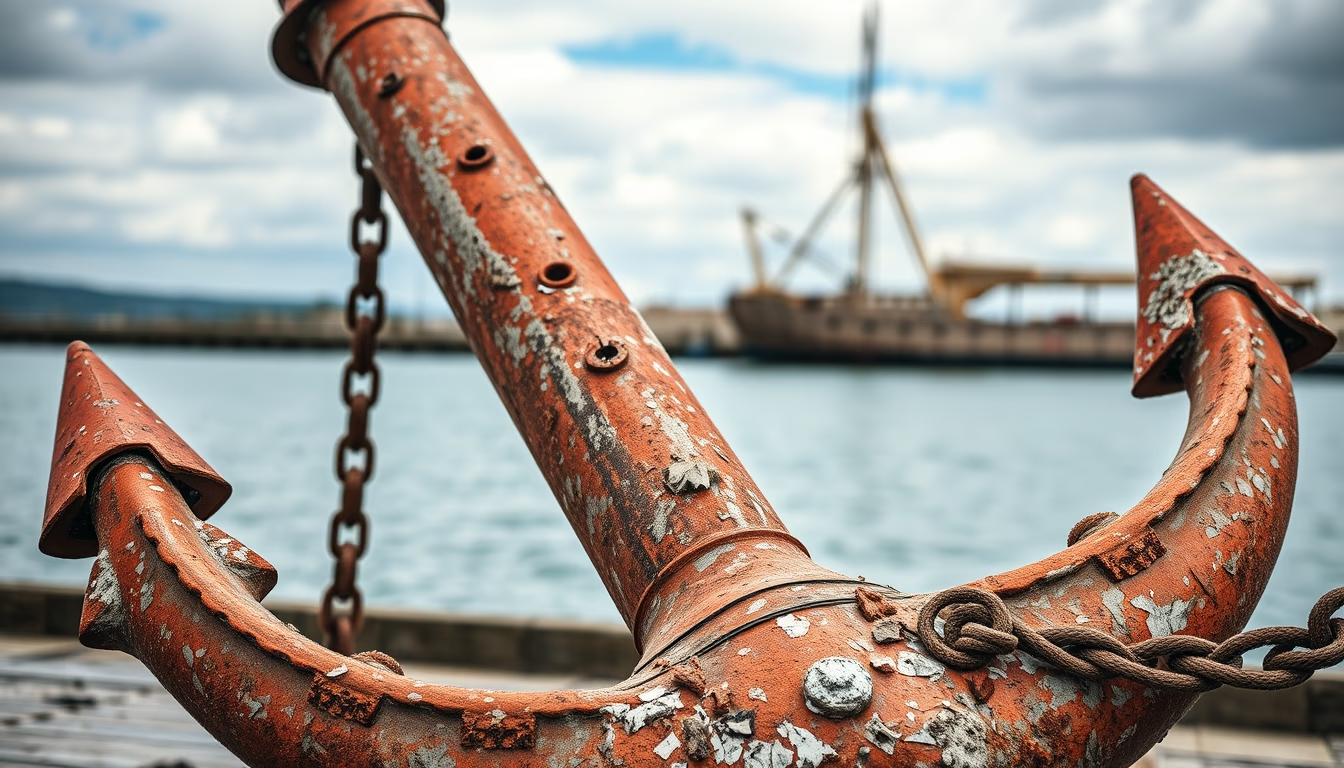
Large rusty anchors tell stories of navigation, abandonment, and resilience against time, serving as symbols of global maritime heritage.
About this subject
Anchors are ancient nautical devices essential for securing vessels to the seabed or riverbed. Steel anchors, like the one depicted, became widespread in the 19th century during the Industrial Revolution, replacing wrought-iron models. The rust coating is a result of prolonged exposure to saltwater and air, forming iron oxide that can paradoxically protect the underlying metal in certain environments.
This type of anchor, known as the admiralty or stock anchor, was commonly used on medium to large ships. Its structure includes a vertical shank, two curved arms, and a ring at the top for attaching the chain. The weight and design cause the arms to dig into the seabed, providing stability. Although modern designs like plow or claw anchors exist today, traditional anchors are still found in museums, abandoned ports, and as decorative pieces.
In Brazil, historic anchors can be seen in coastal cities such as Paraty, Salvador, and Rio de Janeiro, remnants of the colonial and imperial periods. They often come from shipwrecks or were discarded by shipyards. The rust patina gives these pieces an industrial aesthetic that attracts photographers and historians, and they are studied by maritime archaeologists to date underwater sites.
Interestingly, the practice of displaying rusty anchors as public monuments emerged in the 20th century as port cities began preserving this heritage. A large anchor, like the one in the image, can weigh several tons and requires cranes to move. In 2022, an 18th-century anchor was found off the coast of Portugal, measuring 4 meters and weighing 3 tons, highlighting the scale of such artifacts.
Frequently Asked Questions
Why do anchors rust so quickly in the sea?
Rust is accelerated by saltwater, which acts as an electrolyte, and dissolved oxygen, forming iron oxide. In marine environments, corrosion can reduce metal thickness by up to 0.5 mm per year.
What is the difference between an admiralty anchor and a modern anchor?
The admiralty anchor has curved arms and a stock (horizontal crossbar), while modern anchors like the plow or claw are lighter and feature self-burying designs, making them more efficient on various seabeds.
Where can I see historic anchors in Brazil?
At the Museu do Mar in Santos, Forte de Copacabana in Rio de Janeiro, and in squares of historic cities like Paraty (RJ) and São Luís (MA), where anchors are displayed as monuments.
Direct URL
https://pub-c7d6a6ea828543ac903a74a341ccb2e1.r2.dev/imagens/anchor-large-rusty-national-geographic-style-p3.avifHow to credit
Include a visible link back to UtilizAí. Copy one of the snippets below:
<a href="https://xn--utiliza-eza.com/en/midia/imagens/anchor-large-rusty-national-geographic-style-p3">Anchor large rusty</a> by <a href="https://xn--utiliza-eza.com">UtilizAí</a>, licensed under <a href="https://creativecommons.org/licenses/by/4.0/">CC BY 4.0</a>.
[Anchor large rusty](https://xn--utiliza-eza.com/en/midia/imagens/anchor-large-rusty-national-geographic-style-p3) by [UtilizAí](https://xn--utiliza-eza.com), CC BY 4.0
License: CC-BY-4.0