Anchor large rusty
1344×768 · AVIF · CC BY 4.0
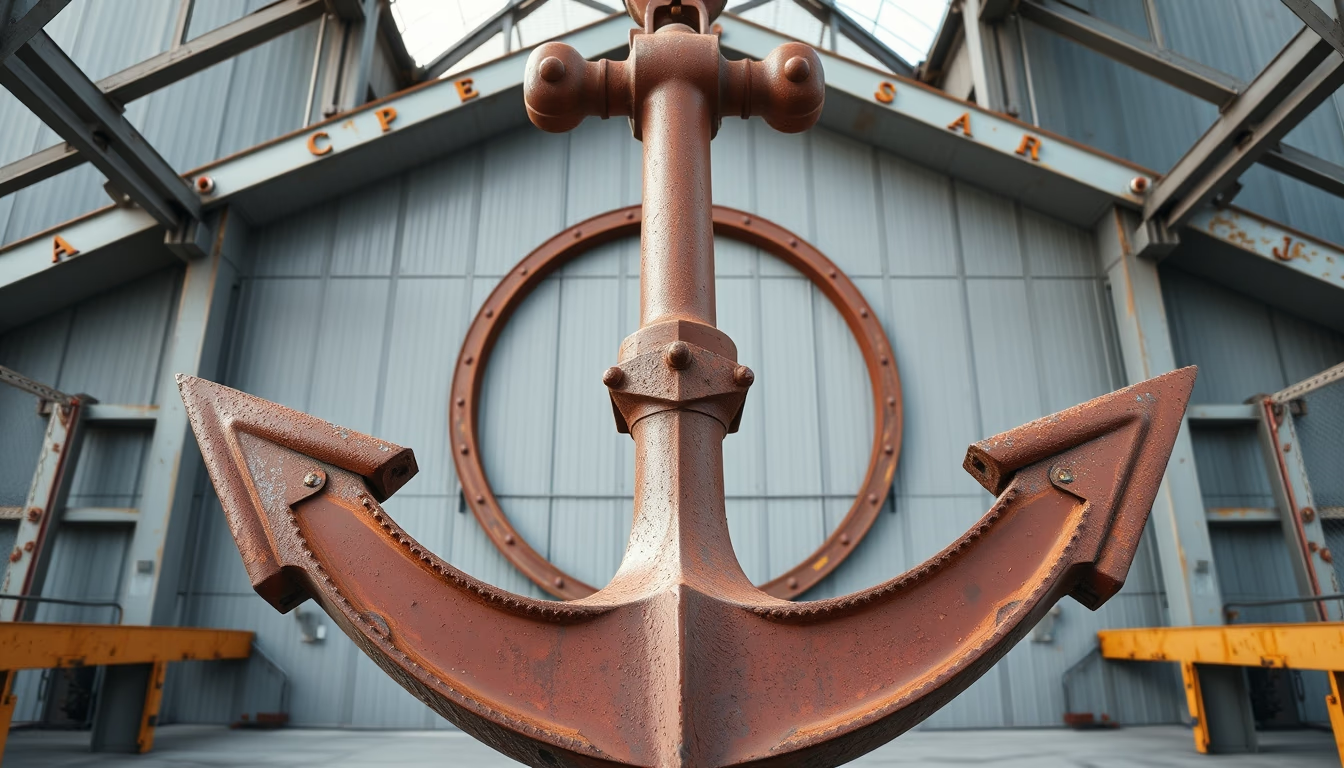
Large rusty anchors evoke decades of navigation, stormy seas, and abandonment. Discover the history and engineering behind these monumental pieces.
About this subject
Anchors are fundamental navigation tools since ancient times. The first versions were stones tied with ropes, evolving forged iron models in the Middle Ages. The Admiralty anchor, with its curved stock and large flukes, became the standard for centuries. Modern anchors, such as the Danforth type, are lighter and more efficient, but large forged iron anchors are still found in historic ports and decommissioned ships.
The rusting process on a large anchor is not only aesthetic but indicates prolonged exposure to saltwater and humidity. Corrosion can take decades to weaken the metal, and many ancient anchors are recovered from shipwrecks centuries old. In Brazil, the Port of Santos and Guanabara Bay preserve examples of 19th-century anchors used in merchant and war vessels.
Culturally, the anchor symbolizes hope, stability, and safety, being one of humanity's oldest symbols. It appears on coats of arms, flags, and tattoos, evoking life at sea. In many coastal towns, old anchors are displayed as monuments, telling stories of shipwrecks and storms.
Interestingly, the weight of a large anchor can exceed 10 tons on large vessels. Producing these pieces required specialized forges and skilled labor. Today, most are made of high-strength steel, but forged iron ones are still prized by collectors and restorers.
Frequently Asked Questions
What is the historical origin of anchors?
The first recorded anchors were stones tied with ropes used by Phoenicians and ancient Greeks. By the 5th century BC, the Chinese were already using forged iron anchors.
Why do large anchors get so rusty?
Rust is the result of iron or steel oxidizing when exposed to saltwater and oxygen. Old anchors have been submerged or exposed for decades, accelerating the process.
Where can I see old anchors in Brazil?
At the Port of Santos, there is a 19th-century anchor at the Coffee Museum. Fiscal Island in Rio de Janeiro also displays historic anchors. Small coastal towns often have anchors in squares.
Direct URL
https://pub-c7d6a6ea828543ac903a74a341ccb2e1.r2.dev/imagens/anchor-large-rusty-architectural-photography-p5.avifHow to credit
Include a visible link back to UtilizAí. Copy one of the snippets below:
<a href="https://xn--utiliza-eza.com/en/midia/imagens/anchor-large-rusty-architectural-photography-p5">Anchor large rusty</a> by <a href="https://xn--utiliza-eza.com">UtilizAí</a>, licensed under <a href="https://creativecommons.org/licenses/by/4.0/">CC BY 4.0</a>.
[Anchor large rusty](https://xn--utiliza-eza.com/en/midia/imagens/anchor-large-rusty-architectural-photography-p5) by [UtilizAí](https://xn--utiliza-eza.com), CC BY 4.0
License: CC-BY-4.0