Analytical balance closeup
1344×768 · AVIF · CC BY 4.0

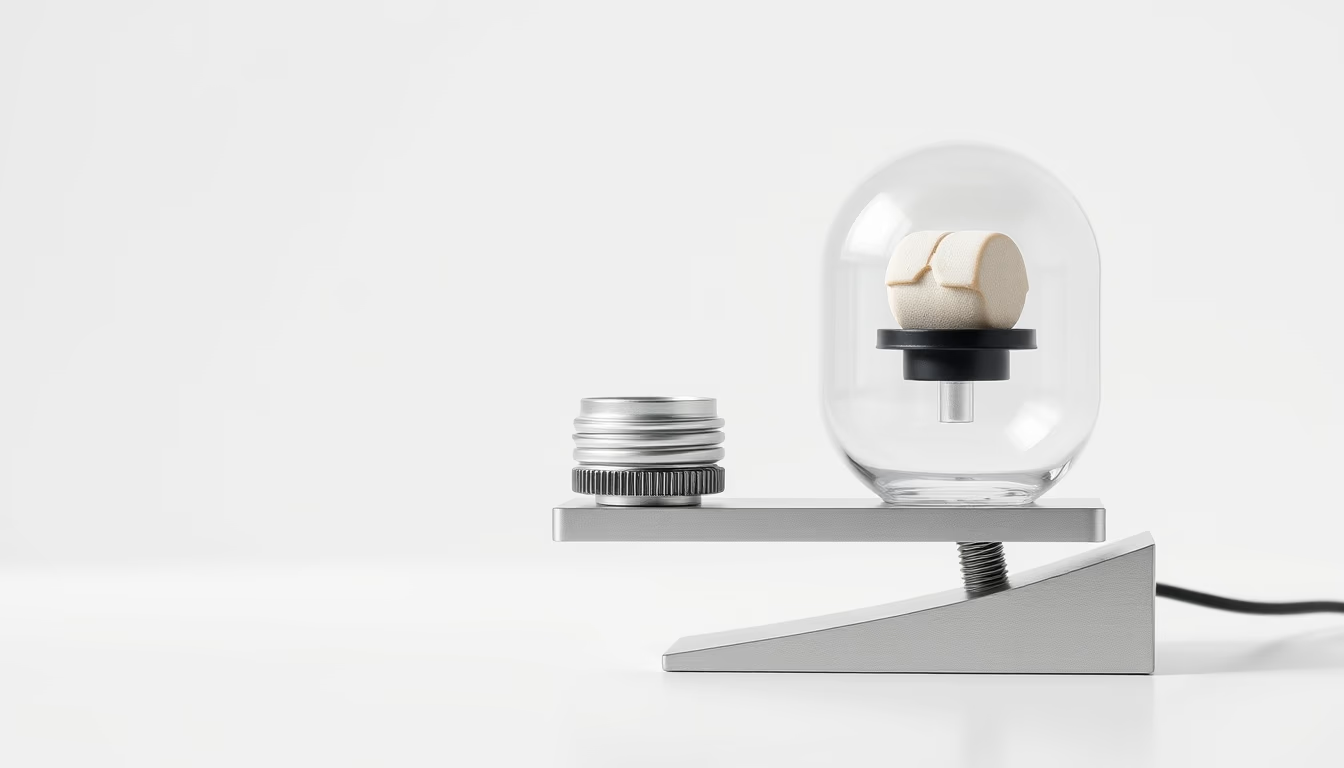
Closeup of an analytical balance, a precision instrument for mass measurements accurate to 0.0001 g in laboratories.
About this subject
The analytical balance is one of the most precise instruments found in chemical, pharmaceutical, and research laboratories. Capable of measuring mass with a resolution of 0.0001 g (0.1 mg), it operates on the principle of electromagnetic force compensation, where an electromagnetic force balances the mass placed on the pan. This technology allows the equipment to detect minute variations, crucial for preparing standard solutions, gravimetric analysis, and synthesizing sensitive compounds.
Proper use of the analytical balance requires specific care. It must be installed on a vibration-free surface, away from drafts and temperature fluctuations that can interfere with readings. Additionally, samples need to be at room temperature, and the balance must be periodically calibrated using certified standard weights. Many modern models include automatic tare functions, internal calibration, and overload protection.
Historically, analytical balances evolved from ancient two-pan balances to modern digital electronic models. The first prototype of an analytical balance was developed by Joseph Black in the 18th century, but it was only in the 20th century, with electronics, that sub-milligram precision was achieved. Today, instruments like Mettler Toledo's XPR series or Sartorius's Cubis series are benchmarks in ISO/IEC 17025 certified laboratories.
Interestingly, the calibration of analytical balances is so critical that national metrology institutes, such as Inmetro in Brazil, maintain primary mass standards. The traceability of these standards to the international prototype kilogram is essential to ensure uniformity of measurements globally. Finally, the analytical balance is also used in industrial quality control, environmental research, and even jewelry for weighing precious metals with high accuracy.
Frequently Asked Questions
What is the typical precision of an analytical balance?
The standard precision is 0.0001 g (0.1 mg), but high-resolution models can reach 0.00001 g (0.01 mg). Always check the manufacturer's specification.
Why does an analytical balance need to be leveled and calibrated before use?
Leveling ensures the pan is horizontal, avoiding measurement errors due to tilting. Calibration with standard weights compensates for electronic drift and environmental variations, ensuring accuracy.
What factors can interfere with an analytical balance measurement?
Vibrations, air currents, temperature changes, humidity, and static electricity are the main factors. That is why balances are installed in controlled areas and often have a protective glass chamber.
Direct URL
https://pub-c7d6a6ea828543ac903a74a341ccb2e1.r2.dev/imagens/analytical-balance-closeup-rembrandt-lighting-dramatic-shadows-fresh9.avifHow to credit
Include a visible link back to UtilizAí. Copy one of the snippets below:
<a href="https://xn--utiliza-eza.com/en/midia/imagens/analytical-balance-closeup-rembrandt-lighting-dramatic-shadows-fresh9">Analytical balance closeup</a> by <a href="https://xn--utiliza-eza.com">UtilizAí</a>, licensed under <a href="https://creativecommons.org/licenses/by/4.0/">CC BY 4.0</a>.
[Analytical balance closeup](https://xn--utiliza-eza.com/en/midia/imagens/analytical-balance-closeup-rembrandt-lighting-dramatic-shadows-fresh9) by [UtilizAí](https://xn--utiliza-eza.com), CC BY 4.0
License: CC-BY-4.0