Analytical balance closeup
1344×768 · AVIF · CC BY 4.0

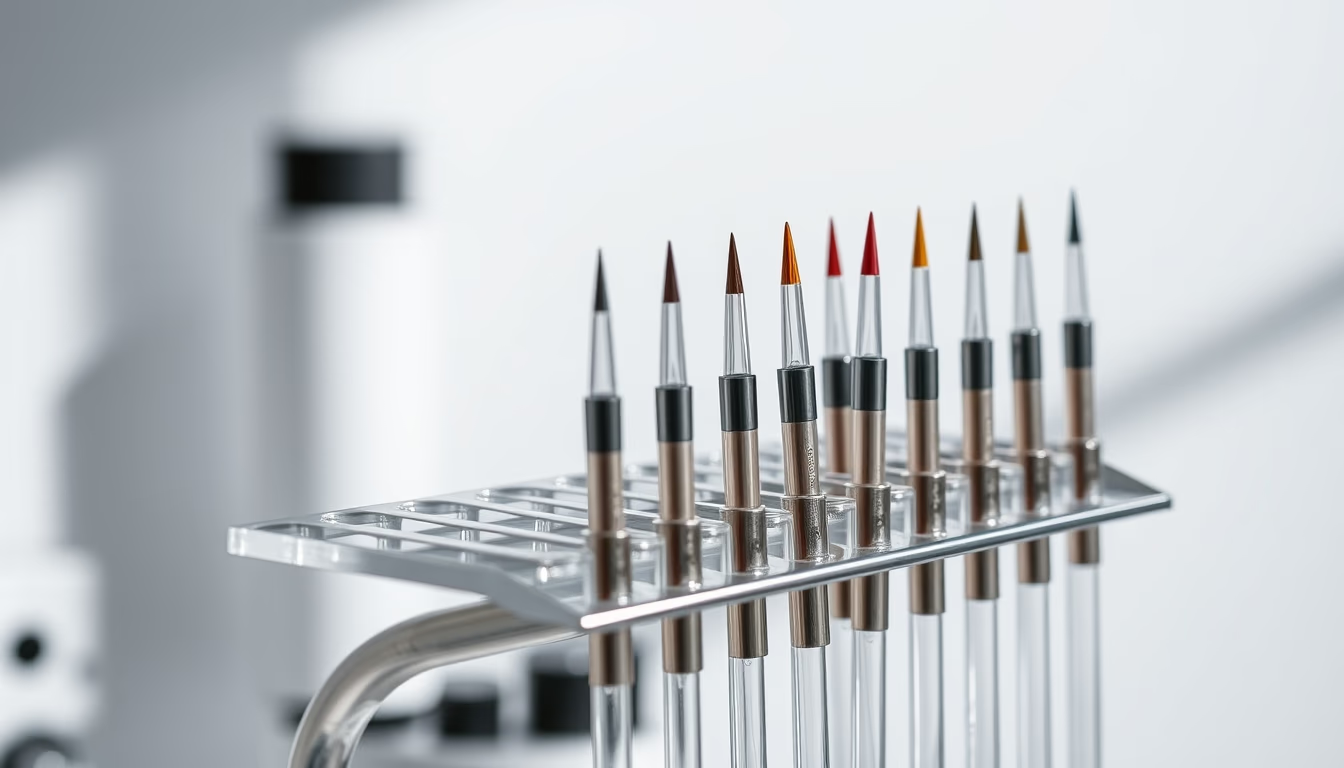
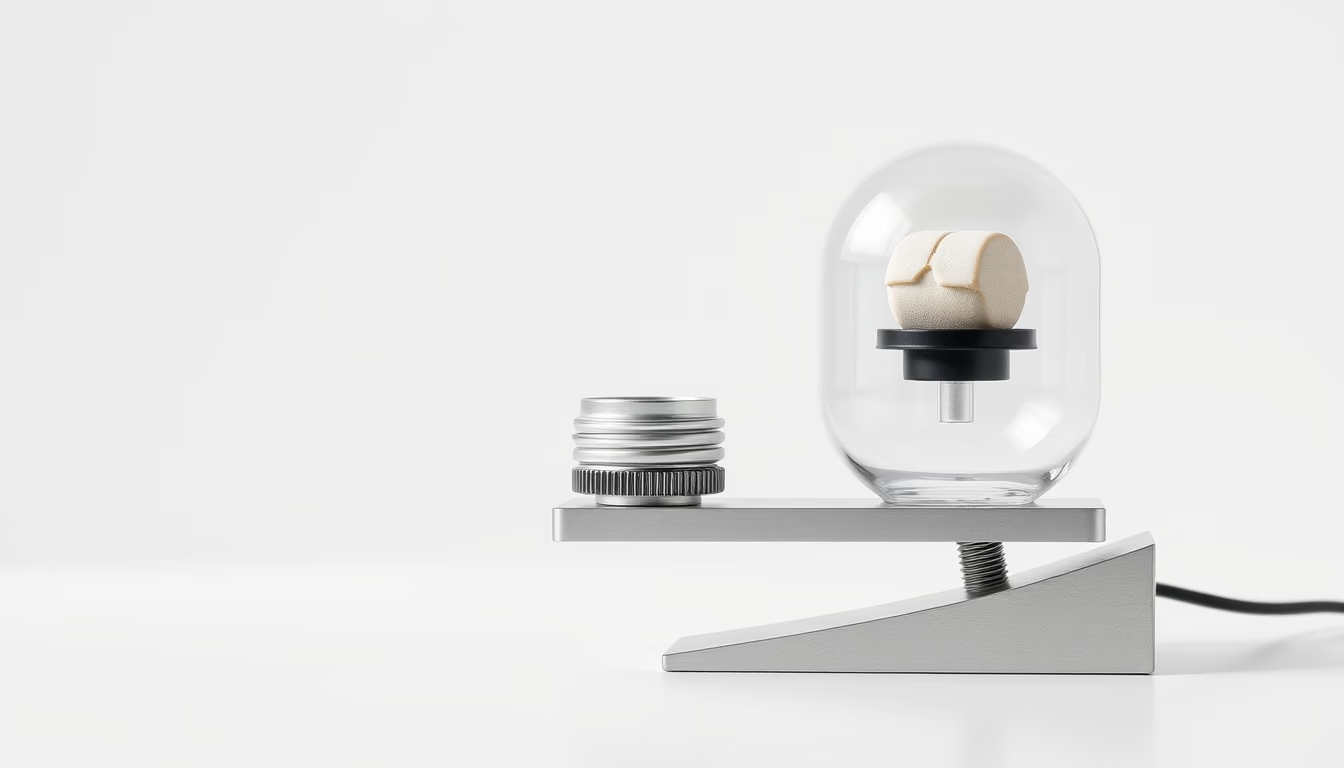
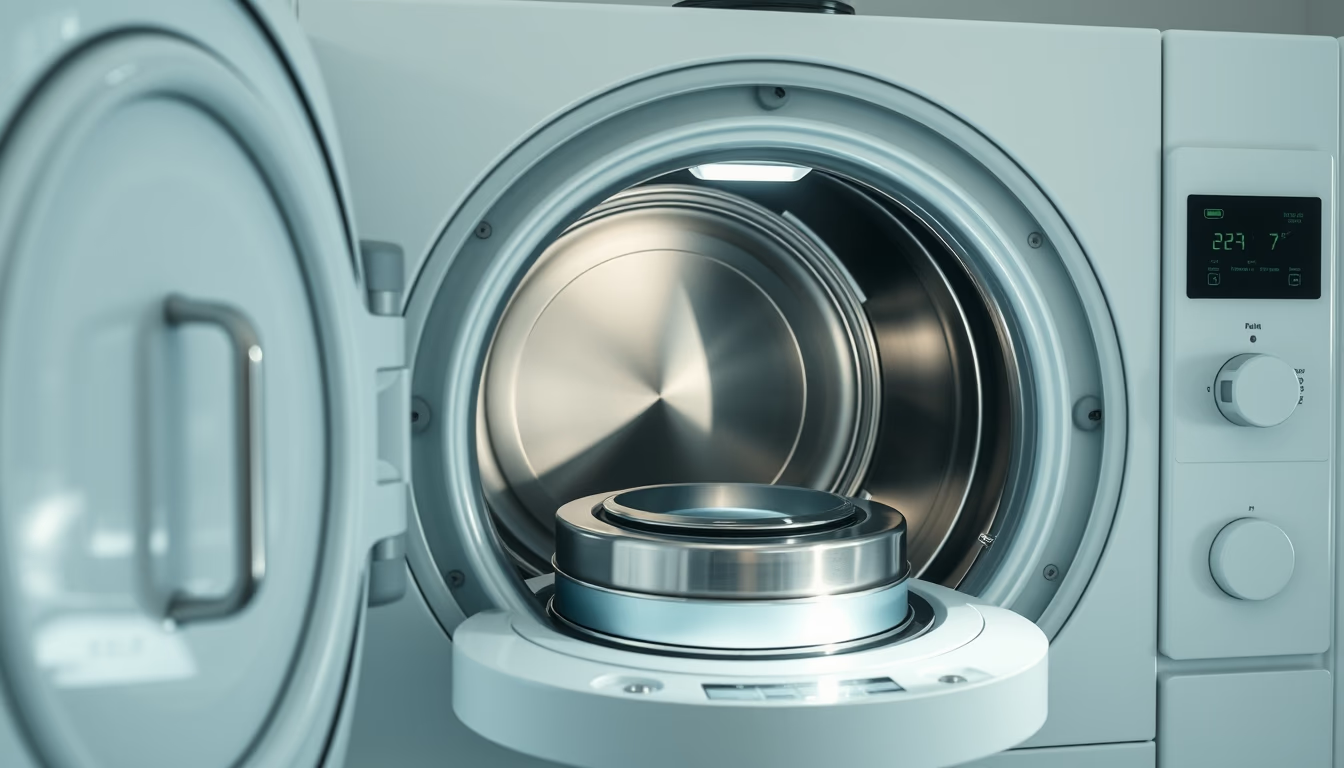
Analytical balance: a precision instrument essential in laboratories for mass measurements accurate to 0.0001 g.
About this subject
An analytical balance is a highly precise mass measurement instrument capable of detecting variations as small as 0.0001 gram (0.1 mg). Used in chemical, pharmaceutical, and research laboratories, it operates on electromagnetic or load cell principles to provide reliable results for quantitative analyses. Unlike common scales, an analytical balance requires a controlled environment: no drafts, stable temperature, perfect leveling, and periodic calibration with standard weights.
The development of modern analytical balances dates back to the 18th century with precision equal-arm balances. Today, digital models offer features such as automatic tare, internal adjustment, and computer interfaces, streamlining laboratory work. Precision is so high that factors like air humidity or the heat from an operator's hands can affect readings, necessitating the use of tweezers and sliding doors on the weighing chamber.
In daily lab routines, the analytical balance is indispensable for preparing standards and samples with exact masses, crucial for titrations, solution preparation, and purity analyses. Weighing errors compromise experimental results, so the instrument is handled with extreme care. Calibration uses certified masses, and the equipment is cleaned regularly to avoid contamination.
Interestingly, modern analytical balances can achieve resolutions of 0.01 mg or even higher in models called microbalances or ultramicrobalances, used in nanotechnology and materials science. Electromagnetic force compensation technology has replaced older spring systems, offering greater stability and faster measurements.
Frequently Asked Questions
What is the difference between an analytical balance and a semi-analytical balance?
An analytical balance has higher precision, typically 0.0001 g (0.1 mg) or better, while semi-analytical balances have precision of 0.001 g (1 mg) or 0.01 g. This affects cost, sensitivity, and usage requirements.
Why does an analytical balance need a weighing chamber?
The chamber protects the sample and pan from air currents, dust, and temperature changes that can affect accuracy. It also allows the operator to use sliding doors to minimize thermal interference from hands.
How often should an analytical balance be calibrated?
Daily calibration or before each use is recommended, depending on usage frequency and laboratory requirements. Calibration should be performed with certified masses traceable to international standards.
Direct URL
https://pub-c7d6a6ea828543ac903a74a341ccb2e1.r2.dev/imagens/analytical-balance-closeup-long-exposure-fresh5.avifHow to credit
Include a visible link back to UtilizAí. Copy one of the snippets below:
<a href="https://xn--utiliza-eza.com/en/midia/imagens/analytical-balance-closeup-long-exposure-fresh5">Analytical balance closeup</a> by <a href="https://xn--utiliza-eza.com">UtilizAí</a>, licensed under <a href="https://creativecommons.org/licenses/by/4.0/">CC BY 4.0</a>.
[Analytical balance closeup](https://xn--utiliza-eza.com/en/midia/imagens/analytical-balance-closeup-long-exposure-fresh5) by [UtilizAí](https://xn--utiliza-eza.com), CC BY 4.0
License: CC-BY-4.0