Analytical balance closeup
1344×768 · AVIF · CC BY 4.0

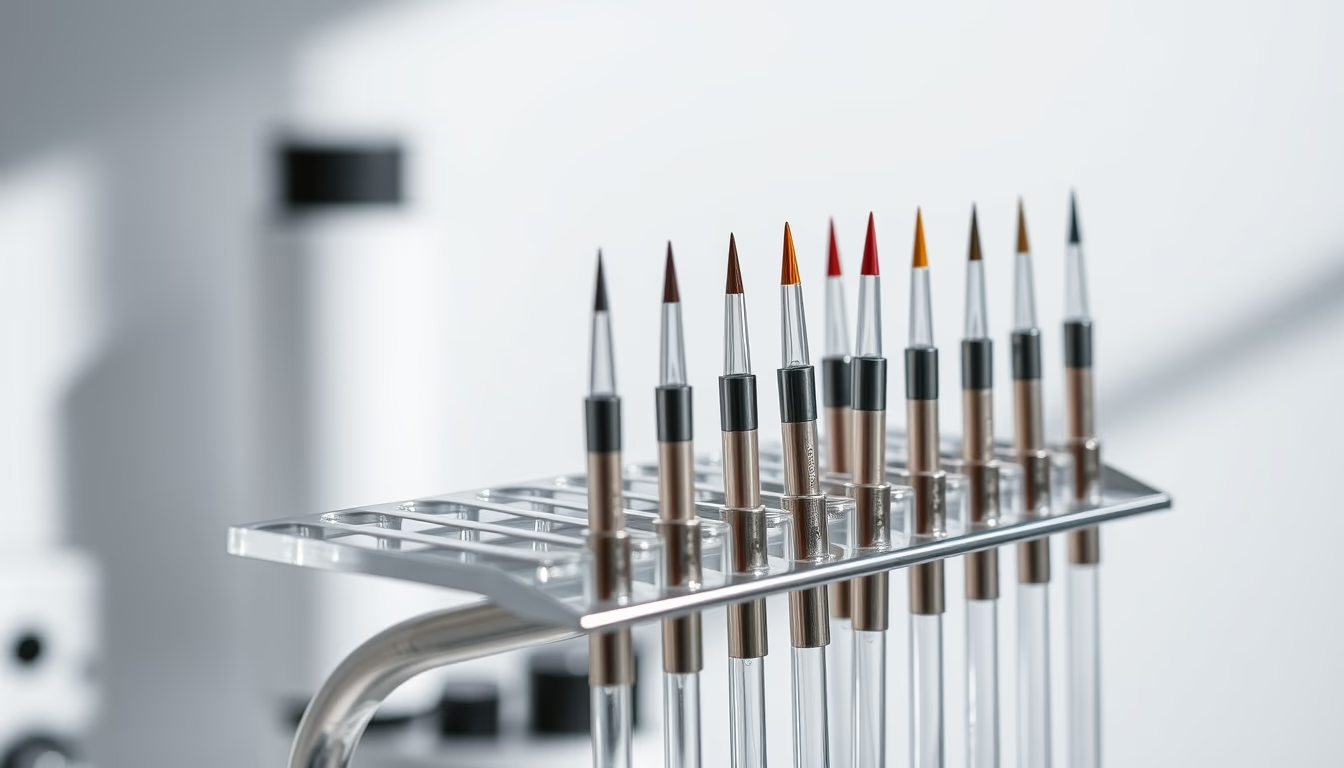
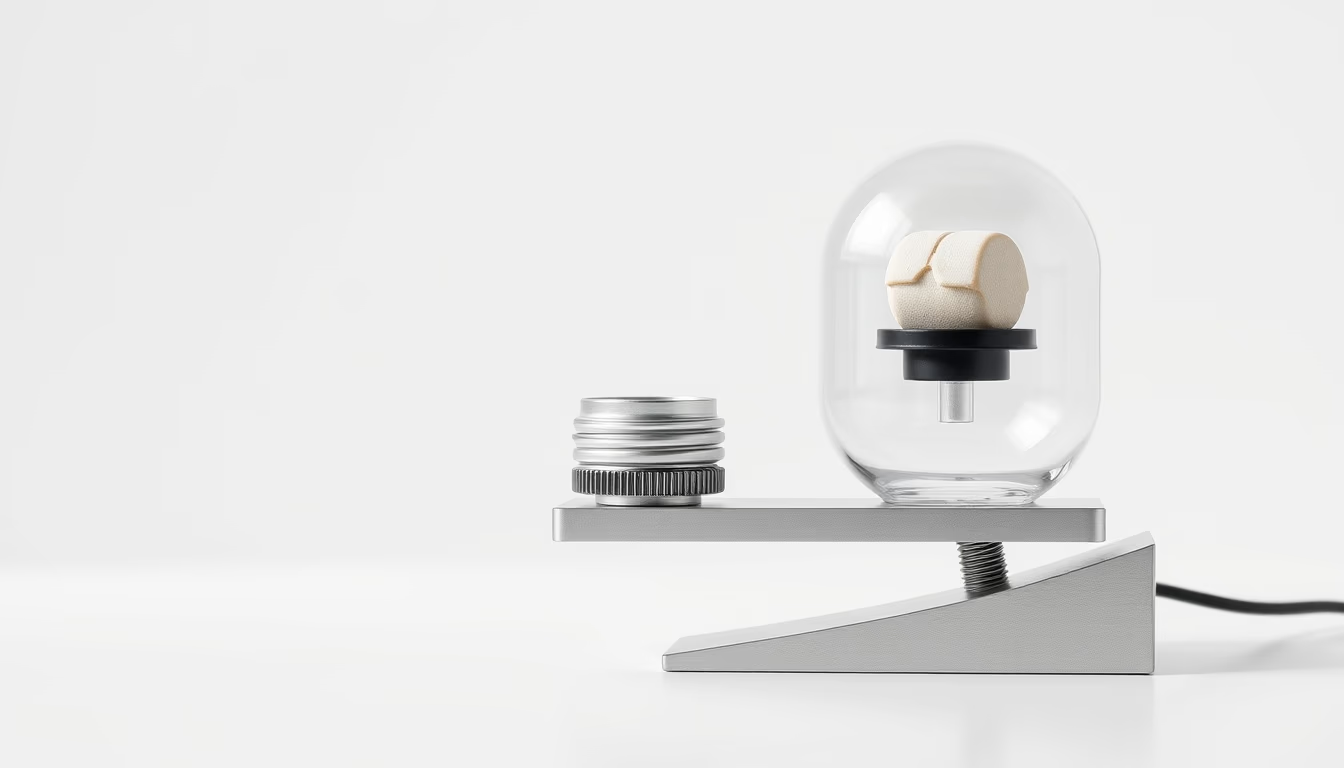
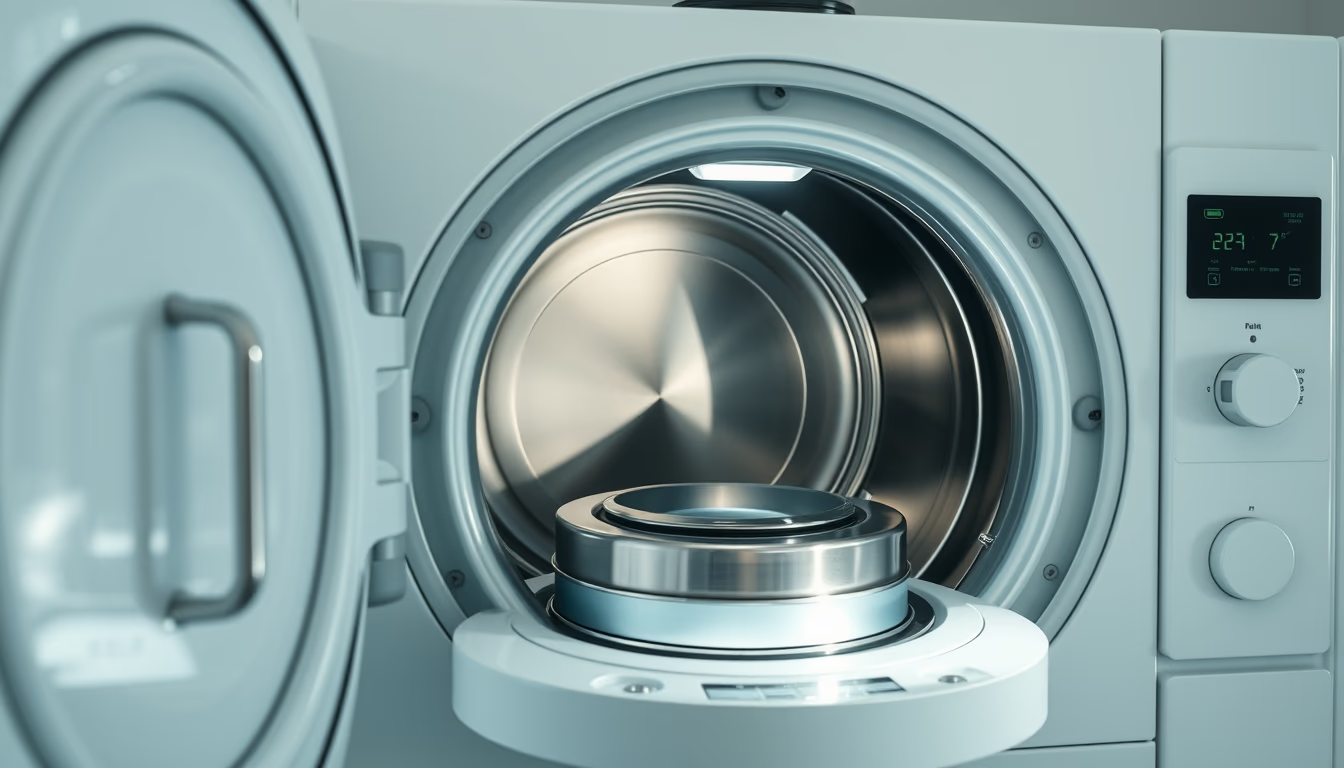
Closeup of an analytical balance: a high-precision laboratory instrument for mass measurement, used in chemistry and pharmacy.
About this subject
The analytical balance is one of the most precise instruments found in chemistry, pharmacy, and scientific research laboratories. Unlike common precision balances, analytical balances can measure mass with a resolution of up to 0.0001 gram (0.1 mg), requiring controlled conditions of temperature, humidity, and absence of air currents. Their operation is based on load cells or electromagnetic compensation mechanisms, enabling users to obtain reliable results for quantitative analyses such as preparing standard solutions, density determination, and gravimetric analyses.
The construction of an analytical balance includes a weighing chamber with sliding doors, which protects the pan from external influences. Before use, calibration with certified weights is essential to ensure metrological traceability. Many modern models offer computer connectivity for automatic data recording, meeting good laboratory practice (GLP) requirements.
In Brazil, analytical balances are mandatory in clinical analysis laboratories, industrial quality control, and educational institutions. Their precision is crucial for validating experiments and ensuring safety in processes involving toxic or reactive substances. Periodic maintenance, including cleaning and leveling checks, is indispensable to preserve measurement accuracy.
Frequently Asked Questions
What is the difference between an analytical balance and a semianalytical balance?
An analytical balance has a precision of 0.0001 g (0.1 mg), while a semianalytical balance has a precision of 0.001 g (1 mg). Analytical balances require a more controlled environment and have a closed weighing chamber.
How to correctly calibrate an analytical balance?
Use certified standard weights with known mass. Follow the manufacturer's instructions: typically turn on the balance, allow it to warm up, and select the calibration option. Repeat the process periodically.
Why does an analytical balance need a draft shield?
The draft shield protects the pan from air currents, dust, and temperature fluctuations that can interfere with measuring very small masses, ensuring precision.
Direct URL
https://pub-c7d6a6ea828543ac903a74a341ccb2e1.r2.dev/imagens/analytical-balance-closeup-film-grain-authentic-fresh2.avifHow to credit
Include a visible link back to UtilizAí. Copy one of the snippets below:
<a href="https://xn--utiliza-eza.com/en/midia/imagens/analytical-balance-closeup-film-grain-authentic-fresh2">Analytical balance closeup</a> by <a href="https://xn--utiliza-eza.com">UtilizAí</a>, licensed under <a href="https://creativecommons.org/licenses/by/4.0/">CC BY 4.0</a>.
[Analytical balance closeup](https://xn--utiliza-eza.com/en/midia/imagens/analytical-balance-closeup-film-grain-authentic-fresh2) by [UtilizAí](https://xn--utiliza-eza.com), CC BY 4.0
License: CC-BY-4.0