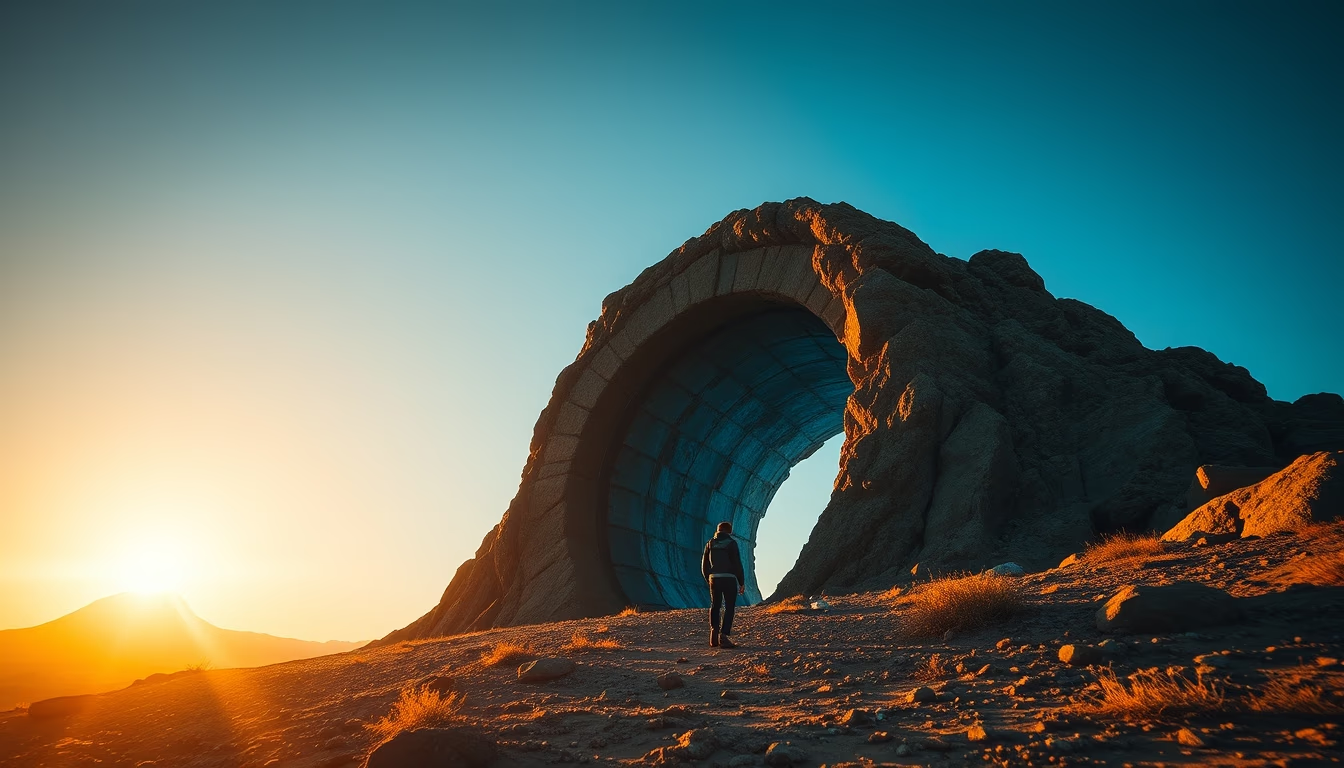
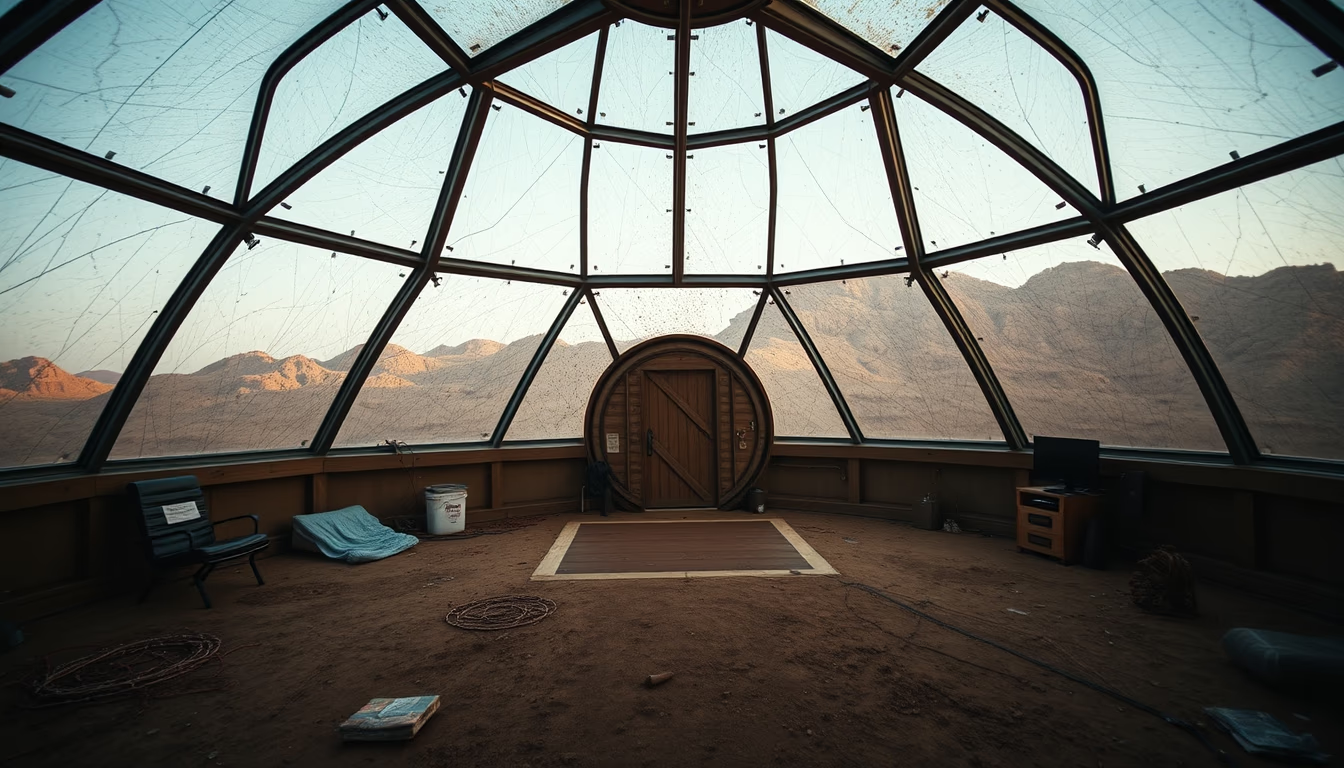
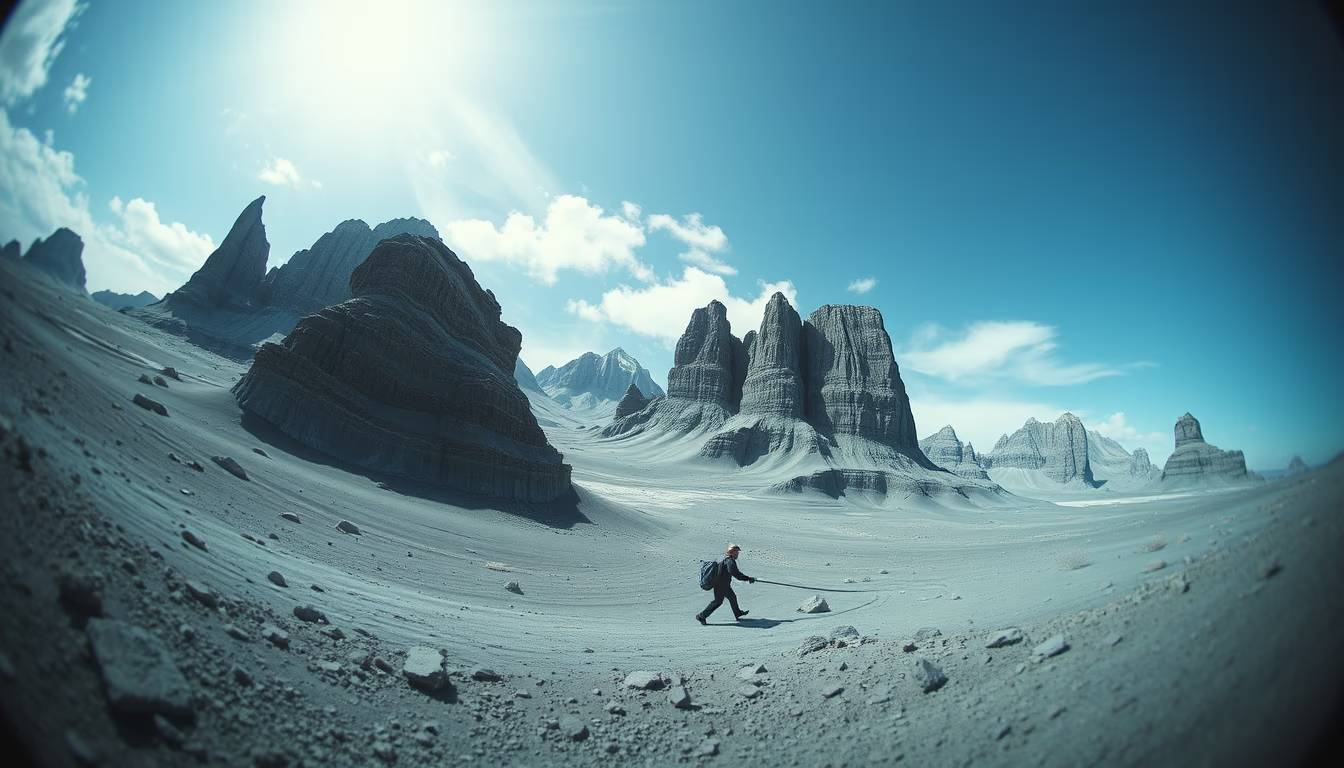
Alien landscape concept
1344×768 · AVIF · CC BY 4.0
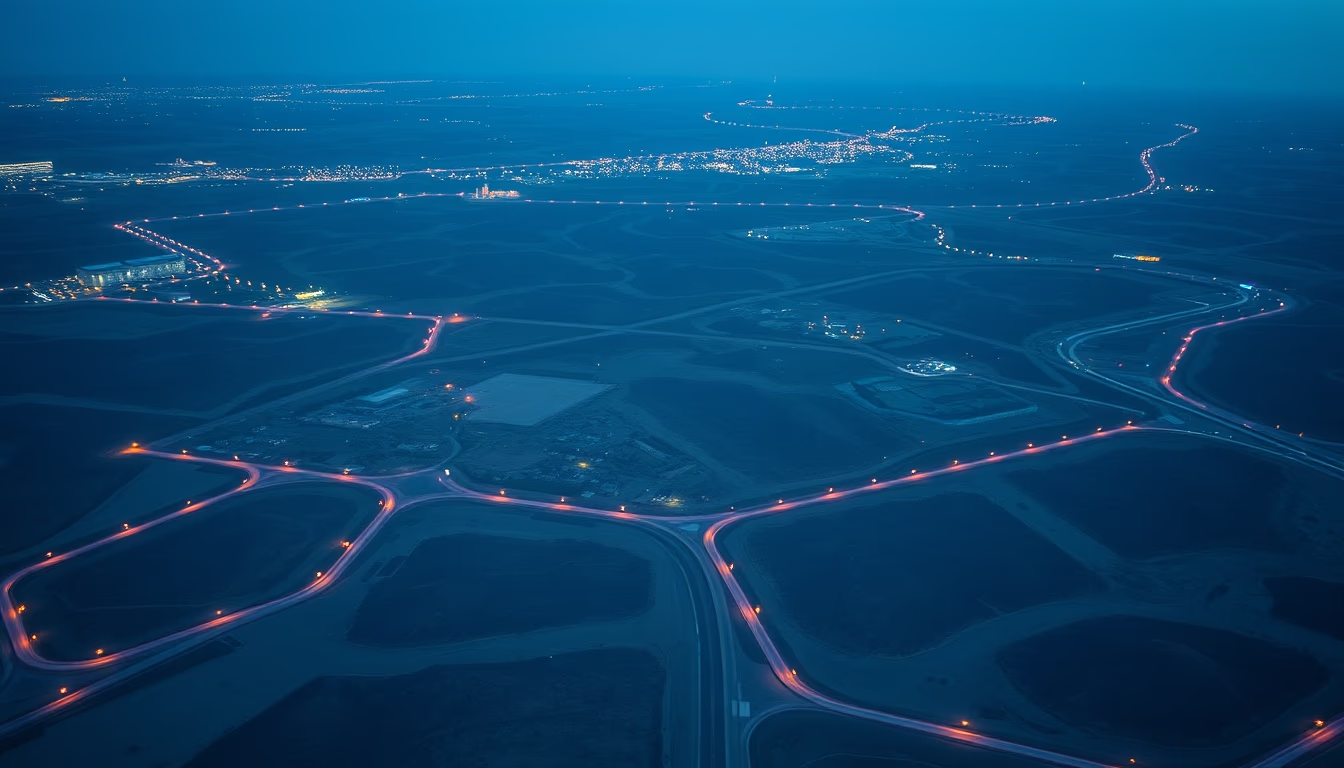
Alien landscapes are among the most iconic elements of science fiction, depicting distant worlds and ecosystems imagined through art and technology.
About this subject
Alien landscapes are visual constructs combining extraterrestrial geology, exotic atmospheres, and hypothetical life forms. From Chesley Bonestell's pioneering illustrations in the 1940s depicting Martian canyons and red suns to contemporary digital creations, these landscapes have evolved alongside scientific knowledge and artistic tools. Concept art for films like 'Dune' (2021) and 'Avatar' (2009) uses references from Earth deserts, bioluminescent forests, and rock formations to suggest believable worlds.
The use of aerial drones in modern photography has directly influenced how artists conceive panoramic views of alien worlds. Drone-captured imagery reveals geological patterns, symmetries, and textures that feed the imagination of set designers. In sci-fi art exhibitions and portfolios, it is common to find compositions mimicking flight angles over unknown surfaces, blending geographical realism with fantasy.
Culturally, these landscapes reflect the human fascination with space exploration and the unknown. They appear in games, books, films, and series, acting as backdrops for narratives of colonization, discovery, and conflict. The work of artist Moebius, for example, popularized landscapes with alien vegetation and floating cities, while designer Syd Mead created futuristic skylines that mix machines and nature.
Creating a conceptual alien landscape involves research in planetary science, geology, and synthetic biology. Artists often study known exoplanets, icy moons like Europa, and deserts like the Atacama to ground their visions. The result is a visual genre that continues to evolve with every new space discovery.
Frequently Asked Questions
What defines an alien landscape in science fiction?
An alien landscape is characterized by geological and atmospheric elements not found on Earth, such as unusual sky colors, exotic rock formations, bioluminescent vegetation, or methane oceans. It serves as a setting for fictional worlds, blending artistic creativity with scientific plausibility.
What are the most famous examples of alien landscapes?
Notable examples include the desert of Arrakis in Dune, the forests of Pandora in Avatar, the oceans of Europa in 2010: The Year We Make Contact, and the Neptune landscapes in The Terminator. In art, works by Chesley Bonestell, Moebius, and Simon Stålenhag are benchmarks.
How does aerial photography influence the creation of conceptual alien landscapes?
Aerial photography, especially from drones, provides large-scale natural patterns, textures, and viewing angles that inspire artists. Top-down views of deserts, glaciers, or volcanoes are often adapted to simulate alien topographies, adding realism to compositions.
Direct URL
https://pub-c7d6a6ea828543ac903a74a341ccb2e1.r2.dev/imagens/alien-landscape-concept-aerial-drone-shot-fresh4.avifHow to credit
Include a visible link back to UtilizAí. Copy one of the snippets below:
<a href="https://xn--utiliza-eza.com/en/midia/imagens/alien-landscape-concept-aerial-drone-shot-fresh4">Alien landscape concept</a> by <a href="https://xn--utiliza-eza.com">UtilizAí</a>, licensed under <a href="https://creativecommons.org/licenses/by/4.0/">CC BY 4.0</a>.
[Alien landscape concept](https://xn--utiliza-eza.com/en/midia/imagens/alien-landscape-concept-aerial-drone-shot-fresh4) by [UtilizAí](https://xn--utiliza-eza.com), CC BY 4.0
License: CC-BY-4.0