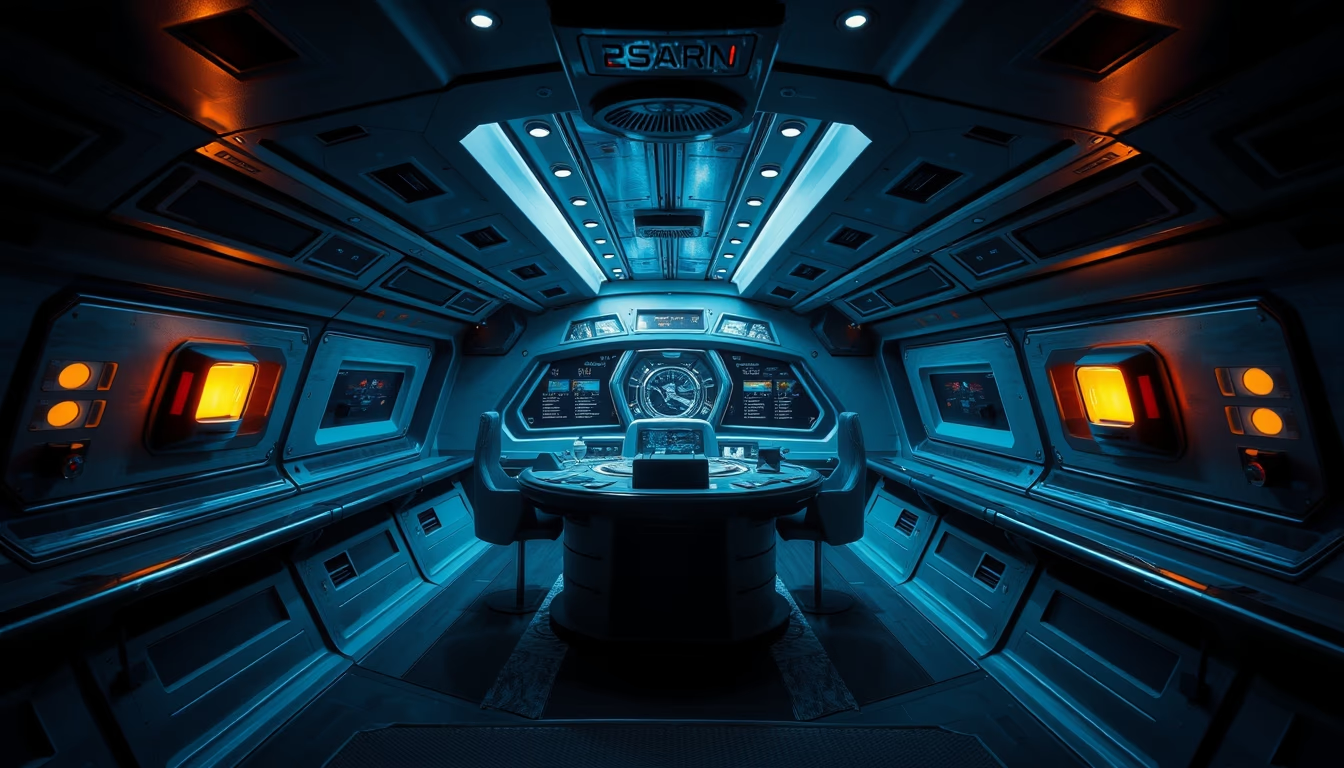
Ai core data center
1344×768 · AVIF · CC BY 4.0

AI data centers are critical infrastructures that process vast amounts of data to train and operate artificial intelligence models at a global scale.
About this subject
Data centers dedicated to artificial intelligence form the backbone of the current technological revolution. Unlike traditional data centers, these facilities are optimized for parallel computing workloads, using thousands of interconnected GPUs and TPUs. The energy consumption of these colossal installations is staggering: a single AI data center can consume more electricity than a medium-sized city. To address this, companies like Google, Microsoft, and Amazon invest in renewable energy sources and innovative liquid cooling systems.
Strategically located near cheap or renewable energy sources, these centers often operate in Nordic regions or deserts. In the United States, Silicon Valley and northern Virginia concentrate a large share of these facilities. In Brazil, initiatives such as Google's data center in São Paulo and projects by AI-focused startups highlight the sector's growth. Data transmission latency is crucial, which is why some centers are built near submarine cable hubs.
The architecture of an AI data center differs significantly. Instead of traditional servers in standard racks, they employ clusters of specialized hardware, such as Google's TPU pods or NVIDIA's DGX supercomputers. Cooling is often liquid-based, with dielectric fluid immersion to dissipate the extreme heat generated by the chips. Additionally, physical and cybersecurity measures are maximum, with multiple layers of restricted access and continuous surveillance.
Interestingly, the term "AI core" also refers to specific hardware components within chips, such as Neural Processing Units (NPUs) found in smartphones. But at the data center scale, the "core" is the set of accelerators that perform billions of operations per second. The environmental impact of these centers is a hot topic: while they promote advancements, their carbon footprint and water usage for cooling spark debates on sustainability.
Frequently Asked Questions
What is the difference between a traditional data center and an AI data center?
Traditional data centers are designed for general storage and processing, while AI data centers are optimized for intensive parallel workloads, using specialized hardware like GPUs and TPUs, along with advanced cooling systems to handle extreme heat.
Where are the main AI data centers located around the world?
They are often in regions with cheap or renewable energy, such as Nordic countries, the Arizona desert, Virginia (USA), and in Brazil, São Paulo. Proximity to submarine cables and energy sources influences location.
What is the environmental impact of AI data centers?
They consume vast amounts of electricity and water for cooling, contributing to carbon footprint. However, many companies are shifting to renewable energy and more efficient cooling techniques to mitigate this impact.
Direct URL
https://pub-c7d6a6ea828543ac903a74a341ccb2e1.r2.dev/imagens/ai-core-data-center-film-grain-authentic-fresh8.avifHow to credit
Include a visible link back to UtilizAí. Copy one of the snippets below:
<a href="https://xn--utiliza-eza.com/en/midia/imagens/ai-core-data-center-film-grain-authentic-fresh8">Ai core data center</a> by <a href="https://xn--utiliza-eza.com">UtilizAí</a>, licensed under <a href="https://creativecommons.org/licenses/by/4.0/">CC BY 4.0</a>.
[Ai core data center](https://xn--utiliza-eza.com/en/midia/imagens/ai-core-data-center-film-grain-authentic-fresh8) by [UtilizAí](https://xn--utiliza-eza.com), CC BY 4.0
License: CC-BY-4.0