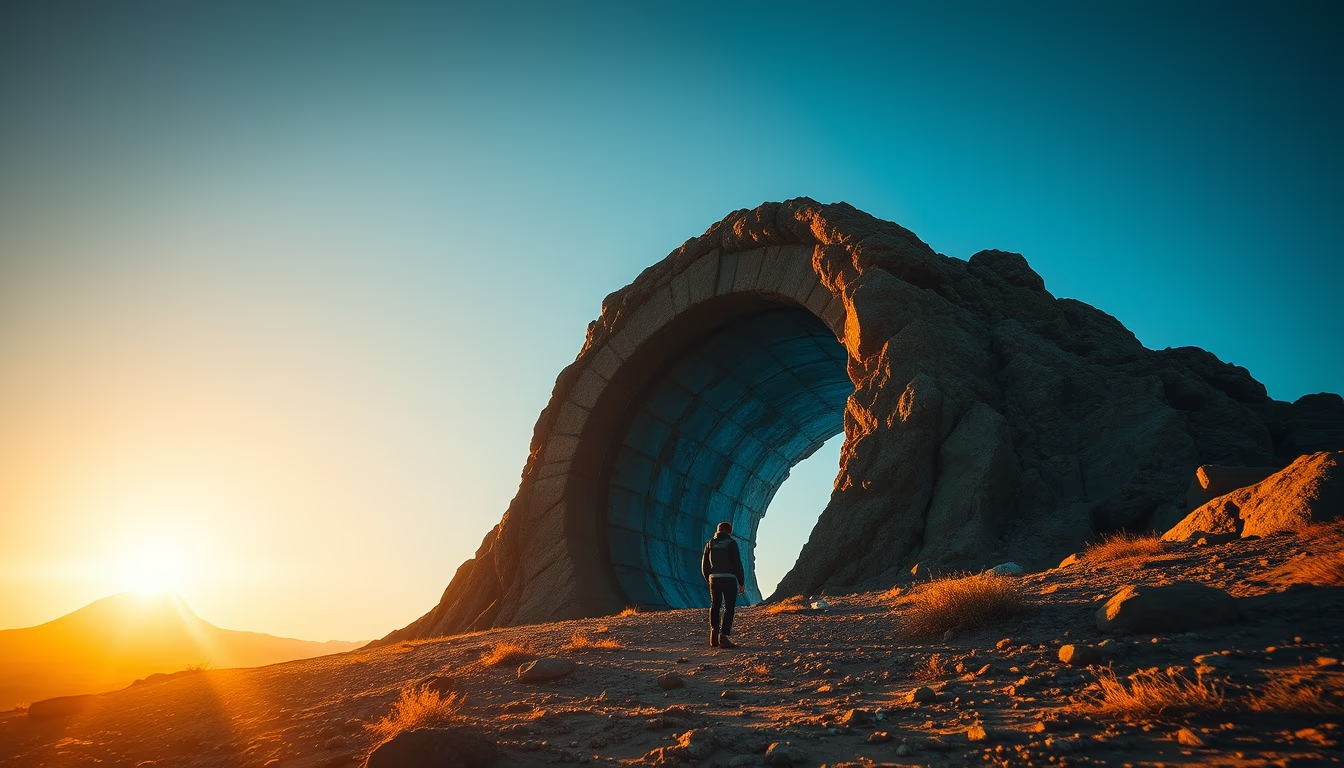
Wormhole portal blue
1344×768 · AVIF · CC BY 4.0
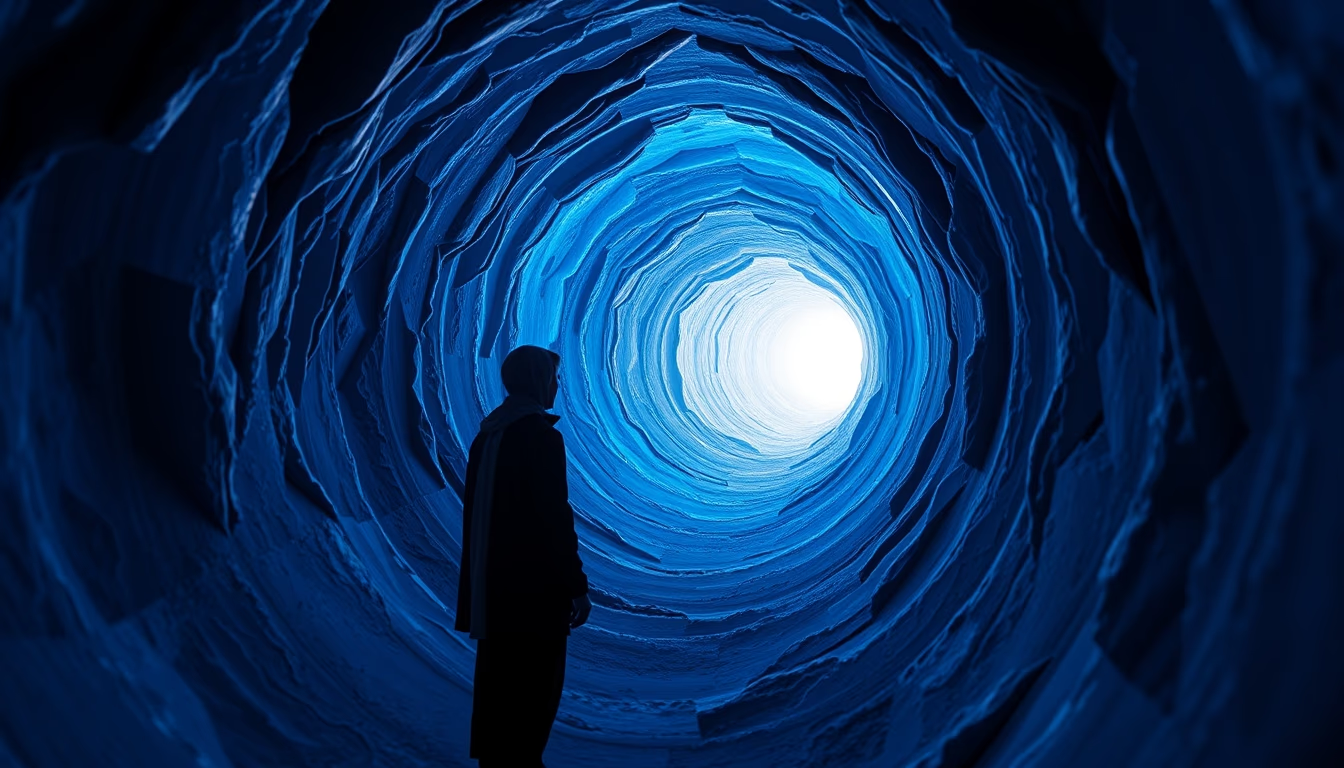
Explore wormholes, spacetime tunnels connecting distant points in the universe, a central theme in science fiction and theoretical physics.
About this subject
Wormholes, also known as Einstein-Rosen bridges, are solutions to the equations of general relativity that would allow instantaneous travel between two distant points in spacetime. The concept was proposed in 1935 by Albert Einstein and Nathan Rosen as a way to connect regions separated by vast distances. Although theoretically possible, wormholes would require exotic matter with negative energy to stay open, something not yet observed in nature.
In popular culture, wormholes are often depicted as bright blue portals leading to other star systems or parallel dimensions. The most iconic example is the film Interstellar (2014), where a wormhole appears near Saturn, allowing astronauts to reach another galaxy. This visual, frequently portrayed as an ethereal blue vortex, is inspired by scientific simulations that show light bending around the event horizon.
Despite their fictional appeal, wormholes raise deep questions about causality and time travel. If a wormhole connected two points in space, it could also connect two moments in time, generating paradoxes. Physicists like Stephen Hawking suggested that the laws of physics would prevent such structures from forming naturally, but research continues into their viability in quantum gravity theories.
In fine art photography, visual representations of wormholes explore cosmic aesthetics, combining vibrant colors like blue and purple to evoke mystery and vastness. Conceptual photographs on this theme aim to merge science and art, inviting viewers to ponder the limits of human knowledge.
Frequently Asked Questions
What is a wormhole?
A wormhole is a hypothetical tunnel in spacetime connecting two distant points in the universe, enabling instant travel or communication. It is based on Einstein's general relativity.
Are wormholes actually possible?
They are theoretically possible but would require exotic matter with negative energy to remain stable. No wormhole has been observed or created experimentally to date.
Why are wormholes often depicted in blue?
The blue coloring comes from artistic representation based on scientific simulations showing light distortion. Blue evokes cosmic energy, mystery, and high energy phenomena.
Direct URL
https://pub-c7d6a6ea828543ac903a74a341ccb2e1.r2.dev/imagens/wormhole-portal-blue-fine-art-photography-fresh3.avifHow to credit
Include a visible link back to UtilizAí. Copy one of the snippets below:
<a href="https://xn--utiliza-eza.com/en/midia/imagens/wormhole-portal-blue-fine-art-photography-fresh3">Wormhole portal blue</a> by <a href="https://xn--utiliza-eza.com">UtilizAí</a>, licensed under <a href="https://creativecommons.org/licenses/by/4.0/">CC BY 4.0</a>.
[Wormhole portal blue](https://xn--utiliza-eza.com/en/midia/imagens/wormhole-portal-blue-fine-art-photography-fresh3) by [UtilizAí](https://xn--utiliza-eza.com), CC BY 4.0
License: CC-BY-4.0