Wind turbine offshore
1344×768 · AVIF · CC BY 4.0
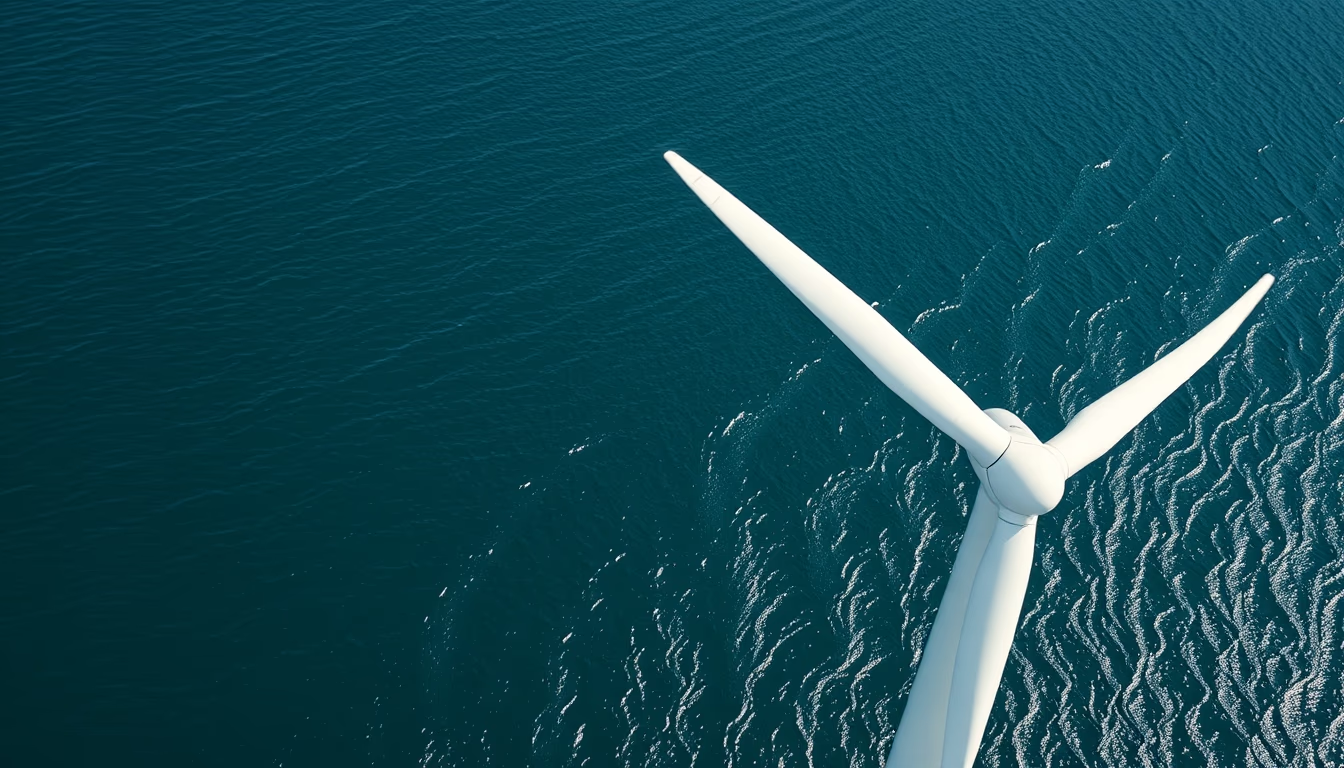
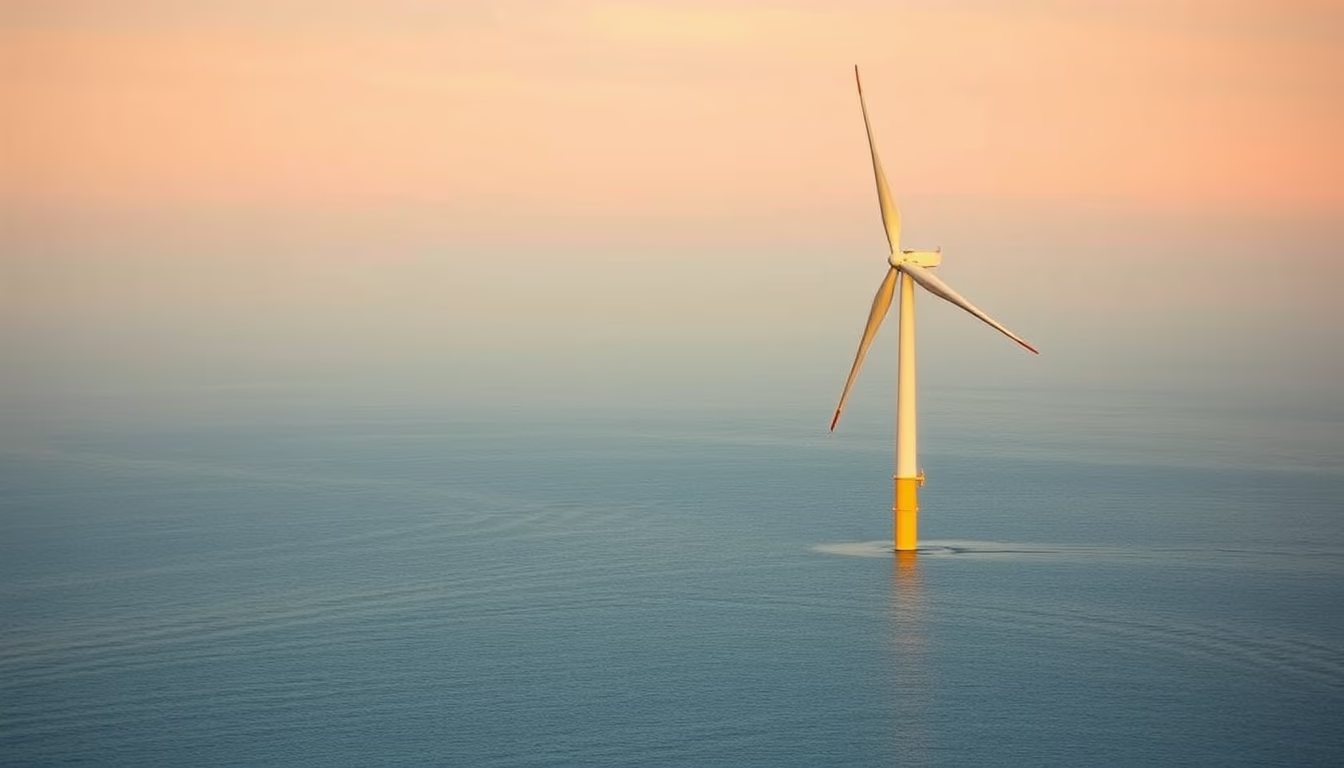
Offshore wind turbines harness sea winds to generate clean electricity, with farms in shallow and deep waters worldwide.
About this subject
Offshore wind turbines represent one of the most promising technologies for large-scale renewable energy generation. Unlike onshore installations, these machines are placed at sea, where winds are stronger and more consistent. The first offshore turbine was installed in 1991 in Denmark at the Vindeby wind farm, with a capacity of 5 MW. Since then, technology has evolved significantly: modern turbines exceed 12 MW of rated power, with blades up to 120 meters long.
Global installed offshore wind capacity reached 64 GW in 2023, led by China, the United Kingdom, and Germany. China leads with over 30 GW, followed by the UK with 14 GW. Brazil, despite its extensive coastline, does not yet have commercial offshore wind farms, but pilot projects are under development, especially in the Northeast, where trade winds are favorable. Water depth and distance from shore are critical factors: fixed-bottom turbines are used up to 60 meters depth, while floating platforms allow operation in water depths of up to 1,000 meters.
Offshore wind energy offers environmental benefits such as no visual or noise barriers for coastal communities, but it also poses challenges: higher installation and maintenance costs, impacts on marine life, and the need for specialized port infrastructure. Innovations such as steel jacket foundations, gearless generators, and dynamic anchoring systems are reducing these costs. The global technical potential is estimated at 120,000 GW, making offshore wind a key component for the energy transition and meeting Paris Agreement targets.
Frequently Asked Questions
What is the average capacity of a modern offshore wind turbine?
Modern offshore turbines range from 8 MW to 15 MW. The largest, such as the Vestas V236-15.0 MW, have 115-meter blades and can generate up to 80 GWh per year.
Does Brazil have commercial offshore wind farms?
No, Brazil does not yet have commercial offshore wind farms. However, several projects are in the environmental licensing phase, especially in the states of Rio Grande do Norte, Ceará, and Rio de Janeiro.
What is the maximum depth for fixed-bottom offshore turbines?
Fixed-bottom turbines are viable down to about 60 meters depth. For deeper waters, floating platforms anchored to the seabed are used.
Direct URL
https://pub-c7d6a6ea828543ac903a74a341ccb2e1.r2.dev/imagens/wind-turbine-offshore-magazine-editorial-p3.avifHow to credit
Include a visible link back to UtilizAí. Copy one of the snippets below:
<a href="https://xn--utiliza-eza.com/en/midia/imagens/wind-turbine-offshore-magazine-editorial-p3">Wind turbine offshore</a> by <a href="https://xn--utiliza-eza.com">UtilizAí</a>, licensed under <a href="https://creativecommons.org/licenses/by/4.0/">CC BY 4.0</a>.
[Wind turbine offshore](https://xn--utiliza-eza.com/en/midia/imagens/wind-turbine-offshore-magazine-editorial-p3) by [UtilizAí](https://xn--utiliza-eza.com), CC BY 4.0
License: CC-BY-4.0