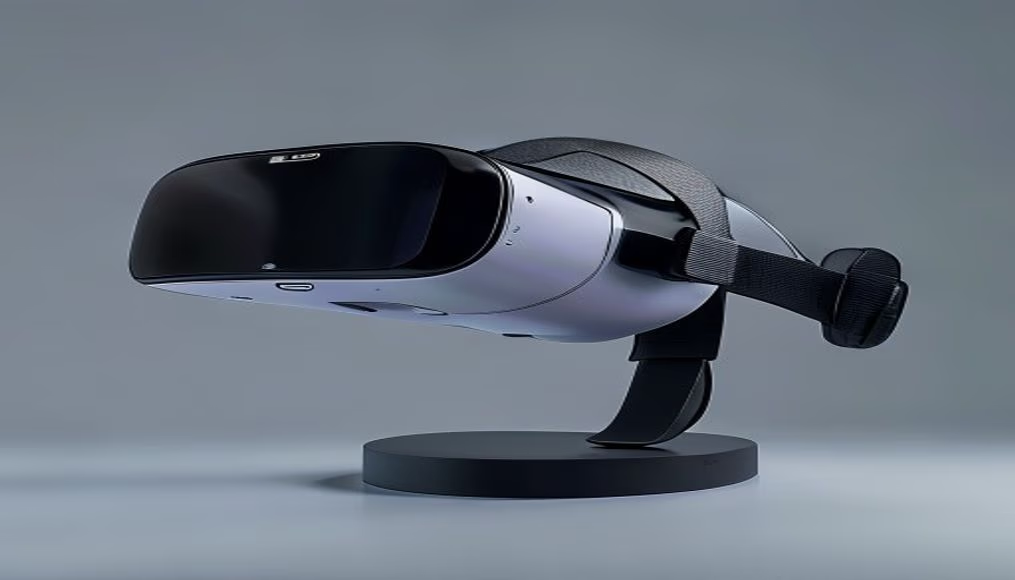
Vr headset on stand
1344×768 · AVIF · CC BY 4.0
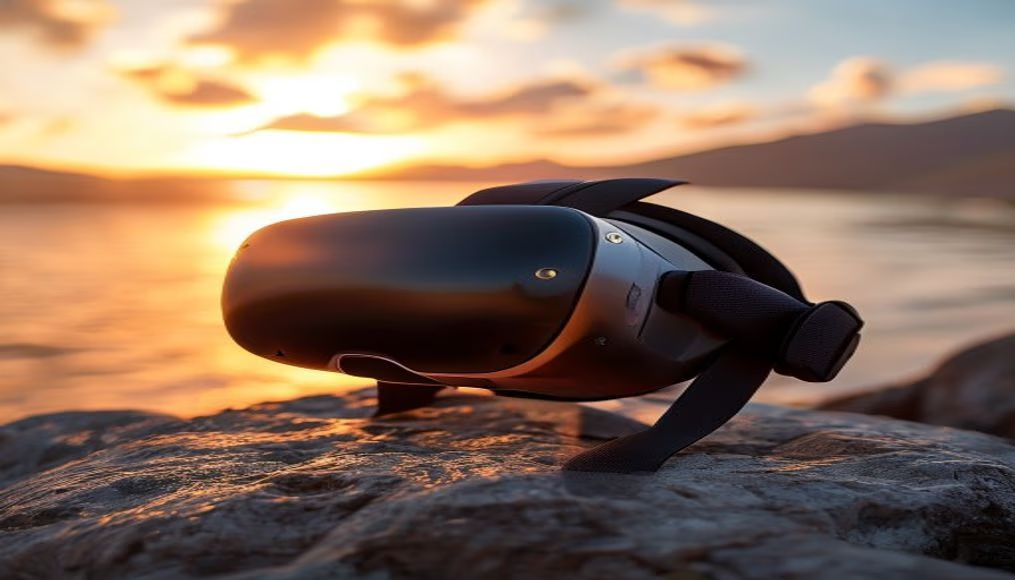
VR headset on stand: immersive technology transforming gaming, education, and professional simulations worldwide.
About this subject
Virtual reality headsets became accessible to mainstream consumers around 2016 with the launch of Oculus Rift and HTC Vive. These devices use high-resolution displays, lenses, and motion sensors to create three-dimensional environments that respond to head movements. Current market leaders include Meta Quest 3, PlayStation VR2, and Valve Index, supporting applications ranging from immersive gaming to medical training, architecture, and psychological therapy.
VR technology relies on position tracking (inside-out or outside-out) and a refresh rate of at least 90 Hz to prevent motion sickness. Hand controllers enable natural interaction with virtual objects. In Brazil, interest has grown alongside the popularity of gaming consoles and PCs, though prices remain high. Events like Brasil Game Show often host VR demos, and local developers create experiences such as "A Ilha" and "Mundo dos Espelhos".
Beyond entertainment, VR is used in flight simulators and military training, reducing costs and risks. In education, platforms like Google Expeditions enable virtual field trips to museums and planets. The COVID-19 pandemic accelerated VR adoption for meetings and telepresence via software like Horizon Workrooms. Integration with 5G networks and artificial intelligence is expected to make experiences even more realistic and affordable over the next decade.
Frequently Asked Questions
What are the main uses of VR headsets beyond gaming?
VR is used for professional training (medicine, aviation, military), education (virtual field trips), architecture (project visualization), and therapy (phobia and stress management).
Do I need a powerful computer for VR?
It depends on the model: standalone headsets like Meta Quest 3 do not require a PC; models like Valve Index need a computer with a dedicated graphics card and high processing power.
Does VR cause motion sickness? How to avoid it?
Yes, some people experience nausea due to latency or low frame rates. To avoid it, use headsets with a 90 Hz+ refresh rate, take breaks, and adjust the interpupillary distance.
Direct URL
https://pub-c7d6a6ea828543ac903a74a341ccb2e1.r2.dev/imagens/vr-headset-on-stand-travel-photography-v10.avifHow to credit
Include a visible link back to UtilizAí. Copy one of the snippets below:
<a href="https://xn--utiliza-eza.com/en/midia/imagens/vr-headset-on-stand-travel-photography-v10">Vr headset on stand</a> by <a href="https://xn--utiliza-eza.com">UtilizAí</a>, licensed under <a href="https://creativecommons.org/licenses/by/4.0/">CC BY 4.0</a>.
[Vr headset on stand](https://xn--utiliza-eza.com/en/midia/imagens/vr-headset-on-stand-travel-photography-v10) by [UtilizAí](https://xn--utiliza-eza.com), CC BY 4.0
License: CC-BY-4.0