Vr headset on stand
1344×768 · AVIF · CC BY 4.0
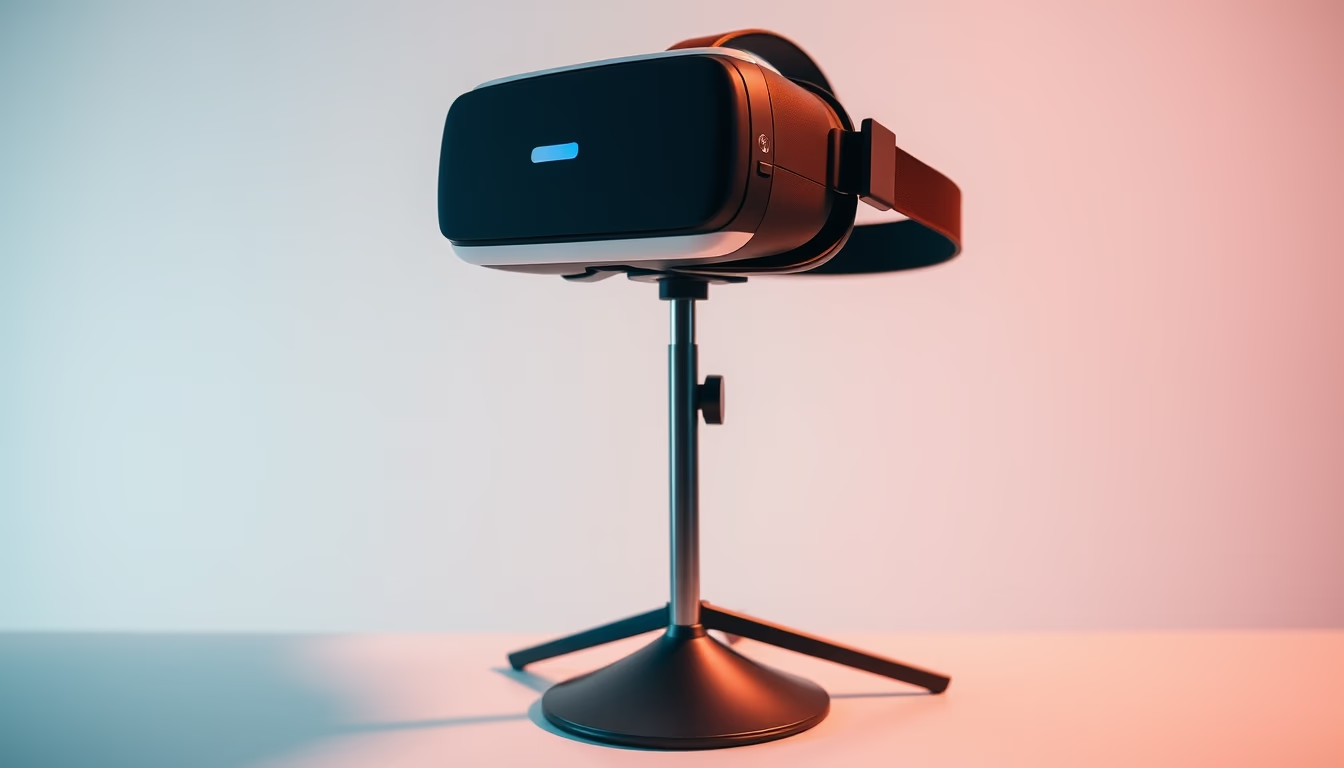
Virtual reality headset resting on a stand, highlighting ergonomic design and lenses in a studio setting.
About this subject
Virtual reality (VR) headsets have evolved rapidly since early prototypes in the 1960s, such as Morton Heilig's Sensorama, to modern devices combining motion tracking, high-resolution displays, and spatial audio. Models like the Meta Quest 3, PlayStation VR2, and HTC Vive Pro 2 represent the state of the art, with fields of view exceeding 110 degrees and refresh rates of 90 to 120 Hz to reduce motion sickness. Ergonomic design is crucial: weight is distributed via adjustable straps and facial cushions for comfort during extended sessions.
VR has found applications beyond gaming, including simulated medical training, exposure therapy for phobias, architectural visualization, and immersive education. Companies like Apple with the Vision Pro and Valve with the Index compete to deliver more realistic experiences, while the VR market is projected to grow at a compound annual rate of 15% until 2030, according to Grand View Research. In Brazil, interest in VR grows with events like Brasil Game Show and the popularization of standalone devices that do not require a PC.
Accessories such as stands and charging docks have become essential for organizing the setup and prolonging the headset's lifespan. A well-designed stand prevents dust accumulation and scratches on the lenses, while keeping cables tidy. Some models include wireless charging or USB ports for syncing. Product photography for VR headsets typically uses soft lighting to highlight lens details and plastic textures, conveying modernity and technology.
Frequently Asked Questions
What are the main uses of a VR headset beyond gaming?
Beyond gaming, VR headsets are used in medical training, exposure therapy, architectural visualization, immersive education, and industrial simulations.
How to choose a stand for a VR headset?
Look for stands with a stable base, non-slip material, and cable management. Models with integrated charging or height adjustment are pluses.
What causes motion sickness in virtual reality and how to avoid it?
Motion sickness is caused by latency between movement and image. To avoid it, use headsets with high refresh rates (90 Hz or more) and take frequent breaks.
Direct URL
https://pub-c7d6a6ea828543ac903a74a341ccb2e1.r2.dev/imagens/vr-headset-on-stand-commercial-product-photography.avifHow to credit
Include a visible link back to UtilizAí. Copy one of the snippets below:
<a href="https://xn--utiliza-eza.com/en/midia/imagens/vr-headset-on-stand-commercial-product-photography">Vr headset on stand</a> by <a href="https://xn--utiliza-eza.com">UtilizAí</a>, licensed under <a href="https://creativecommons.org/licenses/by/4.0/">CC BY 4.0</a>.
[Vr headset on stand](https://xn--utiliza-eza.com/en/midia/imagens/vr-headset-on-stand-commercial-product-photography) by [UtilizAí](https://xn--utiliza-eza.com), CC BY 4.0
License: CC-BY-4.0