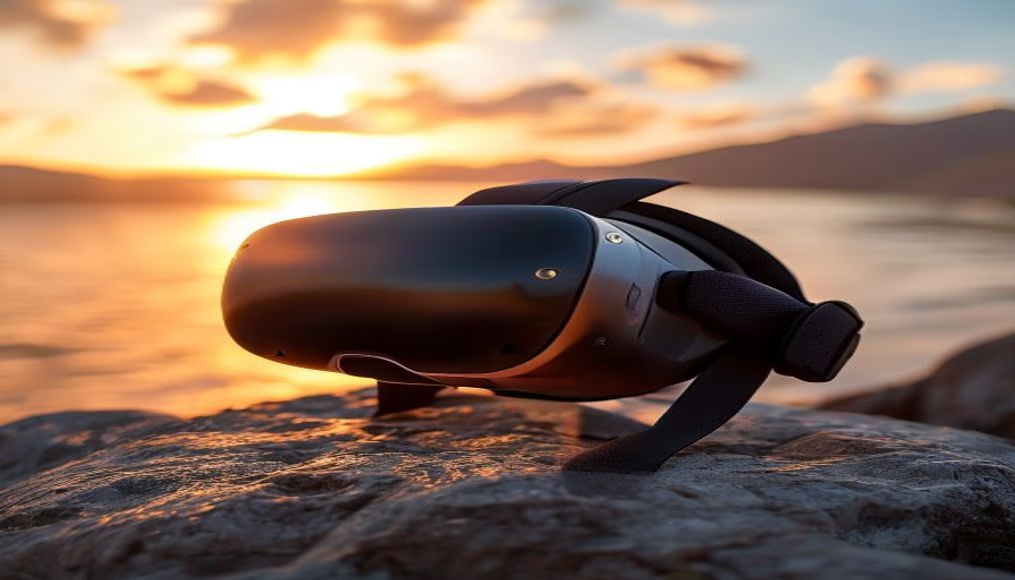
Vr headset on stand
1344×768 · AVIF · CC BY 4.0
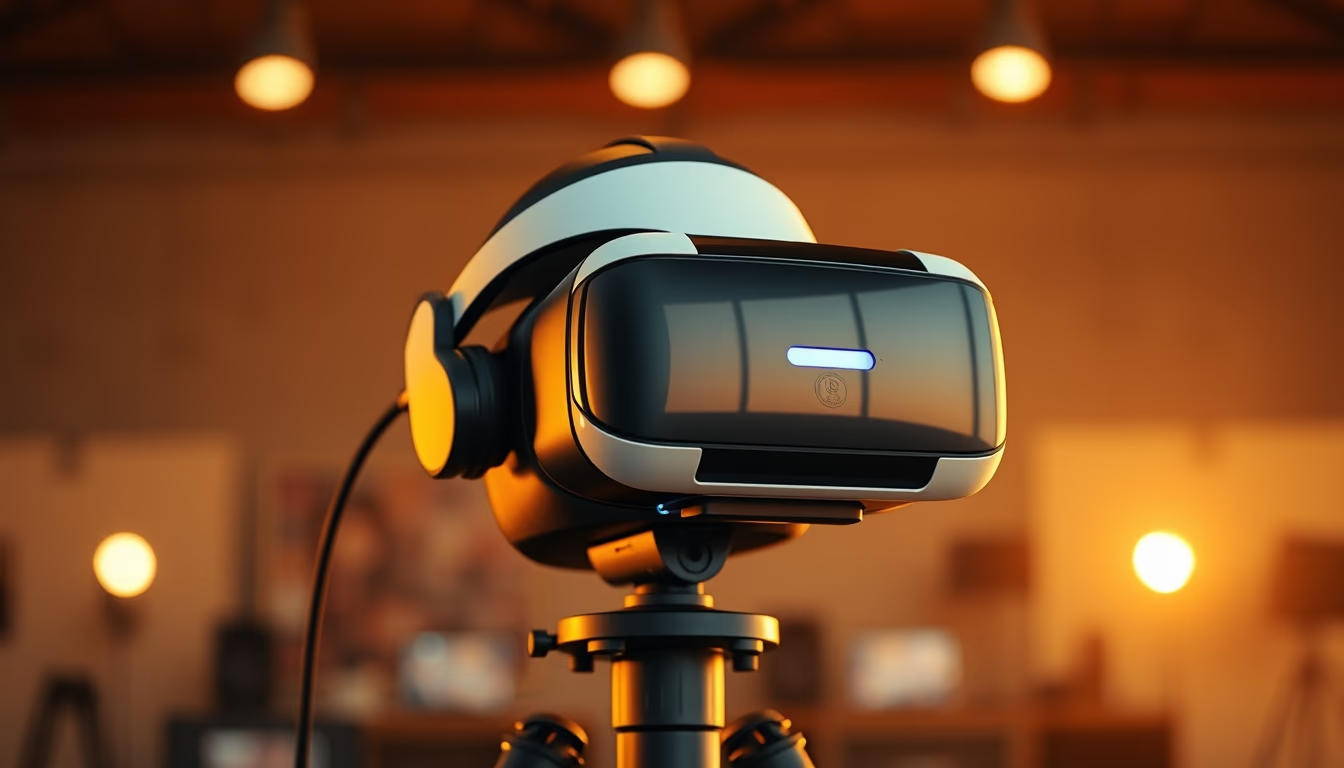
A VR headset rests on a sleek stand, symbolizing the gateway to immersive and interactive experiences in the digital age.
About this subject
Virtual reality (VR) headsets have transformed how we interact with the digital world, offering total immersion in simulated environments. Devices like the Oculus Quest 2, HTC Vive, and PlayStation VR have become popular not only for gaming but also for professional training, education, and therapy. VR technology relies on motion tracking, high-resolution displays, and spatial audio to create a sense of presence in a virtual space.
The VR headset stand shown in the image is a functional accessory that keeps the device organized and protected when not in use. Many stands also double as charging stations, ensuring controllers are ready for the next session. Ergonomics is crucial: a proper stand prevents damage to lenses and straps, extending the equipment's lifespan.
In Brazil, the VR market is still growing, but there are notable initiatives. For instance, the Museum of Tomorrow in Rio de Janeiro offers VR experiences about sustainability, and companies like T-System Brazil use VR for corporate training. Globally, VR is applied in areas such as architecture (virtual property tours), medicine (surgical simulations), and tourism (visiting landmarks without leaving home).
A fun fact: the term 'virtual reality' was popularized in the 1980s by Jaron Lanier, a pioneer of the technology. Today, modern headsets like the Meta Quest 3 offer a resolution of 2064x2208 pixels per eye and hand tracking without controllers, making the experience more natural. The future of VR includes advances in haptics (tactile feedback) and integration with artificial intelligence to create adaptive worlds.
Frequently Asked Questions
What is the difference between VR, AR, and MR?
VR (Virtual Reality) creates a fully digital environment, isolating the user from the real world. AR (Augmented Reality) overlays digital elements onto the real world, like in Pokémon GO. MR (Mixed Reality) combines both, allowing interaction between real and virtual objects.
Do I need a powerful PC to use VR?
It depends on the headset. Models like Oculus Quest 2 and Meta Quest 3 are standalone and don't need a PC. However, HTC Vive and Valve Index require a computer with a dedicated graphics card (e.g., NVIDIA RTX 3060) to run heavy applications.
Can VR cause motion sickness? How to avoid it?
Yes, known as 'cybersickness'. To avoid it, start with short sessions, use teleportation instead of smooth movement, adjust the IPD (interpupillary distance), and keep the room well-lit.
Direct URL
https://pub-c7d6a6ea828543ac903a74a341ccb2e1.r2.dev/imagens/vr-headset-on-stand-cinematic-wide-shot-v2.avifHow to credit
Include a visible link back to UtilizAí. Copy one of the snippets below:
<a href="https://xn--utiliza-eza.com/en/midia/imagens/vr-headset-on-stand-cinematic-wide-shot-v2">Vr headset on stand</a> by <a href="https://xn--utiliza-eza.com">UtilizAí</a>, licensed under <a href="https://creativecommons.org/licenses/by/4.0/">CC BY 4.0</a>.
[Vr headset on stand](https://xn--utiliza-eza.com/en/midia/imagens/vr-headset-on-stand-cinematic-wide-shot-v2) by [UtilizAí](https://xn--utiliza-eza.com), CC BY 4.0
License: CC-BY-4.0