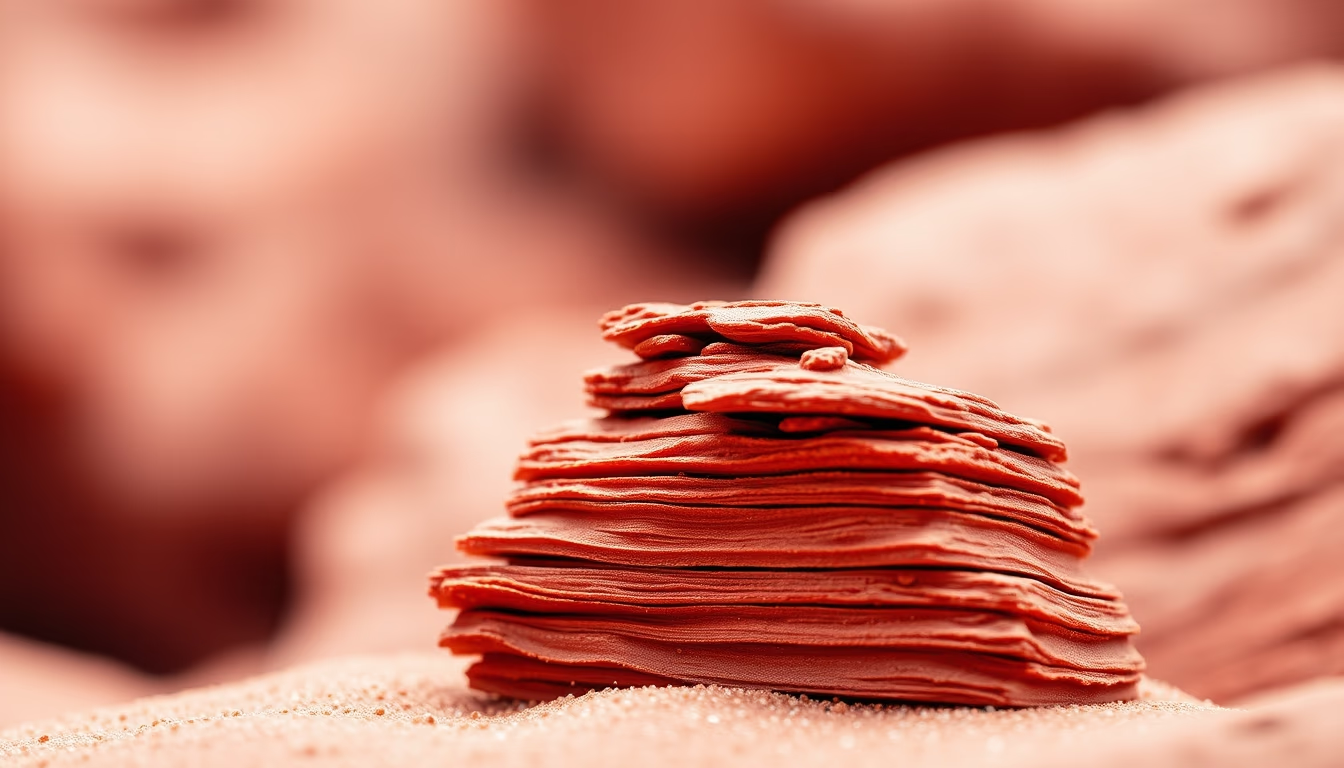
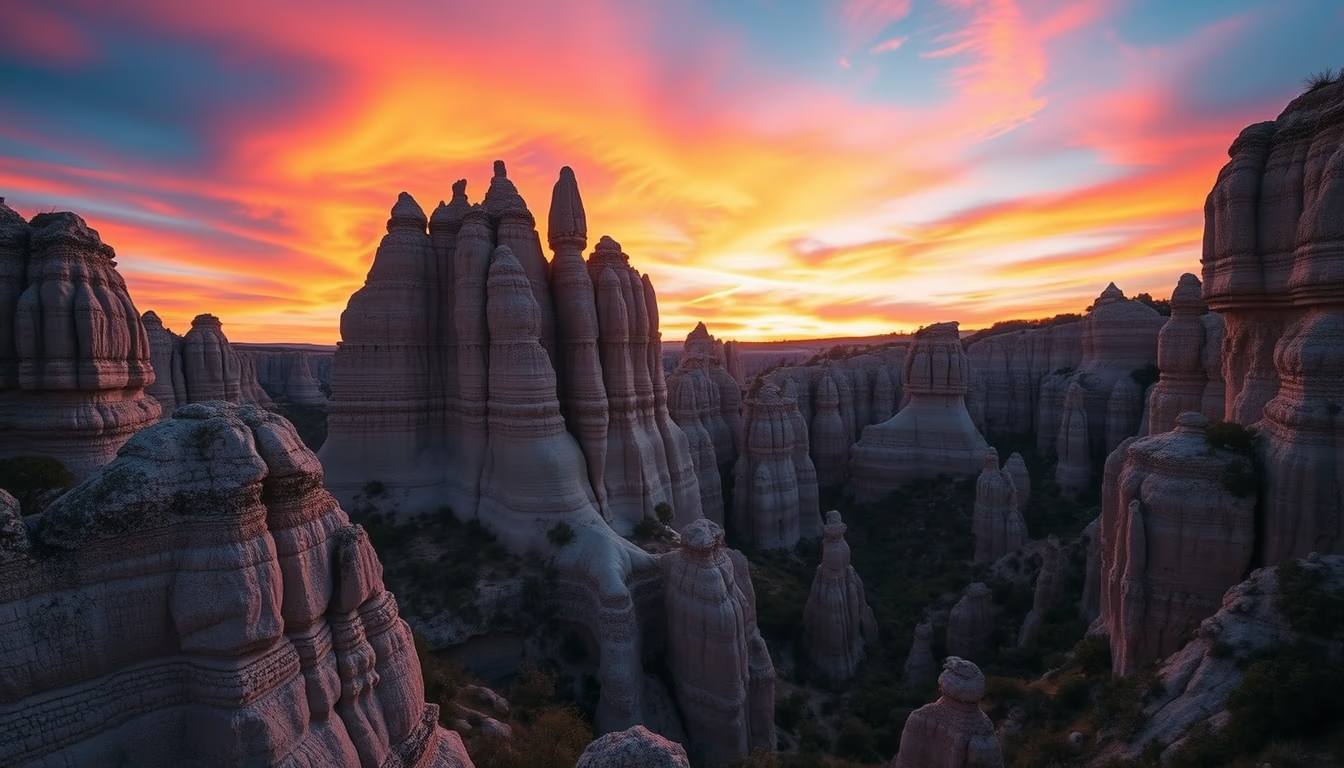
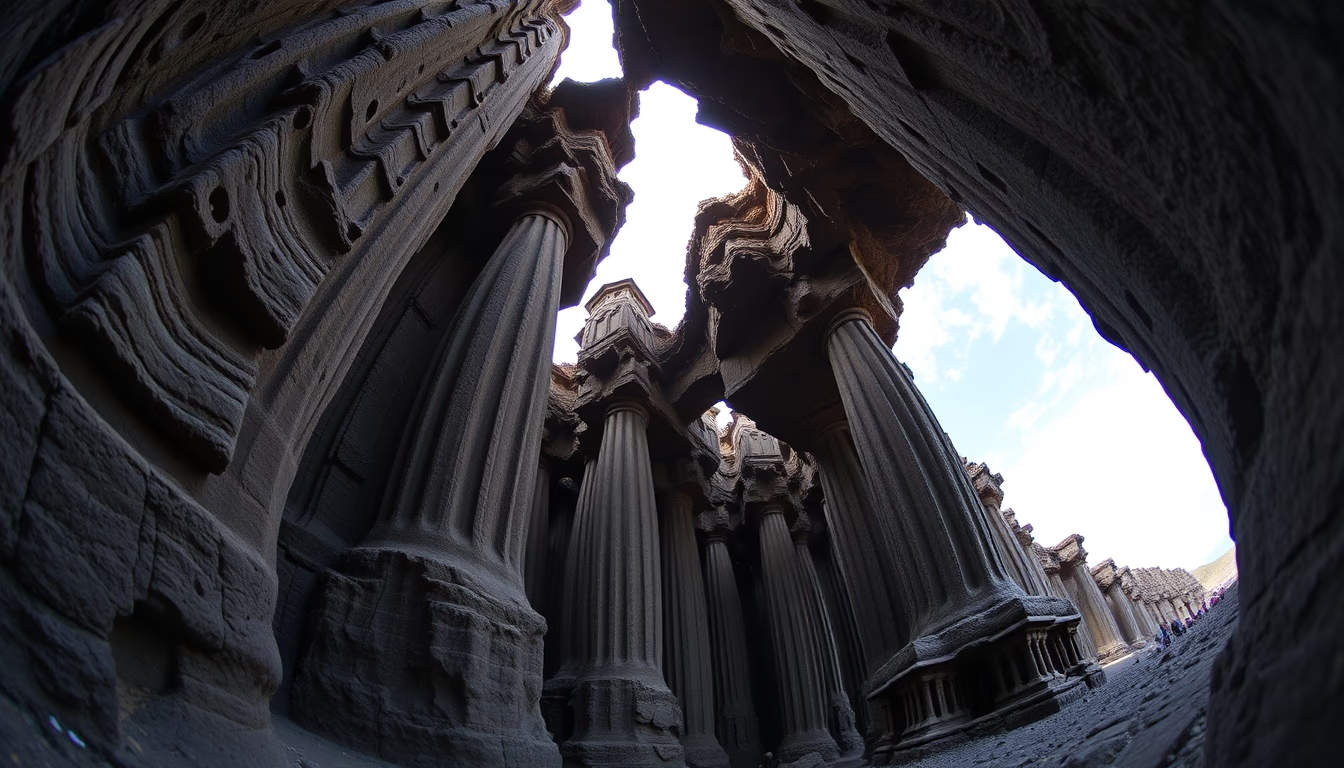
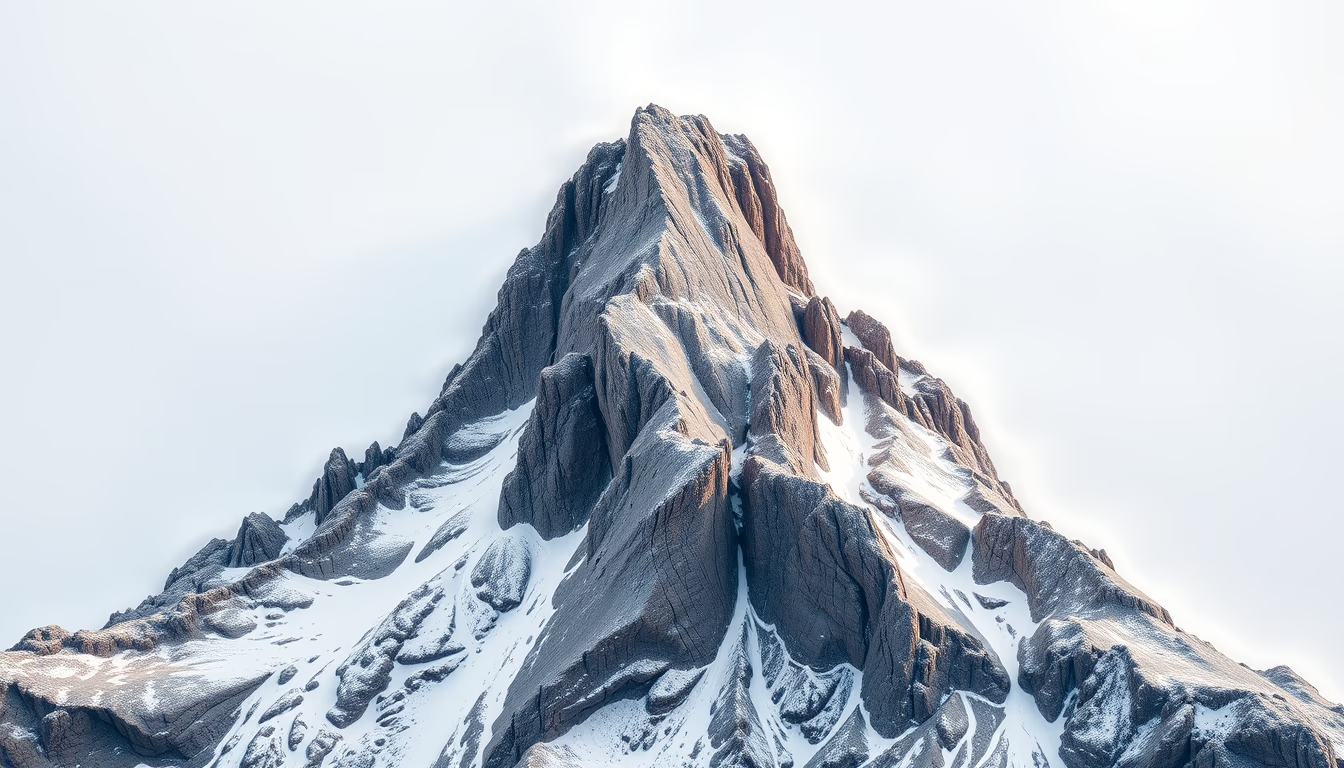
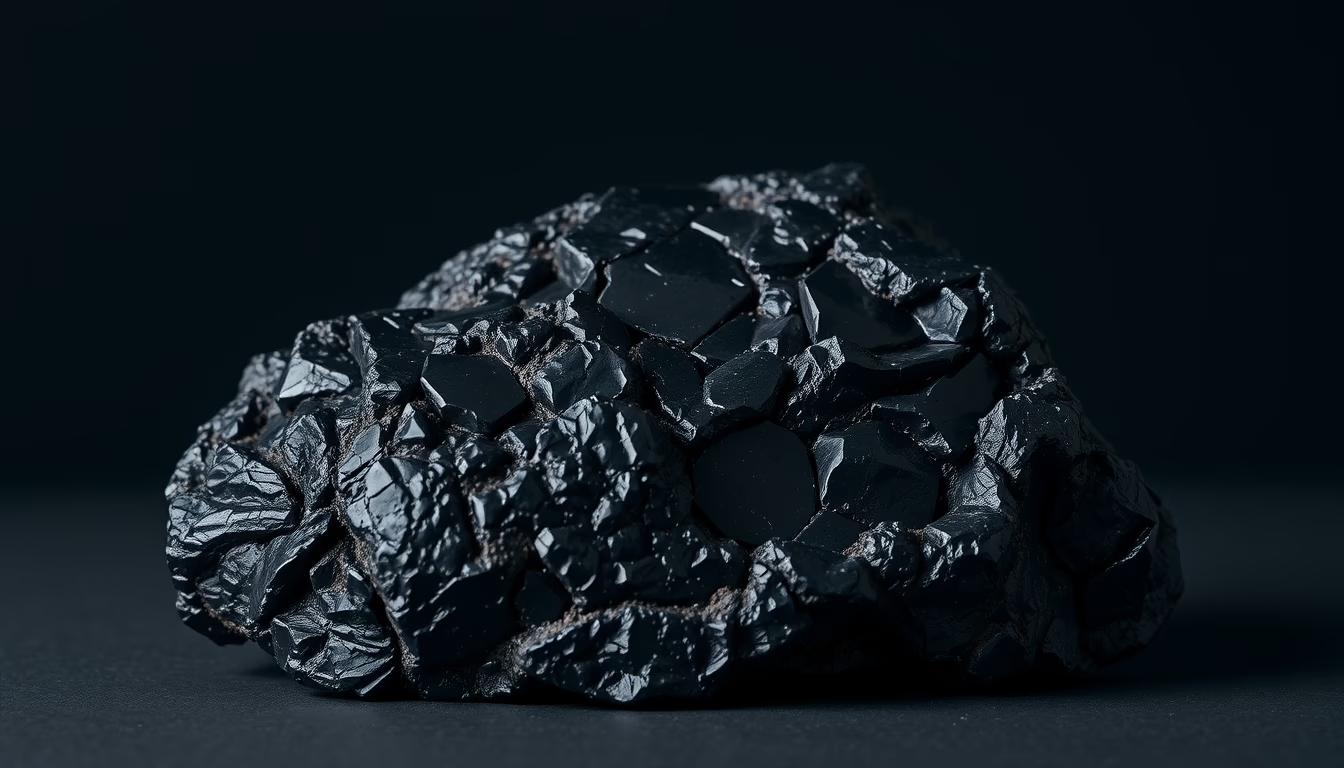
Volcanic rock obsidian
1344×768 · AVIF · CC BY 4.0
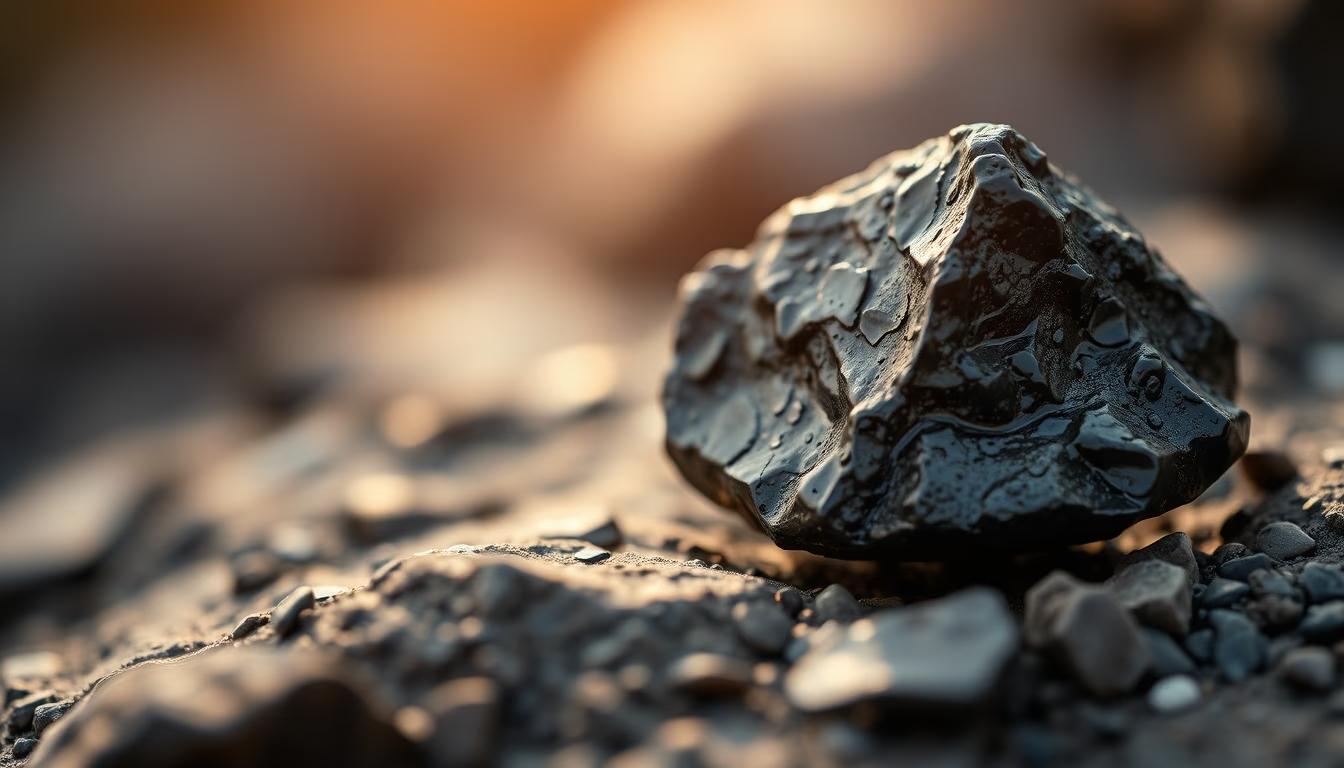
Obsidian is a volcanic glass formed by rapid cooling of lava, prized for its hardness and sharp edges.
About this subject
Obsidian is an extrusive igneous rock of acidic composition, rich in silica, formed when lava expelled by a volcano cools rapidly without time to crystallize. This process produces a natural glass typically black in color, although variations like gray, brown, green, or iridescence occur depending on impurities and inclusions. Its vitreous texture and conchoidal fracture allow it to be knapped into extremely thin and sharp blades, making it valuable for tools and weapons since prehistory.
In ancient times, obsidian was widely used by cultures such as the Aztecs, Maya, and Mesopotamian peoples to make knives, spear and arrow points, as well as mirrors and ceremonial objects. Its use persisted until the Iron Age in some regions, and even today it is employed in high-precision surgical scalpels because its edges can be as thin as 3 nanometers, outperforming stainless steel. In jewelry, obsidian is cut as a gemstone, especially varieties like snowflake obsidian and rainbow obsidian.
Geographically, significant obsidian deposits occur in areas of recent volcanic activity, such as Iceland, Mexico, the United States (Yellowstone), Japan, and Indonesia. In Brazil, it is found mainly in the South region and the Central Plateau, associated with basalt flows. Obsidian is not a mineral but an amorphous glass, with a hardness of 5 to 5.5 on the Mohs scale. Interestingly, obsidian can alter over time by absorbing water to form a crust called perlite, a process used in archaeological dating (obsidian hydration).
Frequently Asked Questions
How is obsidian formed?
Obsidian forms when silica-rich lava cools rapidly on the Earth's surface, preventing mineral crystallization. This process creates an amorphous volcanic glass.
What are the main uses of obsidian?
Historically, it was used for cutting tools and weapons. Today, it is used in surgical scalpels, jewelry, and decorative objects. It also serves in archaeology for obsidian hydration dating.
Is obsidian considered a gemstone?
Yes, it is cut as a gemstone, especially varieties like snowflake obsidian and rainbow obsidian. However, its gemological value is lower than stones like diamond or ruby.
Direct URL
https://pub-c7d6a6ea828543ac903a74a341ccb2e1.r2.dev/imagens/volcanic-rock-obsidian-tilt-shift-miniature-fresh2.avifHow to credit
Include a visible link back to UtilizAí. Copy one of the snippets below:
<a href="https://xn--utiliza-eza.com/en/midia/imagens/volcanic-rock-obsidian-tilt-shift-miniature-fresh2">Volcanic rock obsidian</a> by <a href="https://xn--utiliza-eza.com">UtilizAí</a>, licensed under <a href="https://creativecommons.org/licenses/by/4.0/">CC BY 4.0</a>.
[Volcanic rock obsidian](https://xn--utiliza-eza.com/en/midia/imagens/volcanic-rock-obsidian-tilt-shift-miniature-fresh2) by [UtilizAí](https://xn--utiliza-eza.com), CC BY 4.0
License: CC-BY-4.0