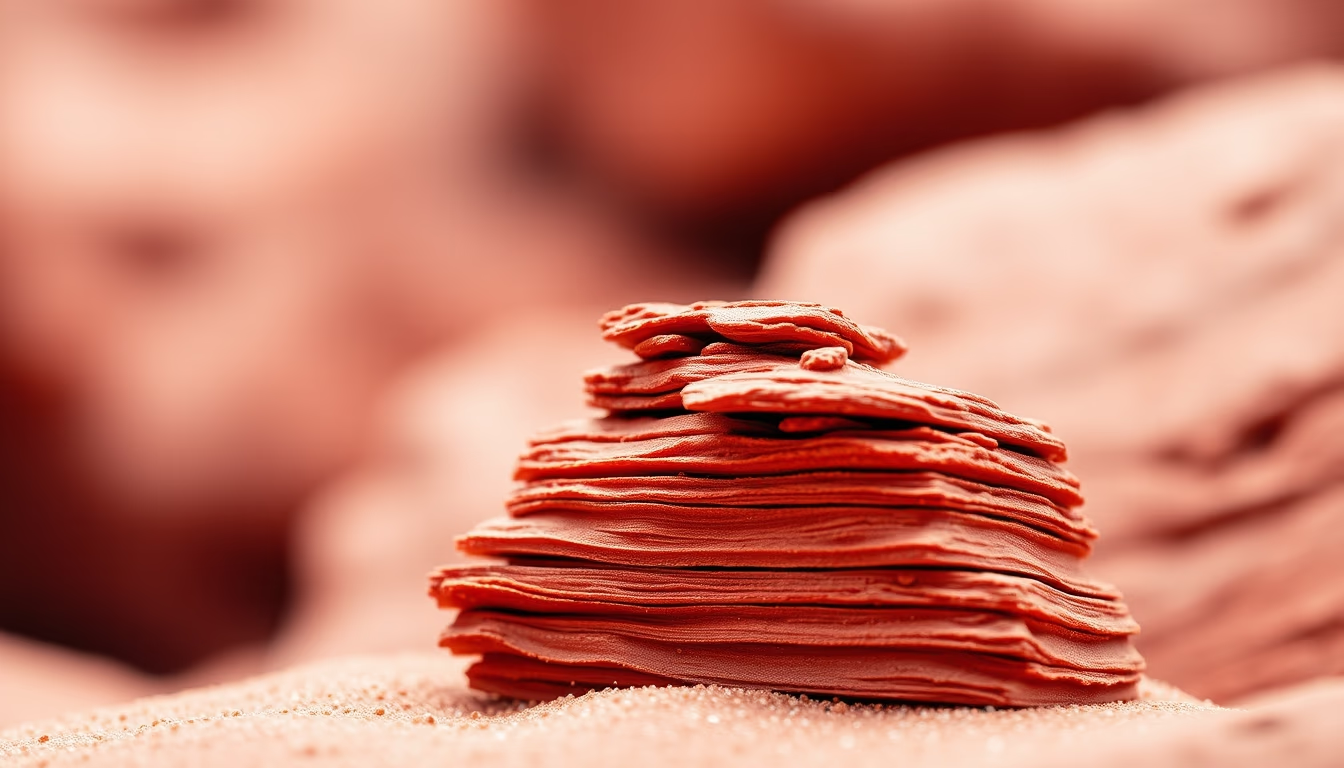
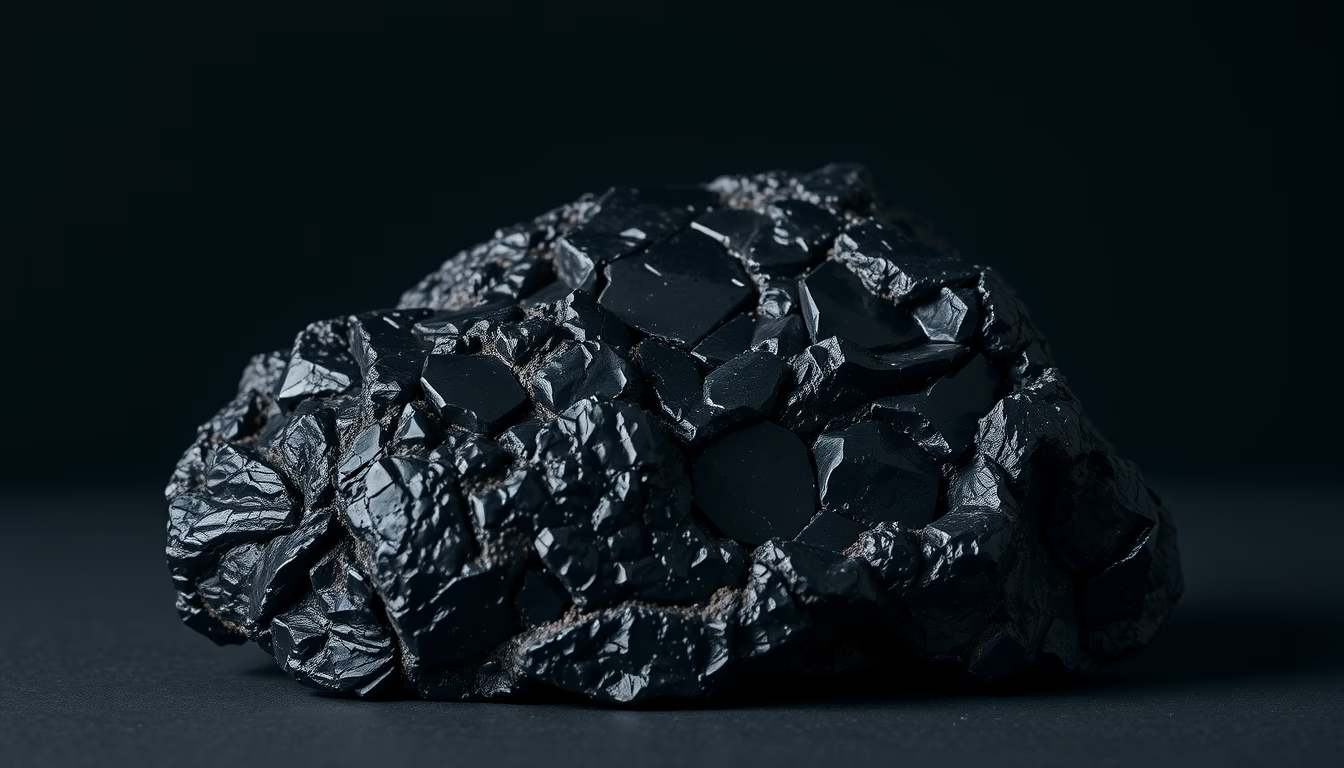
Volcanic rock obsidian
1344×768 · AVIF · CC BY 4.0
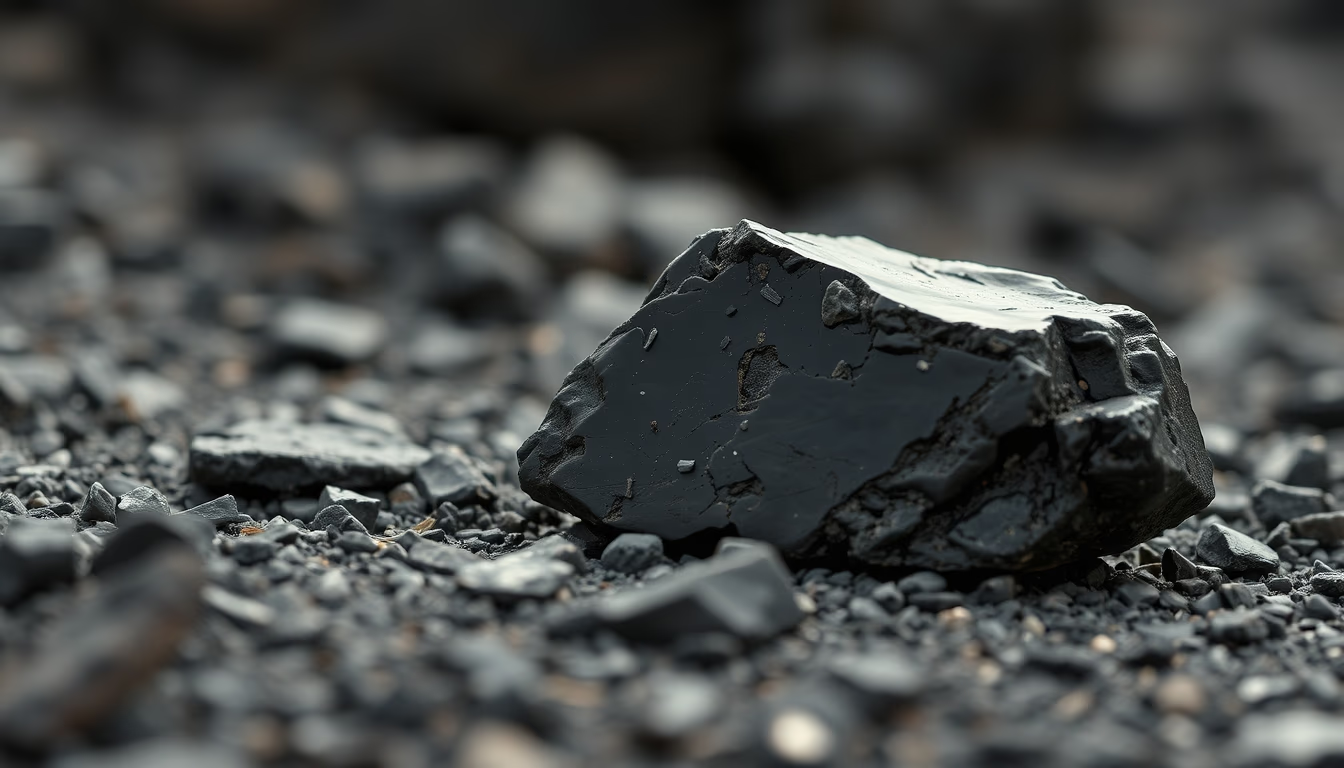
Obsidian is a natural volcanic glass formed by the rapid cooling of lava, known for its smooth and razor-sharp surface.
About this subject
Obsidian is an extrusive igneous rock classified as an amorphous volcanic glass. It forms when silica-rich lava cools so rapidly that there is no time for mineral crystallization. This results in a glassy, homogeneous texture with no crystalline structure. Chemically similar to granite or rhyolite, obsidian lacks crystals, giving it unique properties such as an extremely sharp conchoidal fracture.
Historically, obsidian was widely used by ancient civilizations for cutting tools, arrowheads, and blades. In Mesoamerica, the Aztecs and Mayas crafted knives and mirrors from obsidian. In Neolithic Europe, obsidian flakes served as surgical instruments. Today, obsidian blades are employed in ophthalmic and dermatologic surgeries because their edge is finer than steel scalpels, reducing scarring.
Varieties of obsidian exist based on inclusions and colors. Black obsidian is most common, but mahogany (reddish-brown), green, blue, and rainbow obsidian occur, the last showing iridescence from magnetite inclusions or air bubbles. Snowflake obsidian features white cristobalite crystals. Major world deposits are in Mexico, Iceland, Hungary, Italy (Lipari island), Peru, and the western United States (Oregon, California). In Brazil, minor occurrences exist in Paraná and the Amazon.
Although brittle, obsidian is valued as an ornamental gem in jewelry. Its hardness on Mohs scale is about 5, 5.5, but cutting it is difficult due to chipping. Archaeologists use obsidian hydration dating to date artifacts by measuring the absorbed water layer over time, a technique called obsidian hydration dating.
Frequently Asked Questions
Is obsidian considered a gemstone?
Obsidian is classified as a semiprecious or ornamental stone, not a precious gem like diamond or ruby. It is valued for its glassy beauty and use in jewelry.
Why is obsidian so sharp?
It forms an extremely sharp conchoidal fracture because it lacks crystalline cleavage planes. This allows obsidian flakes to have edges thinner than steel, used even in modern surgeries.
Where can I find obsidian in Brazil?
In Brazil, obsidian occurrences exist in Paraná state (e.g., São Jerônimo da Serra region) and some Amazon areas. However, deposits are less significant than in Mexico or the USA.
Direct URL
https://pub-c7d6a6ea828543ac903a74a341ccb2e1.r2.dev/imagens/volcanic-rock-obsidian-documentary-photography-fresh4.avifHow to credit
Include a visible link back to UtilizAí. Copy one of the snippets below:
<a href="https://xn--utiliza-eza.com/en/midia/imagens/volcanic-rock-obsidian-documentary-photography-fresh4">Volcanic rock obsidian</a> by <a href="https://xn--utiliza-eza.com">UtilizAí</a>, licensed under <a href="https://creativecommons.org/licenses/by/4.0/">CC BY 4.0</a>.
[Volcanic rock obsidian](https://xn--utiliza-eza.com/en/midia/imagens/volcanic-rock-obsidian-documentary-photography-fresh4) by [UtilizAí](https://xn--utiliza-eza.com), CC BY 4.0
License: CC-BY-4.0