Viking longship replica
1344×768 · AVIF · CC BY 4.0
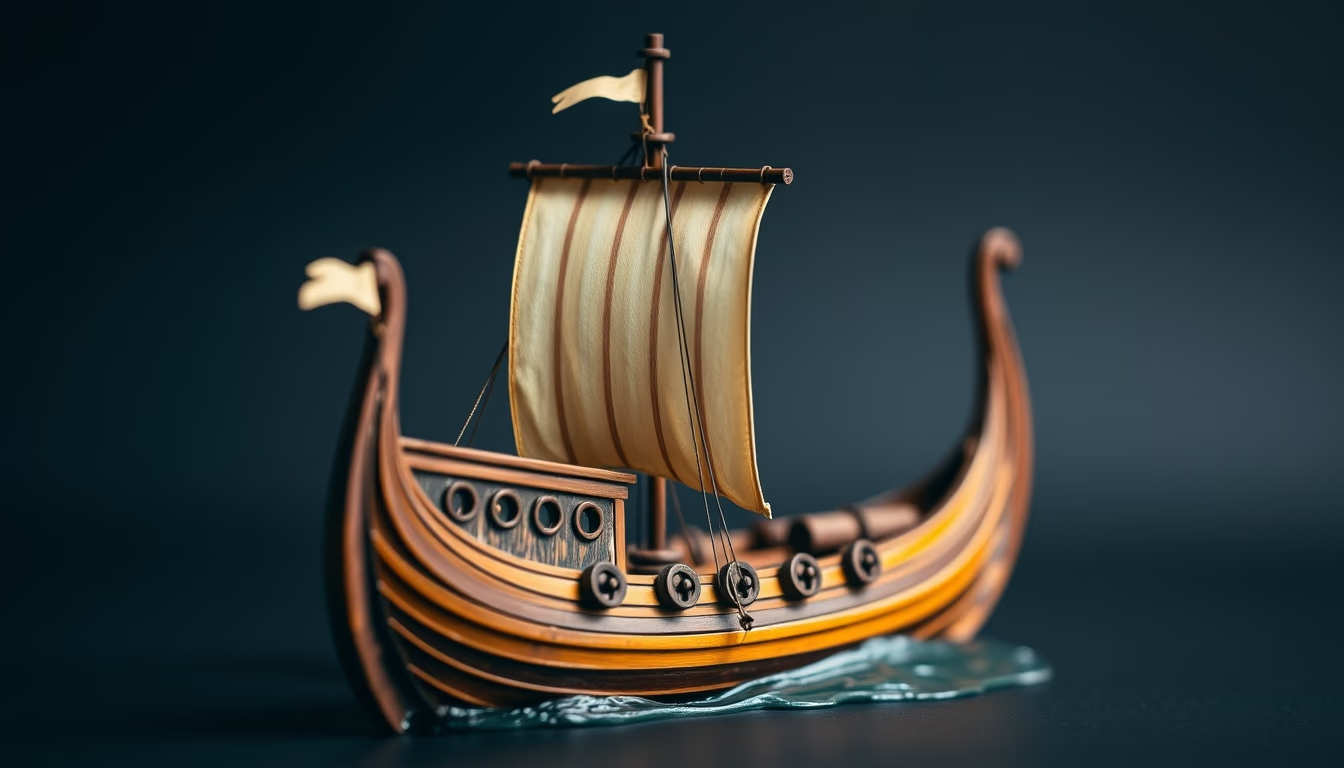
Replicas of Viking longships recreate vessels that dominated northern seas between the 8th and 11th centuries, symbols of naval technology and Norse expansion.
About this subject
Viking longships, or drakkars, were the pinnacle of Norse naval engineering, enabling both ocean and river voyages. Built with overlapping planks (clinker) and a shallow draft, they could navigate shallow waters and be beached directly. Their symmetrical design allowed quick reversal without turning, ideal for surprise raids.
Between the 8th and 11th centuries, these ships enabled Scandinavian expansion from Greenland to the Mediterranean. They served trade, colonization, and plunder. Discoveries of ships like the Gokstad (Norway, 1880) and Oseberg provided detailed evidence of construction and use.
Numerous replicas have been built, such as the Havhingsten fra Glendalough (Denmark) and the Íslendingur (Iceland). They are used for archaeological experiments and to preserve technical knowledge. Replicas follow traditional methods, using oak and oars, and often undertake voyages to test theories about Viking navigation.
Longships measured 20 to 30 meters in length, with crews of up to 60 rowers. A rectangular woolen sail was supplemented by oars. The lack of a deck meant cargo and crew were exposed. Modern studies show they could reach speeds of up to 15 knots.
Frequently Asked Questions
What was a Viking longship?
A Viking longship was a type of naval vessel used from the 8th to the 11th century, built with overlapping planks (clinker technique), a shallow draft, and propelled by oars and a rectangular sail. It was used for trade, colonization, and warfare.
How are replica Viking longships built?
Replicas are built using traditional methods, primarily using oak. The planks are overlapped and fastened with iron rivets, and the hull is caulked with wool or moss soaked in pitch. Famous replicas like the Havhingsten fra Glendalough were made with tools inspired by original finds.
What routes did the Vikings travel?
Vikings sailed from Scandinavia to Greenland, Iceland, and Newfoundland (Vinland) in the west; to the British Isles, France, and Iberia in the south; and to Russia, the Black Sea, and Constantinople in the east. Their raids and trade routes covered much of Europe and the North Atlantic.
Direct URL
https://pub-c7d6a6ea828543ac903a74a341ccb2e1.r2.dev/imagens/viking-longship-replica-tilt-shift-miniature-p9.avifHow to credit
Include a visible link back to UtilizAí. Copy one of the snippets below:
<a href="https://xn--utiliza-eza.com/en/midia/imagens/viking-longship-replica-tilt-shift-miniature-p9">Viking longship replica</a> by <a href="https://xn--utiliza-eza.com">UtilizAí</a>, licensed under <a href="https://creativecommons.org/licenses/by/4.0/">CC BY 4.0</a>.
[Viking longship replica](https://xn--utiliza-eza.com/en/midia/imagens/viking-longship-replica-tilt-shift-miniature-p9) by [UtilizAí](https://xn--utiliza-eza.com), CC BY 4.0
License: CC-BY-4.0