Vesuvius pompeii view
1344×768 · AVIF · CC BY 4.0
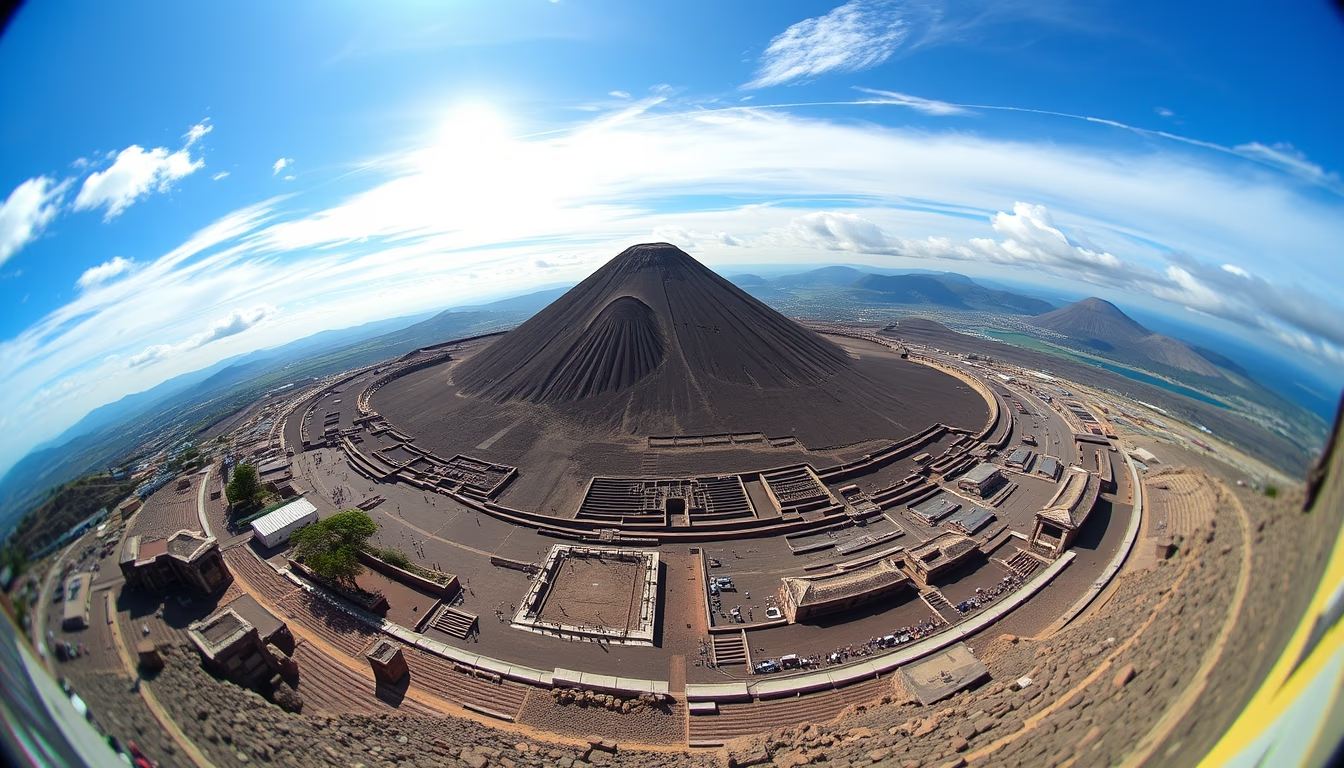
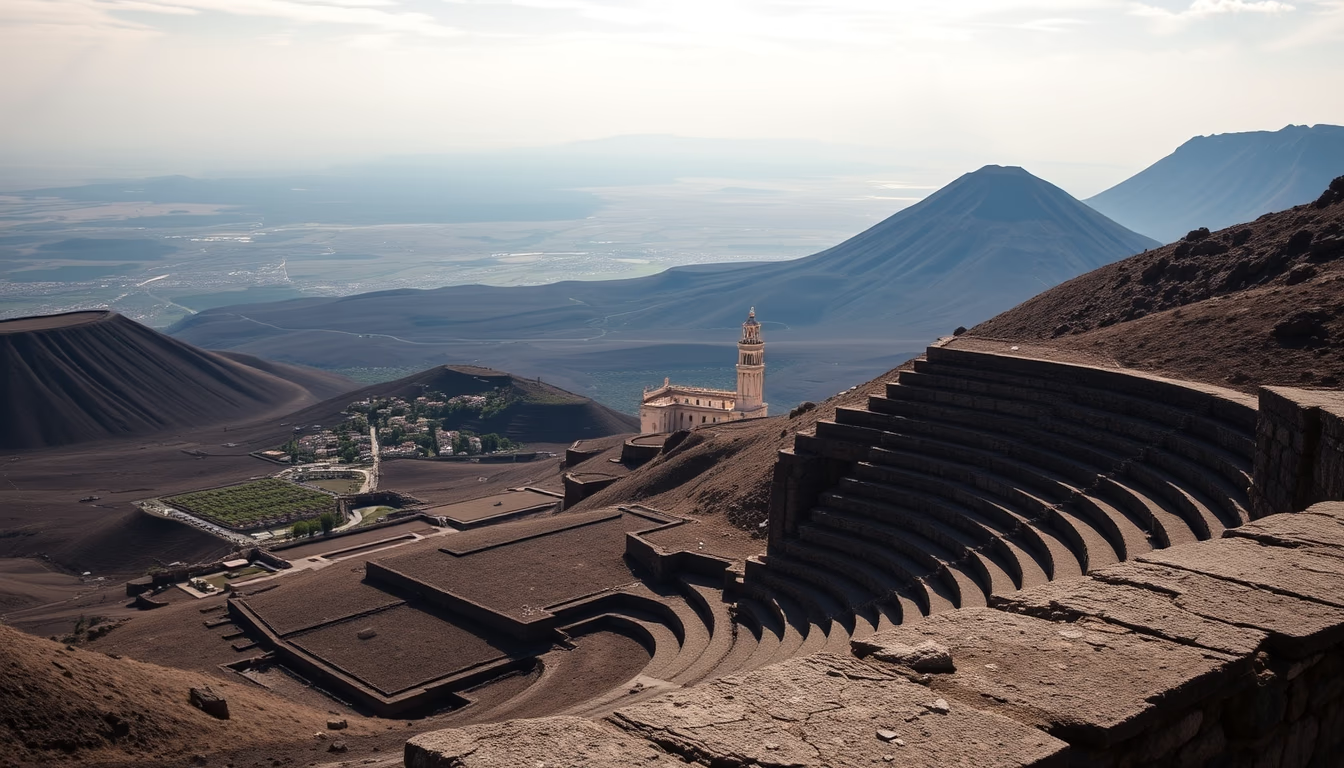
View of Mount Vesuvius overlooking the ruins of Pompeii, one of the world's most dangerous volcanoes, famous for its eruption in 79 AD.
About this subject
Mount Vesuvius is a stratovolcano located on the Gulf of Naples in Italy, and it is the only active volcano on mainland Europe. Its most famous eruption occurred in 79 AD, when a massive cloud of ash, pumice, and toxic gases buried the Roman cities of Pompeii and Herculaneum, preserving them under layers of volcanic material for over 1,500 years. This catastrophic event was documented by Pliny the Younger in letters to the historian Tacitus, providing one of the earliest detailed accounts of a volcanic eruption.
Today, Vesuvius is closely monitored by the Vesuvius Observatory, founded in 1841, which studies its seismic activity and ground deformation. The volcano is considered one of the most dangerous in the world due to the dense population around it, including the city of Naples. Its last major eruption was in 1944, during World War II, and it has been in a resting state since then, but not extinct.
The area around Vesuvius is part of Vesuvius National Park, established in 1995, which protects local biodiversity and offers trails for visitors. From the summit, one can see the gulf, the crater, and the archaeological excavations of Pompeii, a UNESCO World Heritage site. The fish-eye effect in the image broadens this perspective, highlighting the volcano's grandeur over the historic landscape.
Frequently Asked Questions
What is the height of Mount Vesuvius?
Mount Vesuvius is approximately 1,281 meters (4,203 feet) tall, though this height can vary slightly due to changes in the crater after eruptions.
How many people died in the eruption of 79 AD?
It is estimated that about 16,000 people died in the cities of Pompeii, Herculaneum, and surrounding areas during the eruption of 79 AD, although exact numbers are uncertain.
Is Vesuvius still active?
Yes, Vesuvius is an active volcano, although it is currently in a resting state. Its last eruption was in 1944, and it remains constantly monitored due to the risk to the nearby population.
Direct URL
https://pub-c7d6a6ea828543ac903a74a341ccb2e1.r2.dev/imagens/vesuvius-pompeii-view-fish-eye-wide-angle-fresh7.avifHow to credit
Include a visible link back to UtilizAí. Copy one of the snippets below:
<a href="https://xn--utiliza-eza.com/en/midia/imagens/vesuvius-pompeii-view-fish-eye-wide-angle-fresh7">Vesuvius pompeii view</a> by <a href="https://xn--utiliza-eza.com">UtilizAí</a>, licensed under <a href="https://creativecommons.org/licenses/by/4.0/">CC BY 4.0</a>.
[Vesuvius pompeii view](https://xn--utiliza-eza.com/en/midia/imagens/vesuvius-pompeii-view-fish-eye-wide-angle-fresh7) by [UtilizAí](https://xn--utiliza-eza.com), CC BY 4.0
License: CC-BY-4.0