Tugboat working harbor
1344×768 · AVIF · CC BY 4.0
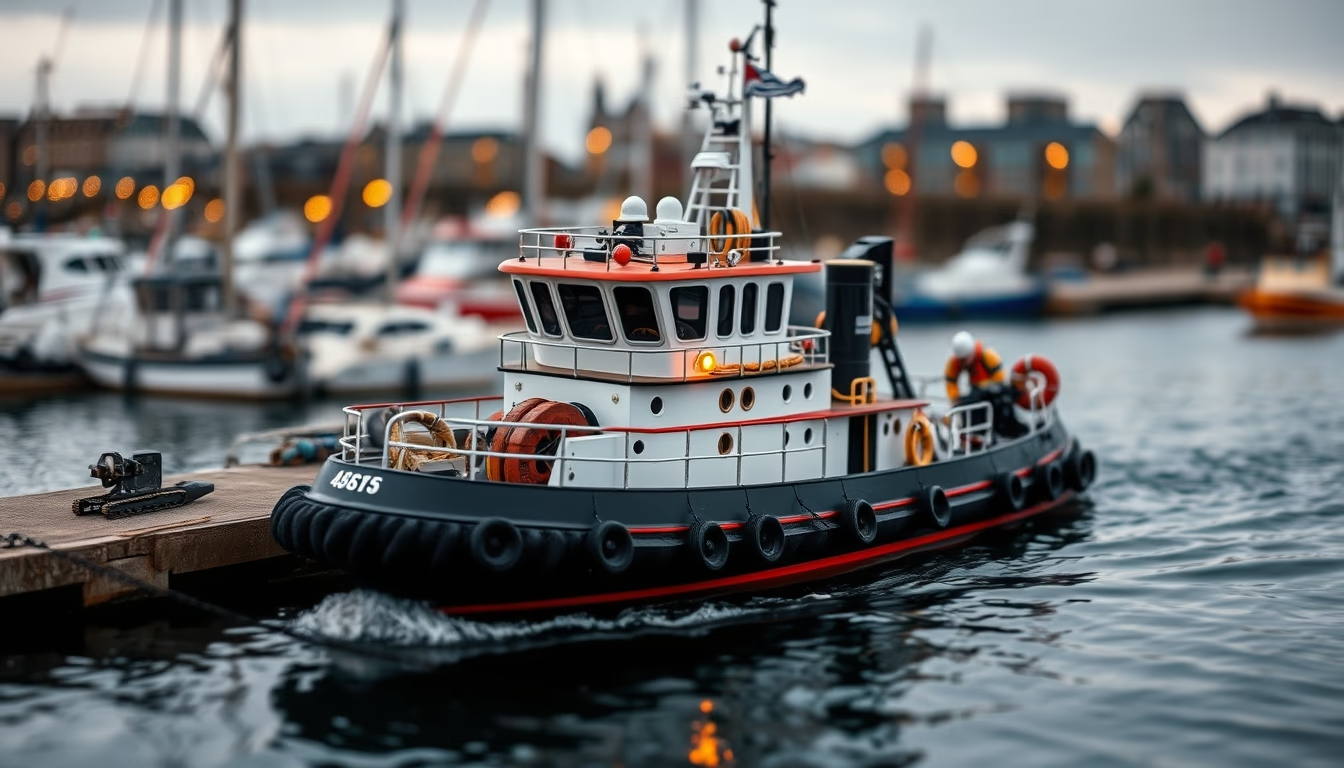
A tugboat at harbor working under a tilt-shift effect that miniaturizes the scene. Discover how these essential vessels maneuver large ships with precision and strength.
About this subject
Tugboats are robust vessels designed to assist larger ships in harbor maneuvers such as docking, undocking, and towing through narrow channels. Unlike other boats, they have extremely powerful engines and advanced propulsion systems like azimuth thrusters, which allow 360-degree rotation on the spot. A tugboat's strength is measured by bollard pull, its static towing capacity, which can exceed 100 tonnes in seagoing models.
In busy ports like Rotterdam, Shanghai, and Santos, tugboats work 24/7 to move cargo ships, tankers, and container vessels. They not only push and pull but also provide power and steering when the main ship loses propulsion. There are harbor tugs, which stay within the port area, and ocean-going tugs that operate in extreme conditions during salvage missions or platform towing.
Historically, the first steam tugs appeared in the 19th century in the United Kingdom, revolutionizing navigation. Today, technology has evolved to diesel-electric and hybrid engines, reducing emissions and noise. Some modern tugs are designed for shallow or icy waters, like those in Canadian ports. Interestingly, annual tugboat competitions such as the International Tugboat Races in the US showcase their agility and speed.
The tilt-shift effect in photography, achieved with specialized lenses or digital editing, creates a shallow depth of field that makes the scene look like a miniature model. This technique highlights the scale and operation of the tugboat, but the true protagonist is the naval engineering that enables these small giants to perform tasks no other vessel can.
Frequently Asked Questions
What is the main function of a tugboat?
Tugboats assist larger ships in harbor maneuvers such as docking, undocking, towing, and positioning in channels. They also perform salvage operations, firefighting, and platform removal.
What is the bollard pull of a tugboat?
Bollard pull is the measure of a tugboat's static pulling force, usually in tonnes. A typical harbor tug has around 50 tonnes of bollard pull, while seagoing models can exceed 100 tonnes.
What are the main types of tugboats?
There are harbor tugs, which operate in ports and channels, and ocean-going tugs used in offshore operations like salvage and platform towing. Also, maneuvering tugs have azimuth thrusters, and push-pull tugs are common.
Direct URL
https://pub-c7d6a6ea828543ac903a74a341ccb2e1.r2.dev/imagens/tugboat-working-harbor-tilt-shift-miniature-p1.avifHow to credit
Include a visible link back to UtilizAí. Copy one of the snippets below:
<a href="https://xn--utiliza-eza.com/en/midia/imagens/tugboat-working-harbor-tilt-shift-miniature-p1">Tugboat working harbor</a> by <a href="https://xn--utiliza-eza.com">UtilizAí</a>, licensed under <a href="https://creativecommons.org/licenses/by/4.0/">CC BY 4.0</a>.
[Tugboat working harbor](https://xn--utiliza-eza.com/en/midia/imagens/tugboat-working-harbor-tilt-shift-miniature-p1) by [UtilizAí](https://xn--utiliza-eza.com), CC BY 4.0
License: CC-BY-4.0