Tilapia tanks indoor
1344×768 · AVIF · CC BY 4.0
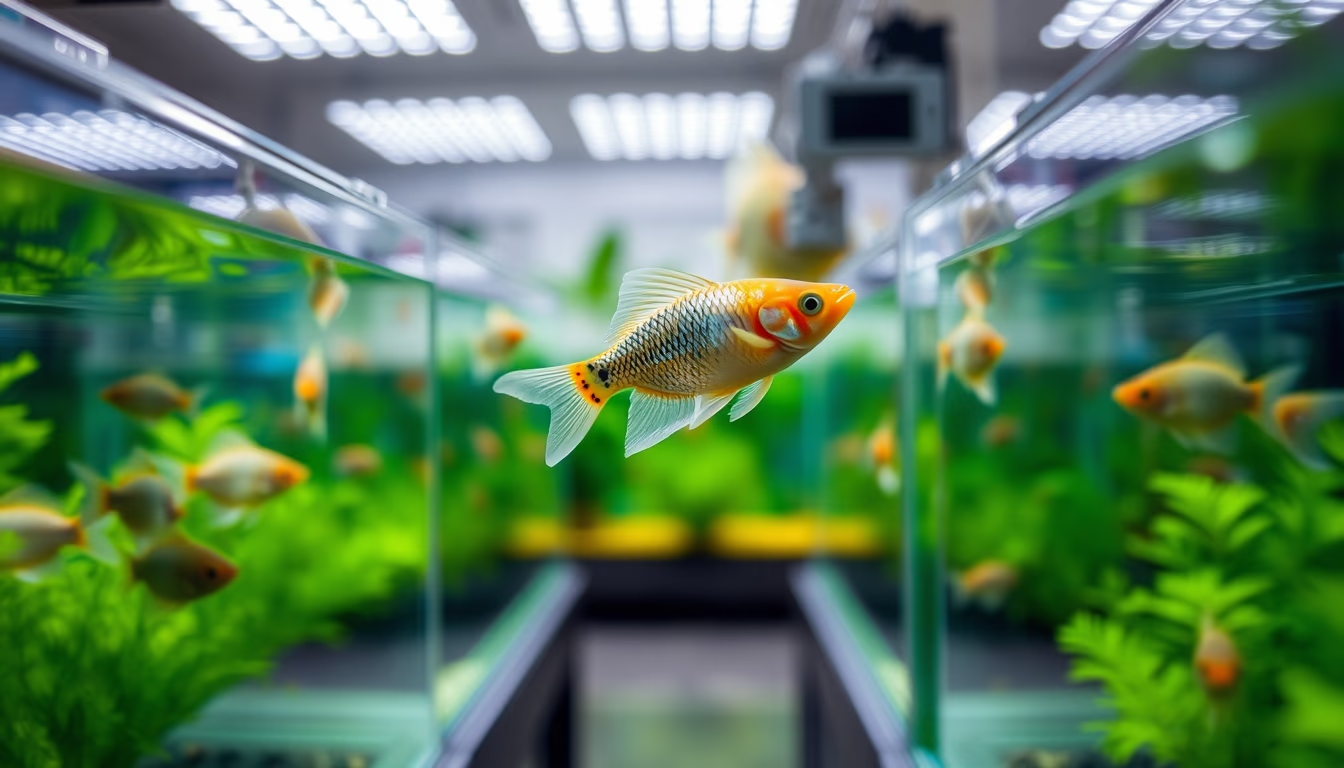
Indoor tilapia tanks represent an intensive aquaculture method, enabling environmental control and high productivity even in urban areas.
About this subject
Tilapia farming in indoor tanks, also known as recirculating aquaculture systems (RAS), is a technique that allows full control of water quality, temperature, and feeding. Unlike ponds or open net cages, indoor systems minimize risks from predators, diseases, and weather fluctuations, resulting in higher survival rates and faster fish growth.
Tilapia (Oreochromis niloticus) is one of the most farmed species globally, with Brazil standing out as a major producer. Indoor cultivation has become especially relevant in urban and peri-urban areas where land availability is limited. Common setups include circular polyethylene or concrete tanks equipped with mechanical and biological filters, aerators, and heat exchangers. Some operations achieve densities exceeding 100 kg/m³ per cycle.
The tilt-shift technique applied to the image gives a miniature perspective, but the reality of indoor aquaculture is robust. Brazil has specific regulations, such as Interministerial Normative Instruction No. 6/2018 for net cage and closed aquaculture systems. Indoor tilapia also supports food security by providing high-quality protein with a lower water and land footprint than traditional livestock.
Interestingly, the first commercial tilapia production in Brazil began in the 1950s in the Northeast, but it was the modernization of recirculation systems from the 2000s onward that expanded indoor farming. Today, states like São Paulo, Paraná, and Santa Catarina lead this approach, with farms using solar energy and automation for remote monitoring.
Frequently Asked Questions
What are the advantages of indoor tanks for tilapia?
Indoor tanks provide complete environmental control, reduced disease risk, higher stocking density, and year-round production regardless of weather.
Is indoor tilapia farming sustainable?
Yes, because it uses less water and land per kilogram of fish, and allows effluent treatment and nutrient recycling.
What is the ideal stocking density for tilapia in indoor tanks?
In well-designed recirculating systems, density can range from 50 to 100 kg/m³, depending on filtration and oxygenation technology.
Direct URL
https://pub-c7d6a6ea828543ac903a74a341ccb2e1.r2.dev/imagens/tilapia-tanks-indoor-tilt-shift-miniature-fresh16.avifHow to credit
Include a visible link back to UtilizAí. Copy one of the snippets below:
<a href="https://xn--utiliza-eza.com/en/midia/imagens/tilapia-tanks-indoor-tilt-shift-miniature-fresh16">Tilapia tanks indoor</a> by <a href="https://xn--utiliza-eza.com">UtilizAí</a>, licensed under <a href="https://creativecommons.org/licenses/by/4.0/">CC BY 4.0</a>.
[Tilapia tanks indoor](https://xn--utiliza-eza.com/en/midia/imagens/tilapia-tanks-indoor-tilt-shift-miniature-fresh16) by [UtilizAí](https://xn--utiliza-eza.com), CC BY 4.0
License: CC-BY-4.0