Tidal energy turbine
1344×768 · AVIF · CC BY 4.0
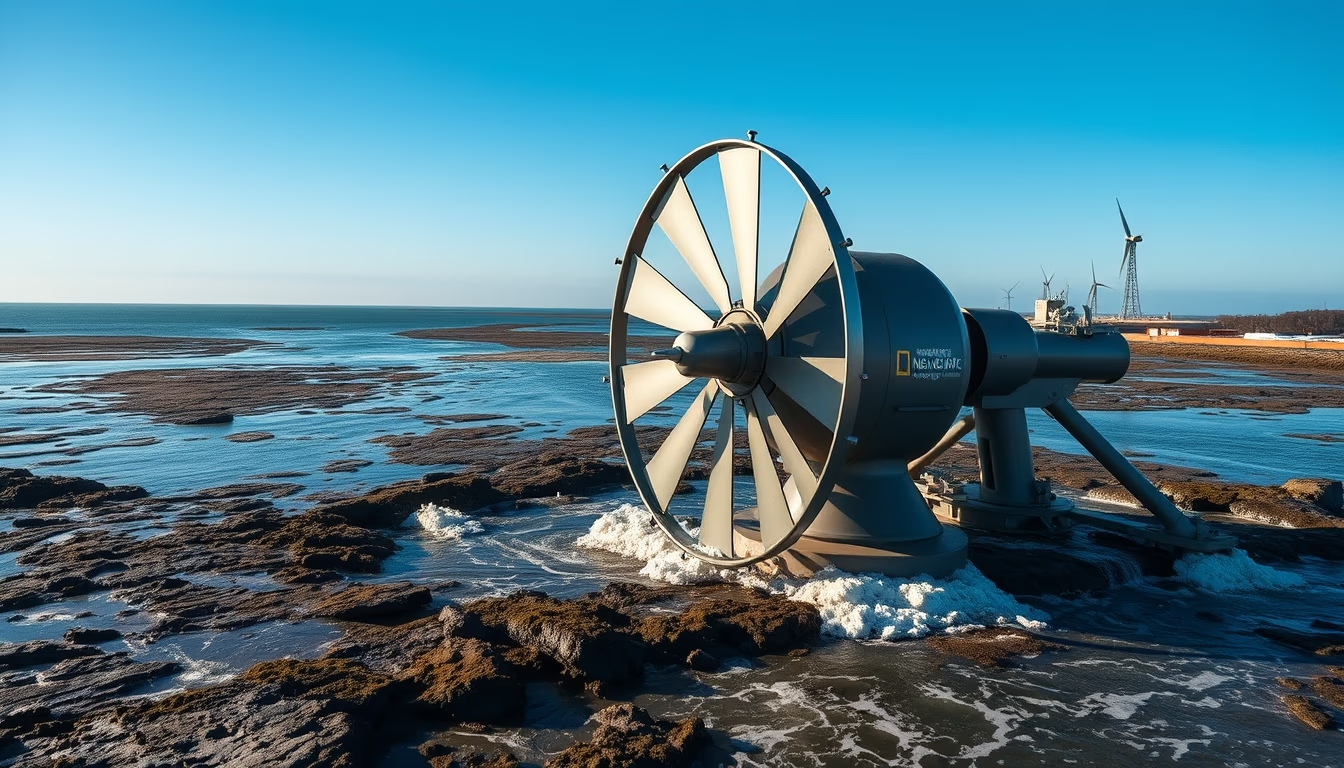
Tidal energy turbines convert the power of ocean currents into clean, predictable electricity.
About this subject
Tidal energy turbines harness currents generated by tides to produce electricity. They work similarly to submerged wind turbines, with blades rotating as water flows past. They are installed on the seafloor in areas with strong currents, such as narrow channels between islands or estuaries. Scotland is a leading hub for this technology, with projects like MeyGen in the Pentland Firth, which has an installed capacity of up to 6 MW. Other examples include the La Rance plant in France, operating since 1966, and the Minas Basin project in Canada.
Unlike solar or wind power, tidal energy is highly predictable, as tides follow known astronomical cycles. This facilitates grid integration. Additionally, submerged turbines do not occupy land space and have low visual impact. However, they face challenges such as corrosion from saltwater, high maintenance costs, and potential interference with marine life. Environmental impact studies aim to minimize risks to fish and mammals, with designs that reduce collisions and noise.
The global potential of tidal energy is enormous but still underexploited. The technical resource is estimated at about 1,200 TWh/year, equivalent to 5% of world electricity consumption. Countries like the United Kingdom, Canada, China, and South Korea invest in research and pilot projects. Free-flow turbines, which do not require dams, are the current focus due to lower ecological impact. With advances in materials and mooring systems, tidal energy could become a significant renewable source in the future.
Frequently Asked Questions
How does a tidal energy turbine work?
A tidal energy turbine works like an underwater windmill. Tidal currents cause the blades to rotate, driving a generator that produces electricity. The electricity is transmitted via submarine cables to the shore.
What are the advantages of tidal energy over other renewables?
The main advantage is predictability: tides are cyclical and known years in advance, unlike wind or sun. Additionally, it has high energy density (water is 800 times denser than air) and low visual impact, as equipment is submerged.
Where are the main tidal energy projects located?
Key projects include MeyGen in Scotland (the world's largest), the La Rance plant in France (operating since 1966), and the Minas Basin project in Canada. Other countries such as South Korea, China, and the USA also have initiatives.
Direct URL
https://pub-c7d6a6ea828543ac903a74a341ccb2e1.r2.dev/imagens/tidal-energy-turbine-national-geographic-style-p5.avifHow to credit
Include a visible link back to UtilizAí. Copy one of the snippets below:
<a href="https://xn--utiliza-eza.com/en/midia/imagens/tidal-energy-turbine-national-geographic-style-p5">Tidal energy turbine</a> by <a href="https://xn--utiliza-eza.com">UtilizAí</a>, licensed under <a href="https://creativecommons.org/licenses/by/4.0/">CC BY 4.0</a>.
[Tidal energy turbine](https://xn--utiliza-eza.com/en/midia/imagens/tidal-energy-turbine-national-geographic-style-p5) by [UtilizAí](https://xn--utiliza-eza.com), CC BY 4.0
License: CC-BY-4.0