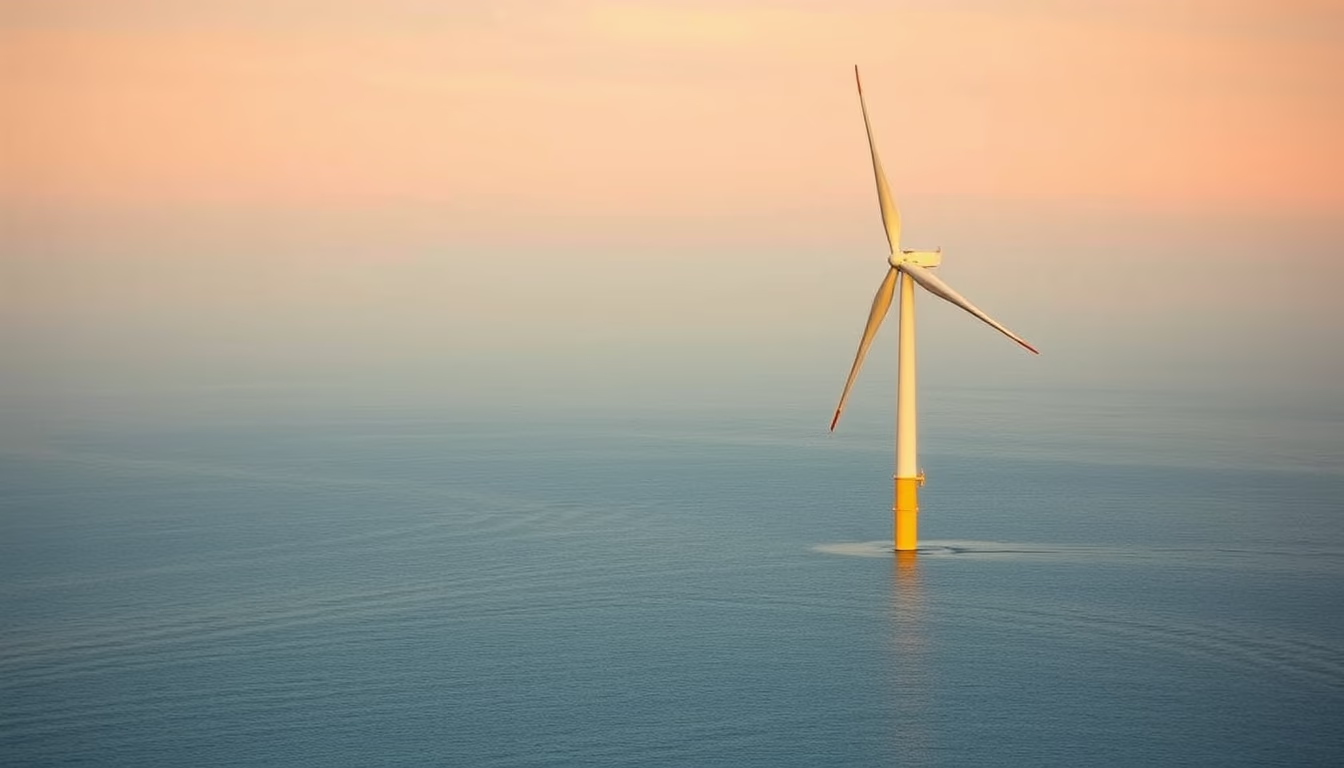
Tidal energy turbine
1344×768 · AVIF · CC BY 4.0
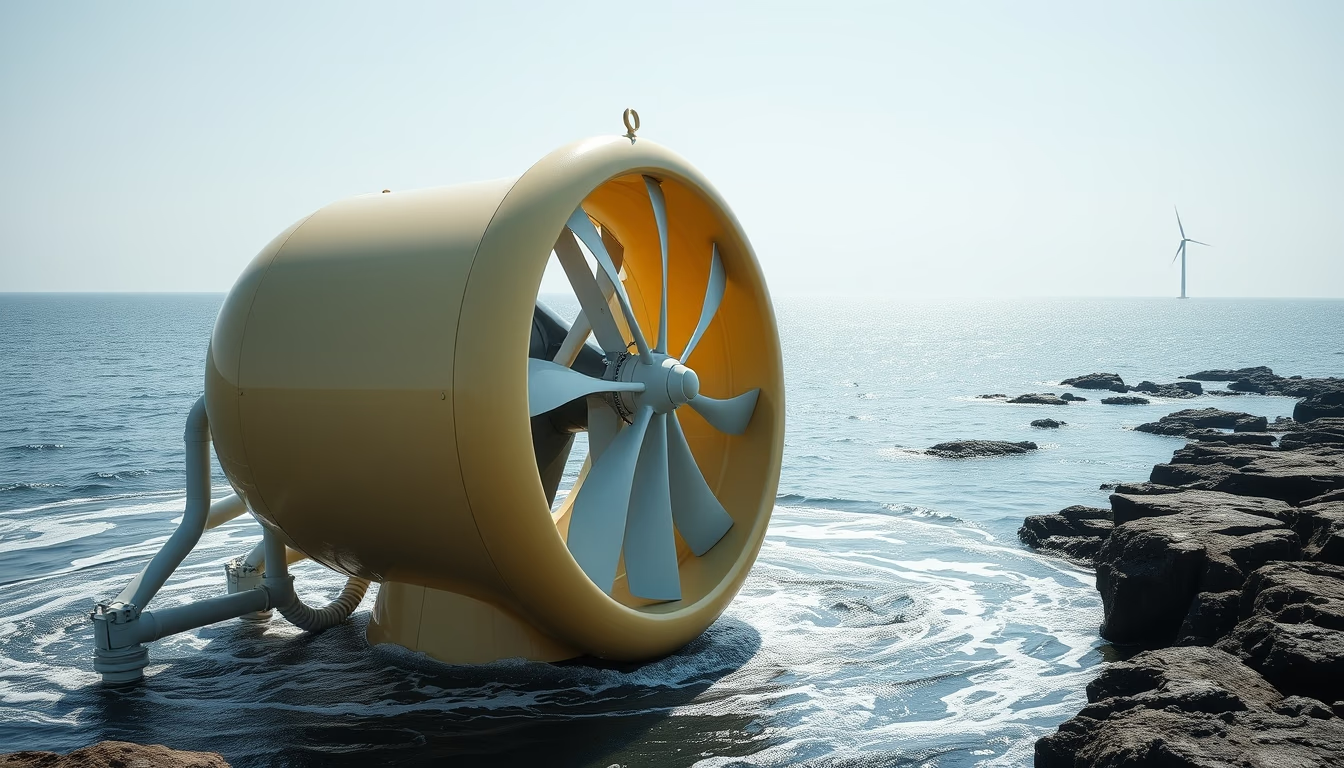
A tidal energy turbine converts the movement of ocean currents into clean and renewable electricity.
About this subject
Tidal energy turbines work similarly to wind turbines but are installed on the seabed or anchored in areas with strong currents. Because water is 832 times denser than air, smaller diameter turbines can generate significant power even at low current speeds. This predictability is a major advantage: unlike solar or wind, tides follow astronomical cycles known years in advance.
Several commercial projects exist worldwide. MeyGen in Scotland is one of the largest, with 6 MW installed capacity and expansion plans to 86 MW. In the Bristol Channel (UK), studies indicate potential to generate up to 5% of the country's electricity. Other countries such as South Korea, Canada, and China also invest in pilot plants. The technology still faces challenges: high installation and maintenance costs, salt corrosion, and potential impacts on marine life, which continue to be studied.
In Brazil, the highest tidal potential is on the northern coast, especially at the mouth of the Amazon River and the coast of Maranhão and Pará, where tidal ranges reach 8 meters. Studies by Eletrobras and local universities have mapped suitable sites, and pilot projects are underway to test small-scale turbines. Although commercial generation has not yet begun, tidal energy could complement Brazil's hydro-rich grid, particularly in isolated coastal areas.
Interestingly, water density allows a 1-meter-diameter turbine to produce the same power as a wind turbine of about 17 meters under moderate winds. This makes tidal turbines compact and less visually intrusive, but requires robust materials and sealing systems against pressure and corrosion. With advances in composite materials and underwater installation techniques, tidal energy costs are expected to decrease in the coming years, making it competitive with other renewables.
Frequently Asked Questions
How does a tidal energy turbine work?
The turbine uses the flow of tidal currents to rotate its blades, which drives a generator to produce electricity. It is similar to a wind turbine but adapted for underwater environments and can be installed on the seabed or attached to floating structures.
What are the main advantages of tidal energy?
The biggest advantage is predictability: tides follow regular cycles, allowing generation planning. Additionally, water's high density allows significant power generation with relatively small turbines, and it is a renewable, low-carbon source.
Where are tidal turbine projects located worldwide?
Notable projects include MeyGen in Scotland (6 MW), the Bristol Channel project in the UK, plants in South Korea (Sihwa Lake) and Canada (Bay of Fundy). In Brazil, studies and pilots are underway on the coast of Maranhão and Pará.
Direct URL
https://pub-c7d6a6ea828543ac903a74a341ccb2e1.r2.dev/imagens/tidal-energy-turbine-minimalist-composition-p0.avifHow to credit
Include a visible link back to UtilizAí. Copy one of the snippets below:
<a href="https://xn--utiliza-eza.com/en/midia/imagens/tidal-energy-turbine-minimalist-composition-p0">Tidal energy turbine</a> by <a href="https://xn--utiliza-eza.com">UtilizAí</a>, licensed under <a href="https://creativecommons.org/licenses/by/4.0/">CC BY 4.0</a>.
[Tidal energy turbine](https://xn--utiliza-eza.com/en/midia/imagens/tidal-energy-turbine-minimalist-composition-p0) by [UtilizAí](https://xn--utiliza-eza.com), CC BY 4.0
License: CC-BY-4.0