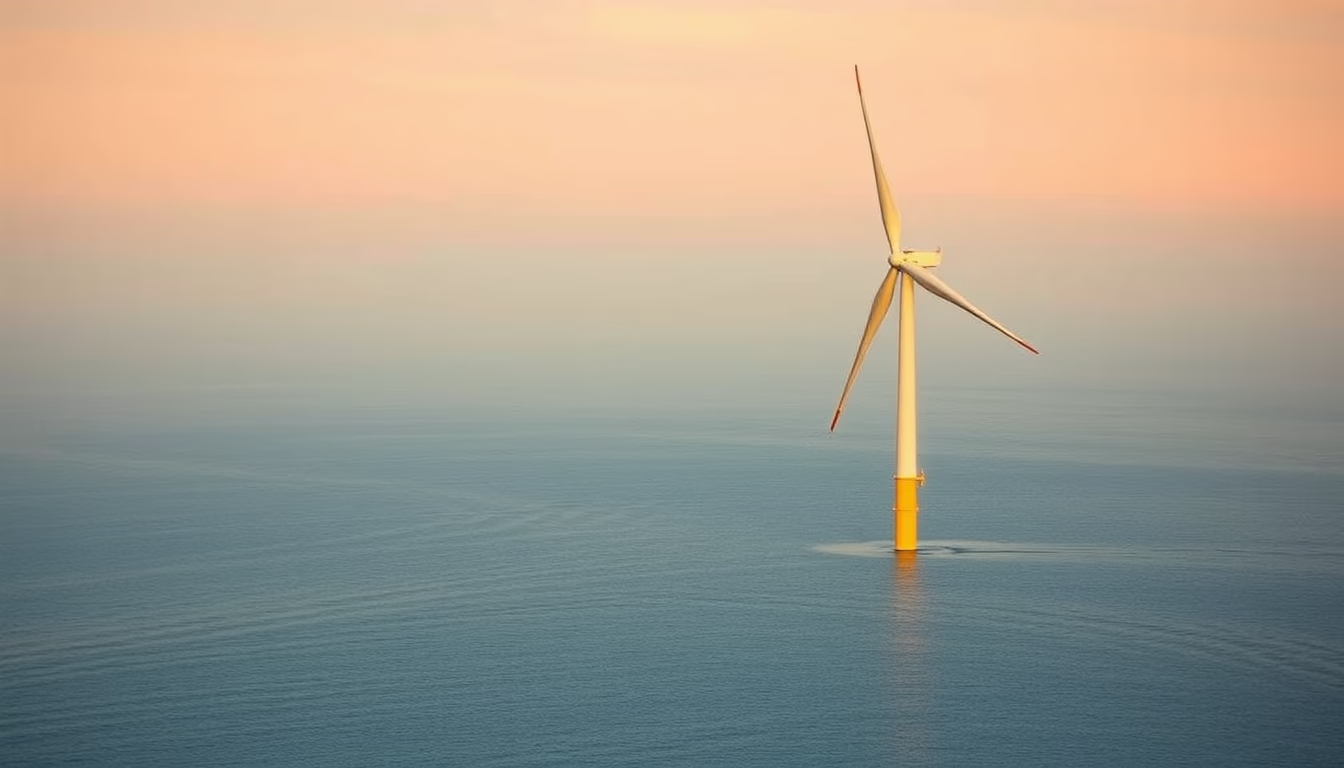
Tidal energy turbine
1344×768 · AVIF · CC BY 4.0

Tidal energy turbines convert ocean current movement into clean and predictable electricity, with potential to power millions of coastal homes.
About this subject
Tidal energy turbines are devices that capture the kinetic energy of tidal currents to generate electricity. They function similarly to underwater wind turbines, but are designed for harsh marine environments with saltwater corrosion and pressure variations. There are two main types: horizontal axis, resembling windmills, and vertical axis, which can be installed on the seabed or floating structures.
Commercial projects already operate in places like the Pentland Firth in Scotland (MeyGen, one of the world's largest), and the Bay of Fundy in Canada, where tides can exceed 15 meters. Countries such as France, South Korea, and China also invest in this technology. The predictability of tides is a crucial advantage over solar and wind, enabling reliable energy planning.
Globally, the largest tidal power plant is the Sihwa Lake Tidal Power Plant in South Korea (254 MW). In the United States, projects are being developed off the coasts of Maine and Alaska. Tidal energy holds potential to supply up to 10% of global electricity demand if fully harnessed.
Environmental impact is relatively low compared to other sources, but it requires marine life studies, especially to avoid collisions with fish and mammals. Advances in materials and remote monitoring are making turbines more efficient and durable, reducing costs over time. Tidal energy remains a promising renewable source for coastal regions.
Frequently Asked Questions
How does a tidal energy turbine work?
It captures the kinetic energy of tidal currents, causing its blades to spin and drive an electric generator. The ebb and flow of tides is predictable and occurs twice daily, ensuring steady power generation.
Where are tidal turbine projects currently operating?
Major projects include MeyGen in Scotland (UK), Bay of Fundy in Canada, La Rance in France (a barrage), Sihwa in South Korea, and several in China. There are no commercial projects in Brazil yet.
What are the environmental impacts of tidal turbines?
Main impacts involve marine life interactions, such as collision risk for fish and mammals, and underwater noise. However, studies show these impacts are generally lower than those from hydroelectric dams or fossil fuel plants.
Direct URL
https://pub-c7d6a6ea828543ac903a74a341ccb2e1.r2.dev/imagens/tidal-energy-turbine-fine-art-photography-p1.avifHow to credit
Include a visible link back to UtilizAí. Copy one of the snippets below:
<a href="https://xn--utiliza-eza.com/en/midia/imagens/tidal-energy-turbine-fine-art-photography-p1">Tidal energy turbine</a> by <a href="https://xn--utiliza-eza.com">UtilizAí</a>, licensed under <a href="https://creativecommons.org/licenses/by/4.0/">CC BY 4.0</a>.
[Tidal energy turbine](https://xn--utiliza-eza.com/en/midia/imagens/tidal-energy-turbine-fine-art-photography-p1) by [UtilizAí](https://xn--utiliza-eza.com), CC BY 4.0
License: CC-BY-4.0