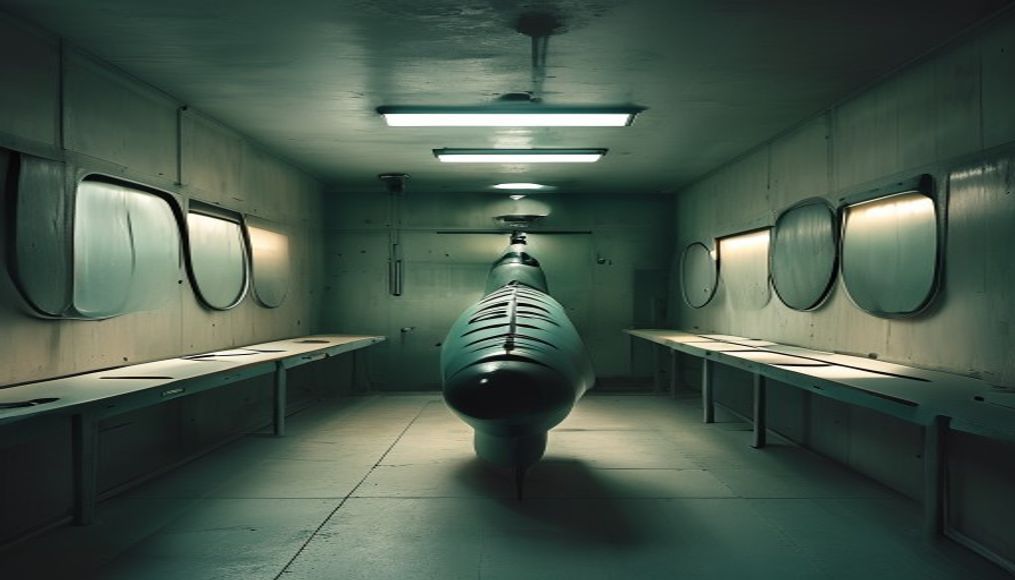
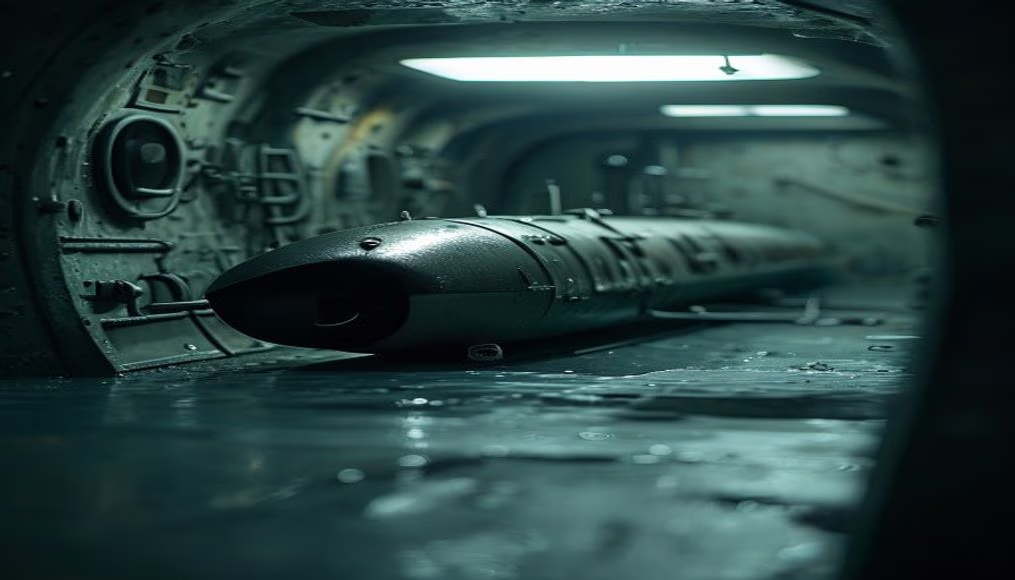
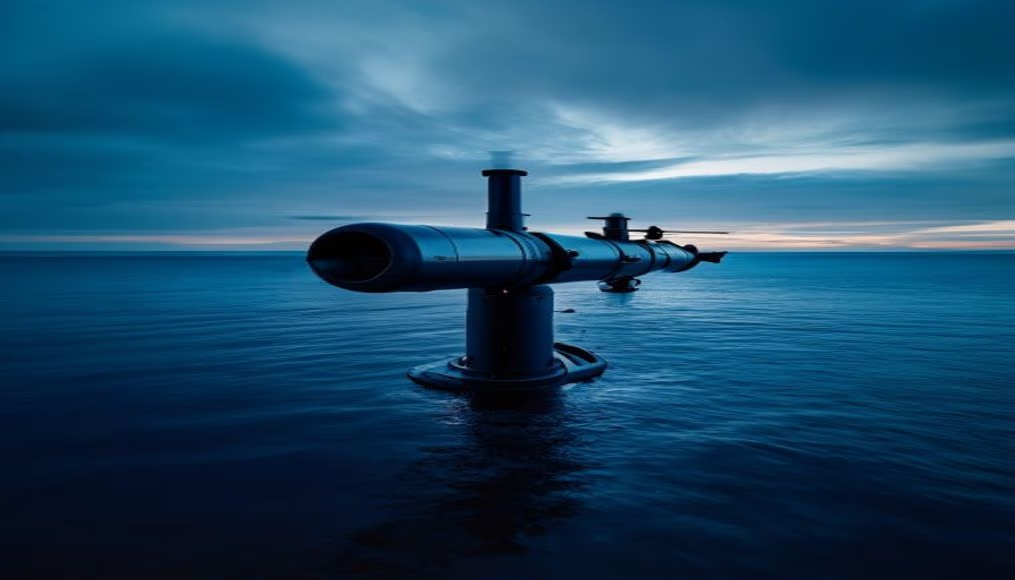
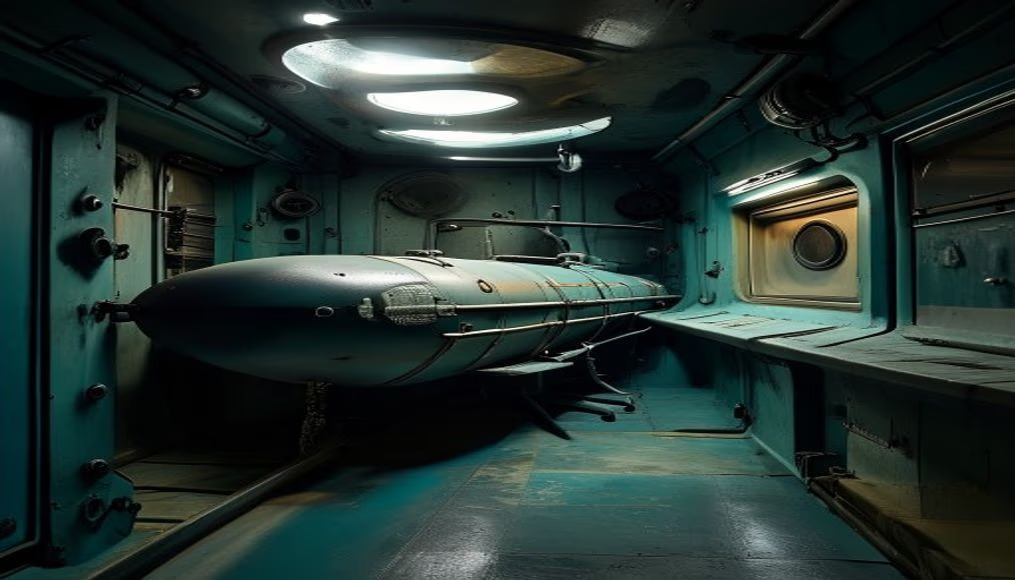
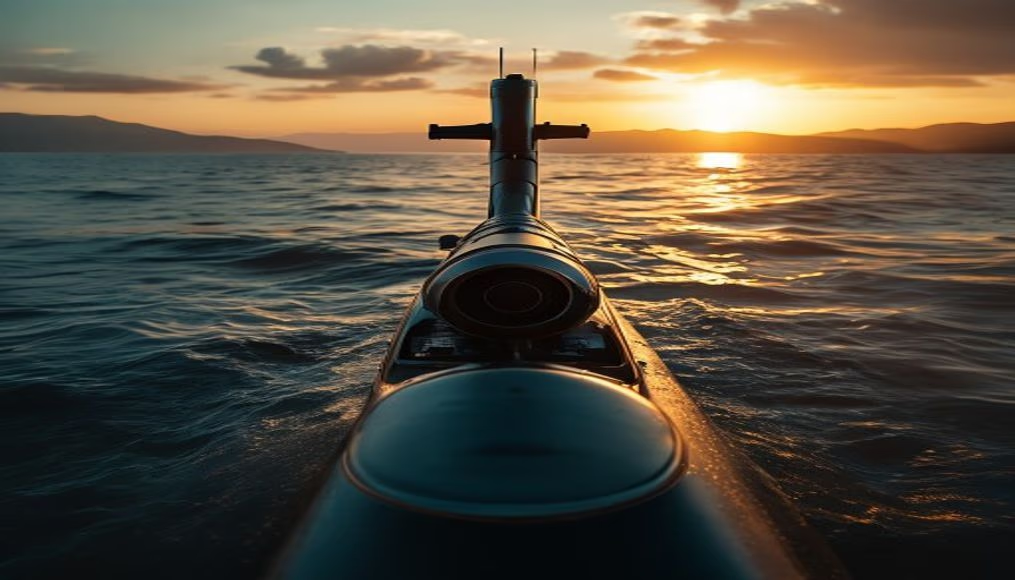
Submarine surfacing ocean
1344×768 · AVIF · CC BY 4.0
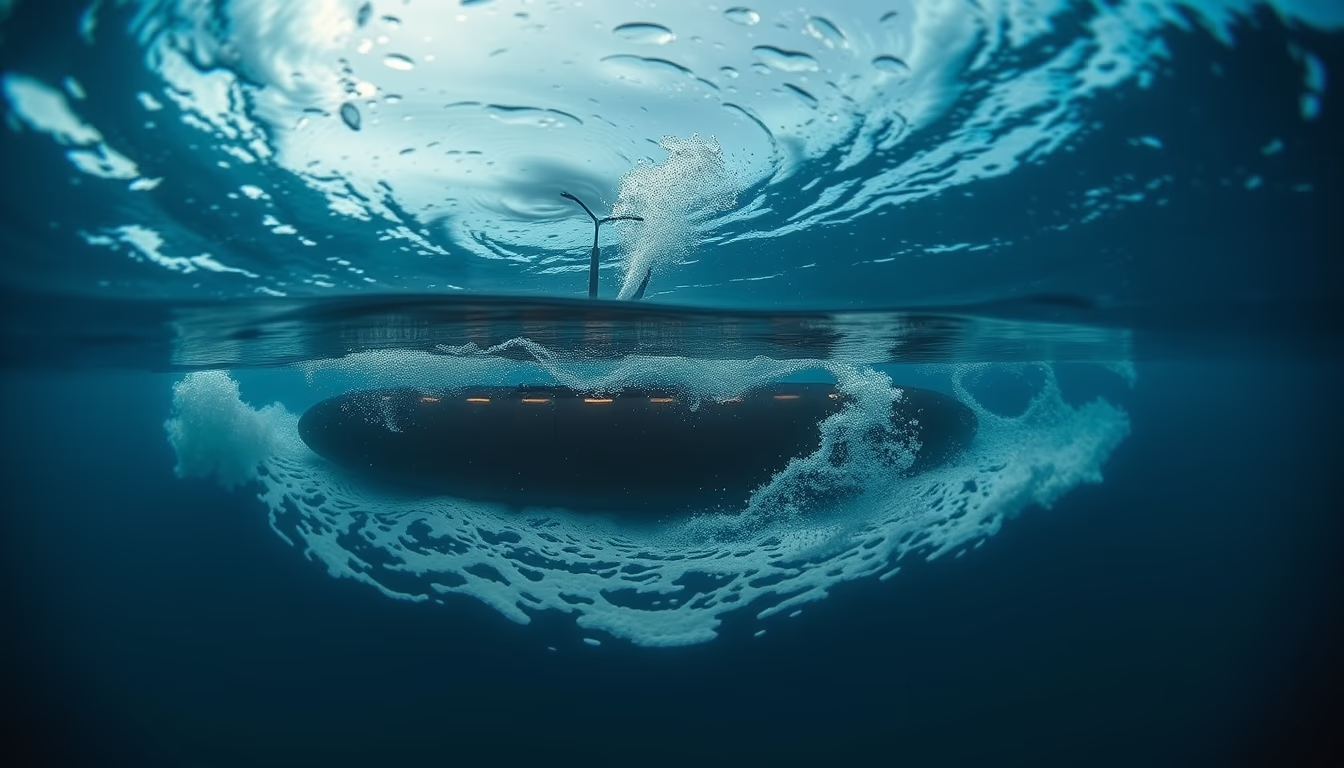
A submarine surfacing in the ocean captured with a fish-eye wide-angle lens, emphasizing the transition between the submerged world and the atmosphere.
About this subject
Submarines are vessels designed to operate below the water's surface, capable of staying submerged for extended periods. The surfacing maneuver is a critical procedure involving precise control of ballast tanks to adjust buoyancy. During ascent, the submarine gradually reduces depth using depth rudders and pumps to expel water from tanks. Upon reaching the surface, hatches are opened to allow ventilation and external communication.
The fish-eye lens used in this image distorts perspective, curving the horizon and expanding the field of view. This photographic technique is common in naval documentation to capture the vastness of the ocean and the vessel's imposing presence. Military submarines, such as Brazil's Tupi or Riachuelo classes, frequently conduct surface training off the Brazilian coast. The South Atlantic region is strategically important for national defense, hosting naval bases like Arraial do Cabo (RJ) and Ilha da Madeira (RJ).
Beyond military use, submarines play key roles in oceanographic research. Remotely operated vehicles (ROVs) and scientific manned submersibles, like Japan's Shinkai 6500, explore abyssal trenches. Brazil has the research submarine 'Almirante Saldanha', used for studies of marine biodiversity and submarine geology. Surfacing in this context is vital for sample collection and data transfer.
The presence of waves and reflected light on the surface creates contrast with the dark hull of the submarine, highlighting its silhouette. In rough sea conditions, surfacing requires extra care to avoid hull damage. Nuclear submarines, such as those of the U.S. Navy, can remain submerged for months, but surfacing is necessary for replenishment and crew rotation. The image captures precisely this moment of connection between two worlds the deep ocean and Earth's atmosphere.
Frequently Asked Questions
Why do submarines need to surface?
To refresh internal air, recharge batteries (in conventional submarines), establish radio communication via antennas, perform minor external repairs, or allow crew and supply changes.
What is a 'snorkel' on submarines?
It is a retractable tube used by conventional submarines to intake air for diesel engines while staying submerged at periscope depth. It allows battery recharging without fully surfacing.
How does a fish-eye lens alter perception of the image?
It distorts straight lines, creating a curved effect that widens the field of view. This makes the submarine appear even more imposing and the ocean more vast, ideal for capturing the scene's magnitude.
Direct URL
https://pub-c7d6a6ea828543ac903a74a341ccb2e1.r2.dev/imagens/submarine-surfacing-ocean-fish-eye-wide-angle-p12.avifHow to credit
Include a visible link back to UtilizAí. Copy one of the snippets below:
<a href="https://xn--utiliza-eza.com/en/midia/imagens/submarine-surfacing-ocean-fish-eye-wide-angle-p12">Submarine surfacing ocean</a> by <a href="https://xn--utiliza-eza.com">UtilizAí</a>, licensed under <a href="https://creativecommons.org/licenses/by/4.0/">CC BY 4.0</a>.
[Submarine surfacing ocean](https://xn--utiliza-eza.com/en/midia/imagens/submarine-surfacing-ocean-fish-eye-wide-angle-p12) by [UtilizAí](https://xn--utiliza-eza.com), CC BY 4.0
License: CC-BY-4.0