Speedboat racing wave
1344×768 · AVIF · CC BY 4.0
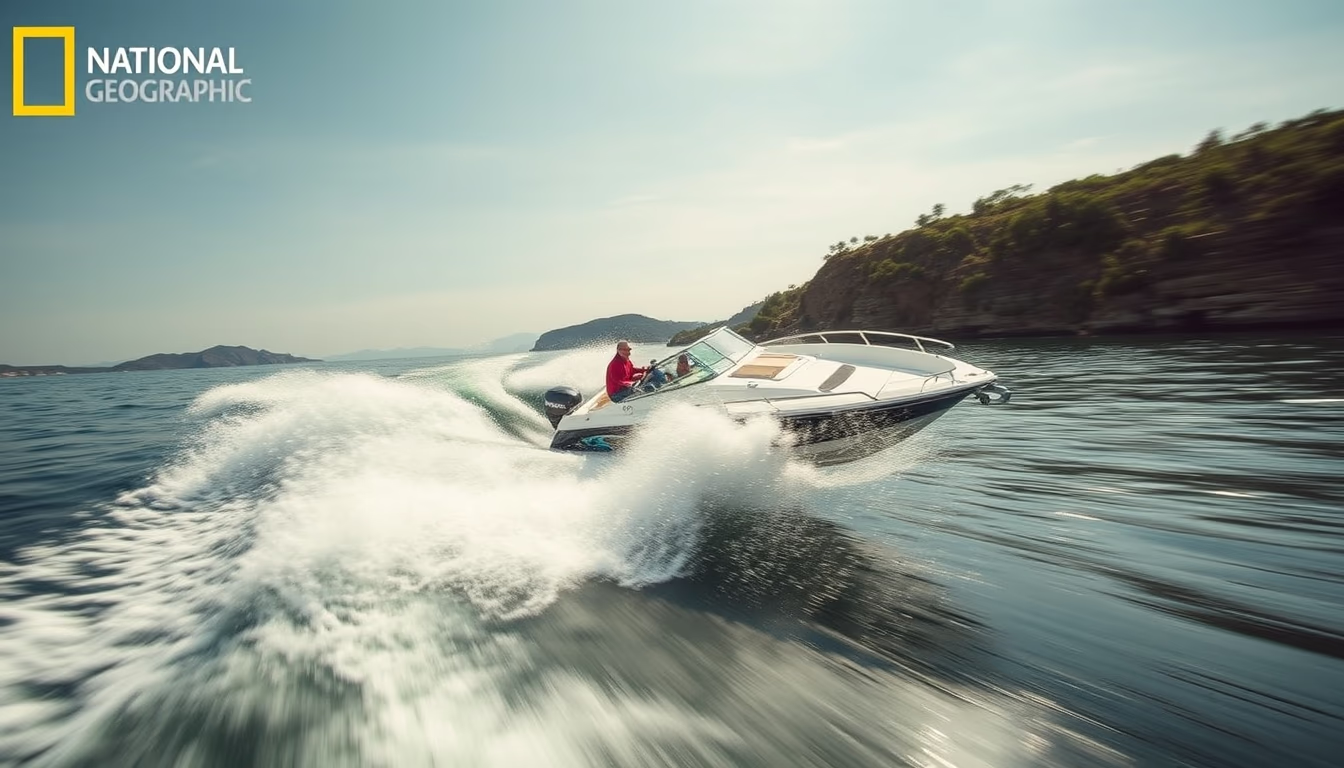
Speedboat racing creates powerful waves that challenge pilots and impact the aquatic environment.
About this subject
Speedboat racing is a high-speed water sport involving powerful motorboats that can exceed 200 km/h, generating significant waves as they slice through the water. These waves, called wakes, are formed by hull displacement and engine thrust, creating a turbulent trail that can last for minutes after the boat passes. The wave dynamics are critical for performance and safety, as pilots must adjust their body position and steering angle to minimize drag and maintain stability at high speeds.
The shape of the wave affects the boat's hydrodynamics, potentially causing loss of grip or capsizing if not controlled. Hull designs are optimized to cut through water efficiently, reducing lateral wave formation. Beyond sport, speedboat waves have environmental impacts. In shallow waters or sensitive ecosystems like mangroves and fish breeding areas, turbulence can erode banks, suspend sediments, and disturb aquatic life. Consequently, many competitions enforce speed limits near coasts or protected zones. National Geographic, known for documenting natural phenomena and extreme sports, often highlights the intersection of human power and natural forces.
Interestingly, a speedboat's wave pattern can reveal hull type and speed. In calm water, the wake forms a characteristic angle of about 19.5 degrees relative to the boat's direction, known as the Kelvin angle. This classic bow and stern wave phenomenon is studied in hydrodynamics. Speedboat racing series, such as F1 H2O, take place in locations like Dubai, Portugal, and Brazil, where climatic and geographical conditions provide challenging settings.
Frequently Asked Questions
What is the average speed of a racing speedboat?
Racing speedboats can exceed 200 km/h, with high-performance models reaching 250 km/h depending on the category and water conditions.
How do speedboat waves affect the environment?
The waves can cause bank erosion, sediment suspension, and disturbance of aquatic habitats, especially in shallow waters and sensitive ecosystems like mangroves.
What is the Kelvin angle in boat wakes?
The Kelvin angle is the approximately 19.5-degree angle formed by a boat's wake relative to its direction of motion, a classic pattern studied in hydrodynamics.
Direct URL
https://pub-c7d6a6ea828543ac903a74a341ccb2e1.r2.dev/imagens/speedboat-racing-wave-national-geographic-style-p8.avifHow to credit
Include a visible link back to UtilizAí. Copy one of the snippets below:
<a href="https://xn--utiliza-eza.com/en/midia/imagens/speedboat-racing-wave-national-geographic-style-p8">Speedboat racing wave</a> by <a href="https://xn--utiliza-eza.com">UtilizAí</a>, licensed under <a href="https://creativecommons.org/licenses/by/4.0/">CC BY 4.0</a>.
[Speedboat racing wave](https://xn--utiliza-eza.com/en/midia/imagens/speedboat-racing-wave-national-geographic-style-p8) by [UtilizAí](https://xn--utiliza-eza.com), CC BY 4.0
License: CC-BY-4.0