Spectrophotometer cuvettes
1344×768 · AVIF · CC BY 4.0

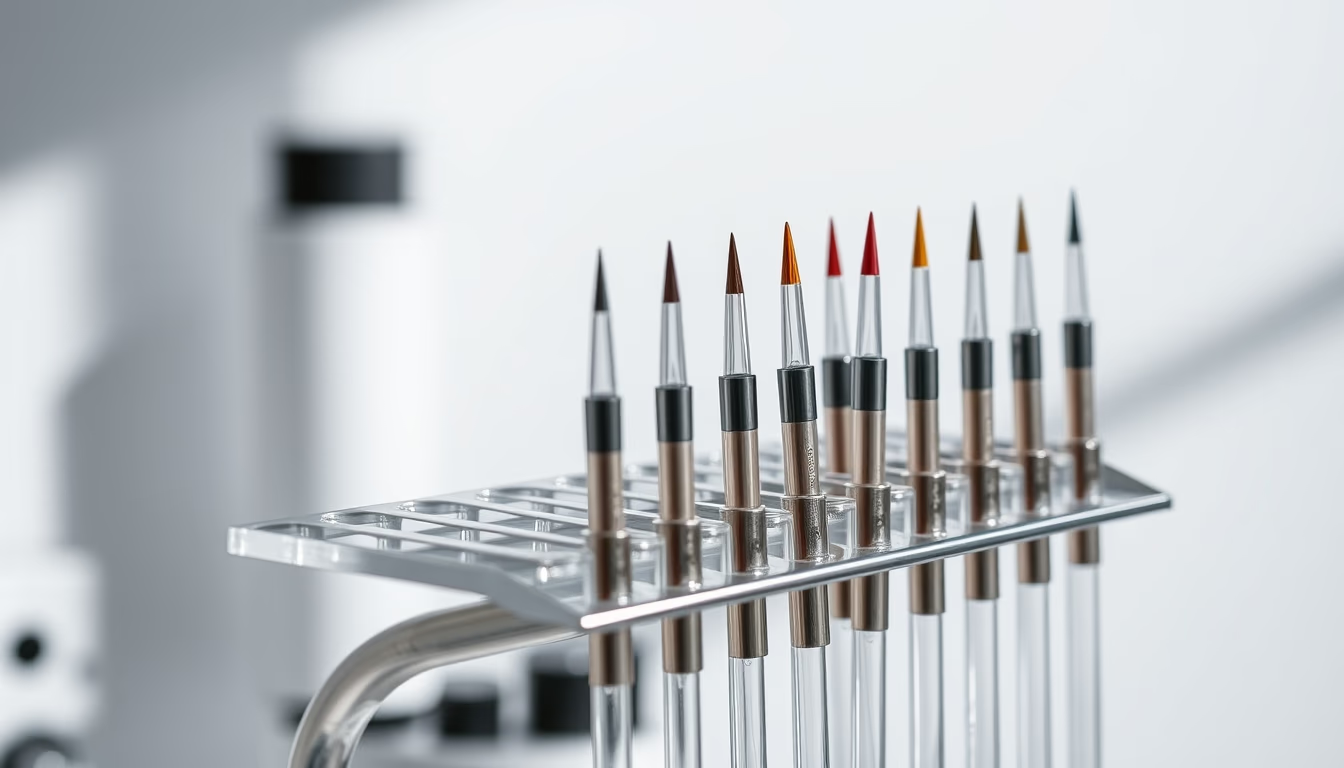
Cuvettes are transparent containers used in spectrophotometry to measure absorbance or transmittance of liquid samples at specific wavelengths.
About this subject
Cuvettes are essential components in spectrophotometers, instruments that analyze the interaction of light with matter. Typically made of glass, quartz, or plastic, their choice depends on the wavelength range: glass for visible light, quartz for ultraviolet (below 350 nm), and disposable plastic for low-cost routines. The standard optical path length is 1 cm, but variations exist for microvolumes and continuous flow.
Optical transparency is crucial; any scratch or dirt can skew results. Therefore, cuvettes are handled with gloves and cleaned before use. In biochemistry labs, polystyrene cuvettes are common for protein assays (Bradford method), while quartz cuvettes are indispensable for nucleic acids (absorbance at 260 nm).
The history of cuvettes dates back to the first spectrophotometers in the early 20th century, such as the Beckman DU model from 1941. Since then, design evolved to include thermostatted cuvettes for enzyme kinetics and flow-through cuvettes for liquid chromatography. Measurement precision relies on the optical quality of the cuvette, with fused quartz cuvettes offering >80% transmission even in the deep UV.
Interestingly, the term “cuvette” comes from French, meaning “small vat”. Today, specialized cuvettes exist for fluorescence, with opaque walls to eliminate stray light, and cuvettes for infrared spectroscopy with salt windows. The standardized square shape and 10 mm path length are defined by norms such as ISO 1346.
Frequently Asked Questions
What is the difference between quartz and glass cuvettes?
Quartz cuvettes are used for ultraviolet measurements (below 350 nm) because ordinary glass absorbs UV. Fused quartz transmits UV efficiently, making it essential for DNA and protein analysis.
Can I reuse disposable plastic cuvettes?
Generally no, as disposable plastic can degrade with solvents and develop micro-scratches that affect accuracy. Also, cross-contamination is hard to eliminate. Use glass or quartz cuvettes for reuse.
How to properly clean cuvettes?
Wash with distilled water and mild detergent, rinse thoroughly, and air dry or use clean air stream. Avoid alcohol or acetone on plastic cuvettes. For quartz, dilute nitric acid can be used to remove proteins.
Direct URL
https://pub-c7d6a6ea828543ac903a74a341ccb2e1.r2.dev/imagens/spectrophotometer-cuvettes-film-grain-authentic-fresh0.avifHow to credit
Include a visible link back to UtilizAí. Copy one of the snippets below:
<a href="https://xn--utiliza-eza.com/en/midia/imagens/spectrophotometer-cuvettes-film-grain-authentic-fresh0">Spectrophotometer cuvettes</a> by <a href="https://xn--utiliza-eza.com">UtilizAí</a>, licensed under <a href="https://creativecommons.org/licenses/by/4.0/">CC BY 4.0</a>.
[Spectrophotometer cuvettes](https://xn--utiliza-eza.com/en/midia/imagens/spectrophotometer-cuvettes-film-grain-authentic-fresh0) by [UtilizAí](https://xn--utiliza-eza.com), CC BY 4.0
License: CC-BY-4.0