Spectrophotometer cuvettes
1344×768 · AVIF · CC BY 4.0
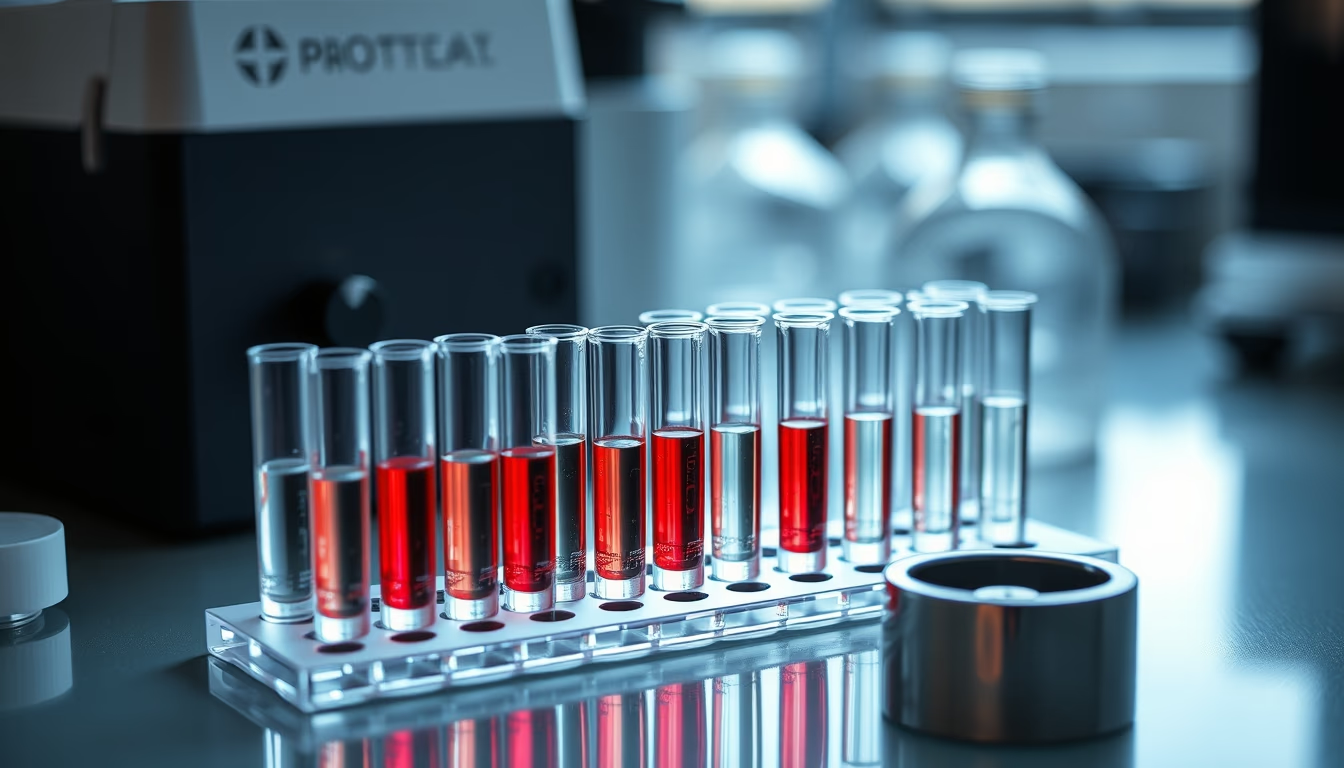
Spectrophotometer cuvettes are high-precision containers used to measure the absorbance of liquid samples in chemical and biological analyses.
About this subject
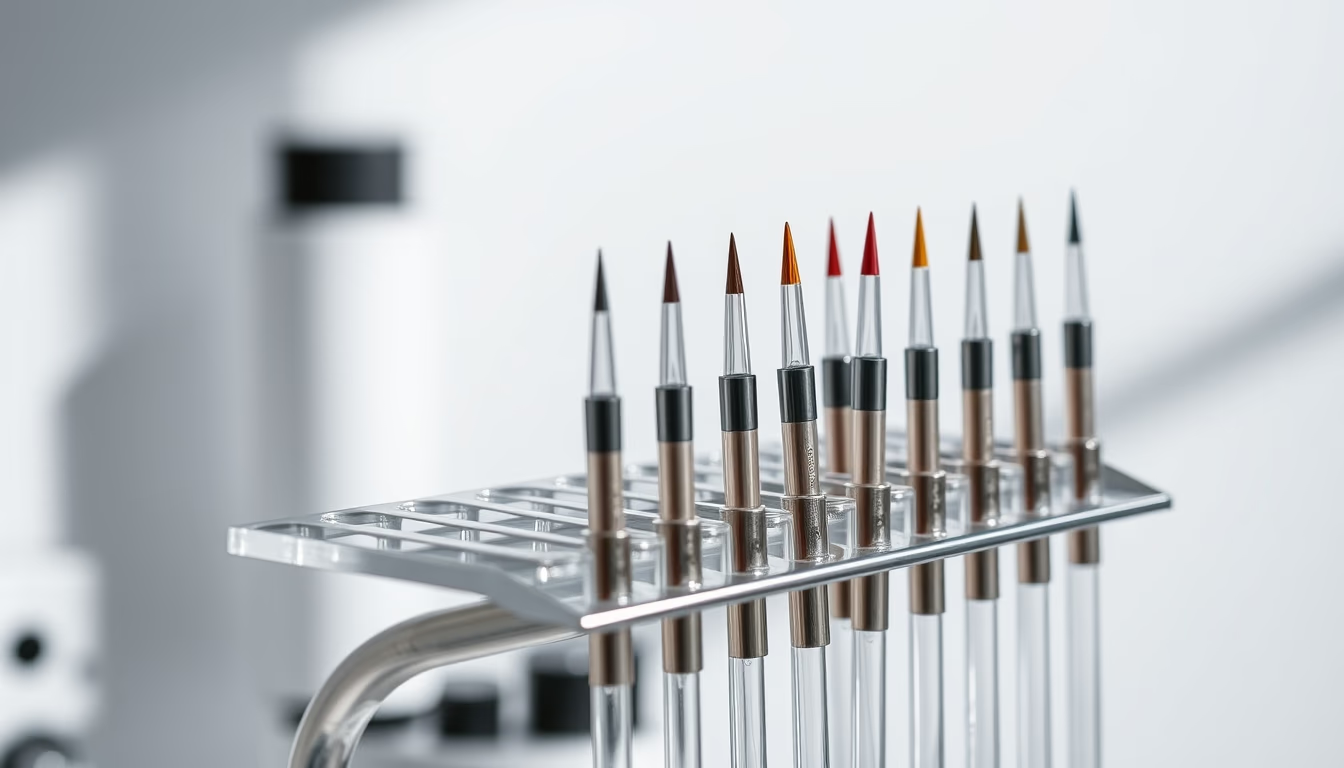
Spectrophotometer cuvettes, also known as cells, are essential accessories in chemistry, biochemistry, and molecular biology laboratories. Made from materials such as quartz, glass, or optical polymers (polystyrene, polymethyl methacrylate), each type serves specific wavelength ranges. Quartz cuvettes are transparent in the ultraviolet (UV) region, while glass cuvettes work well in the visible (VIS) range and plastic cuvettes are disposable for quick assays.
Measurement accuracy depends directly on cuvette quality. The internal distance between parallel faces, the optical path length, is standardized at 10 mm in most spectrophotometers, but versions with 5 mm, 2 mm, or even 1 mm exist for highly concentrated or absorbing samples. Scratches, stains, or dirt on the optical faces cause light scattering and result errors; therefore, cleaning with appropriate solvents is crucial.
In a spectrophotometer, the cuvette is placed in the monochromatic light beam. Light passes through the sample and is partially absorbed according to the Beer-Lambert law, a linear relationship between concentration and absorbance. To ensure linearity, the cuvette must be perfectly aligned and free of bubbles. In quantitative analyses, a reference cuvette containing only the solvent (blank) is used to zero the instrument before reading samples.
Quartz cuvettes, being more expensive, require careful handling and must never be dried in an oven or cleaned with strong acids. Disposable plastic cuvettes avoid cross-contamination and are ideal for high-throughput routines such as ELISA assays or enzymatic kinetics. Regardless of material, the minimum sample volume ranges from 0.5 mL to 2 mL, although microcuvettes exist for volumes below 100 µL, reducing reagent consumption.
Frequently Asked Questions
What is the difference between quartz and glass cuvettes?
Quartz cuvettes are transparent in the UV range (190-400 nm), while glass cuvettes work only from ~320 nm. Quartz is more expensive and heat-resistant; glass is cheaper and suitable for visible-light measurements.
How should spectrophotometer cuvettes be cleaned?
Rinse with deionized water or organic solvent (ethanol, acetone) depending on the sample. Use mild detergent for stubborn residues; avoid abrasives. Never oven-dry; air-dry or use compressed air. For quartz cuvettes, avoid hydrofluoric or concentrated sulfuric acid.
Can plastic cuvettes be used for UV measurements?
No. Common plastics (polystyrene, PMMA) absorb in the UV range, blocking light. Only quartz or special UV-grade methacrylate cuvettes work below 300 nm. Always check the manufacturer's specifications.
Direct URL
https://pub-c7d6a6ea828543ac903a74a341ccb2e1.r2.dev/imagens/spectrophotometer-cuvettes-documentary-photography-fresh8.avifHow to credit
Include a visible link back to UtilizAí. Copy one of the snippets below:
<a href="https://xn--utiliza-eza.com/en/midia/imagens/spectrophotometer-cuvettes-documentary-photography-fresh8">Spectrophotometer cuvettes</a> by <a href="https://xn--utiliza-eza.com">UtilizAí</a>, licensed under <a href="https://creativecommons.org/licenses/by/4.0/">CC BY 4.0</a>.
[Spectrophotometer cuvettes](https://xn--utiliza-eza.com/en/midia/imagens/spectrophotometer-cuvettes-documentary-photography-fresh8) by [UtilizAí](https://xn--utiliza-eza.com), CC BY 4.0
License: CC-BY-4.0