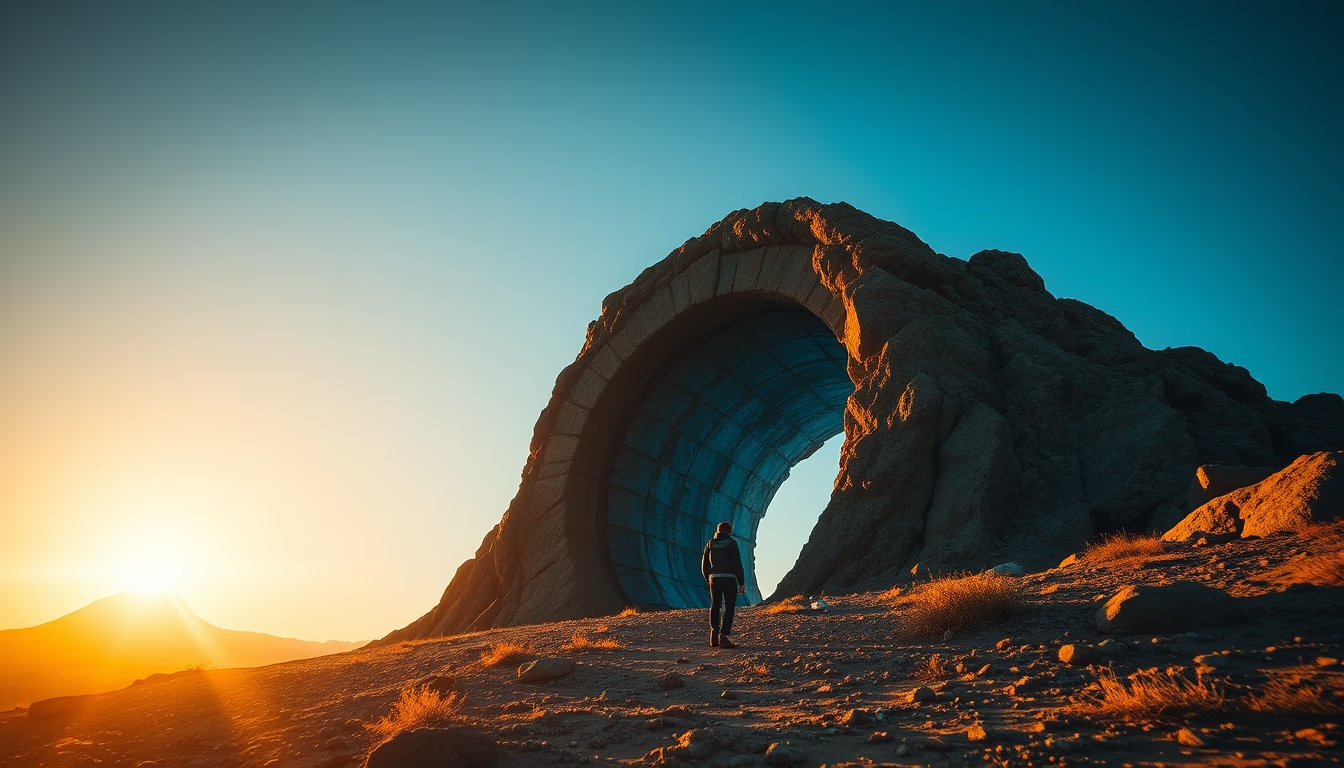
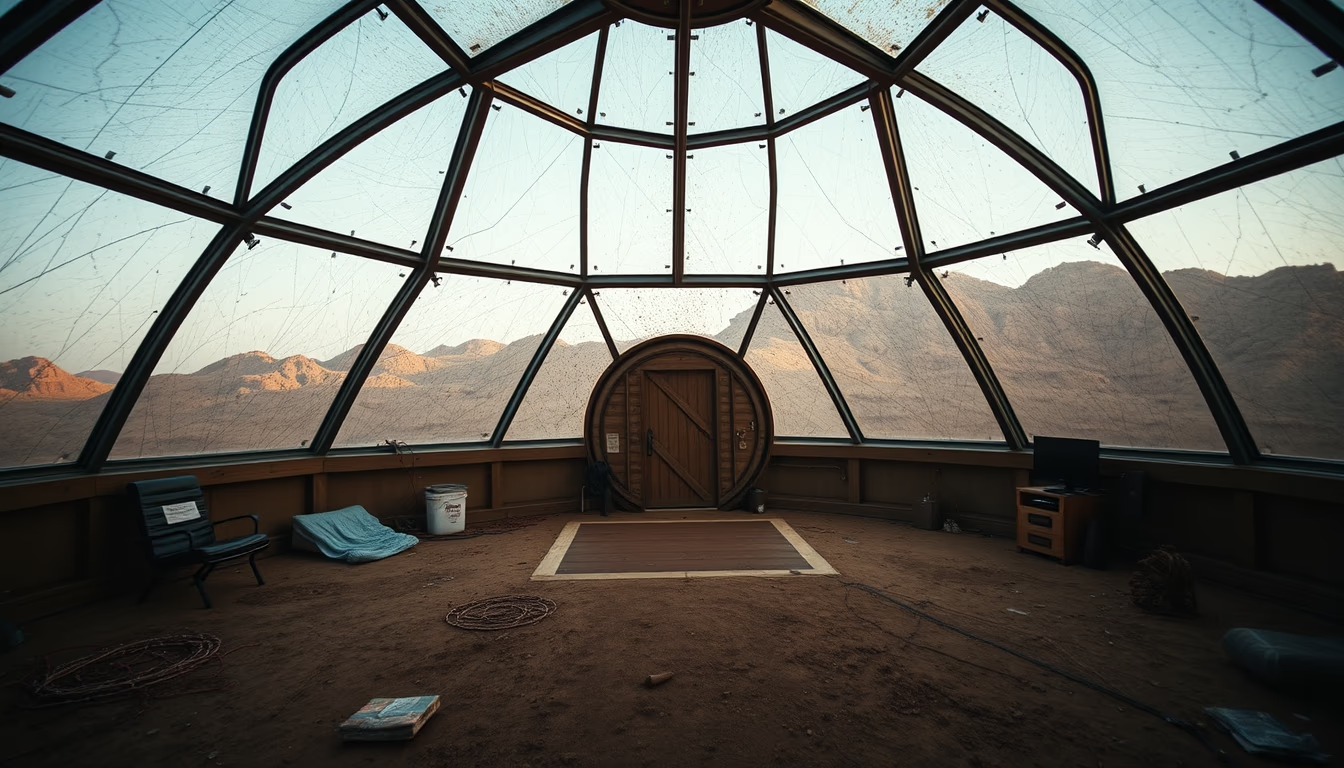
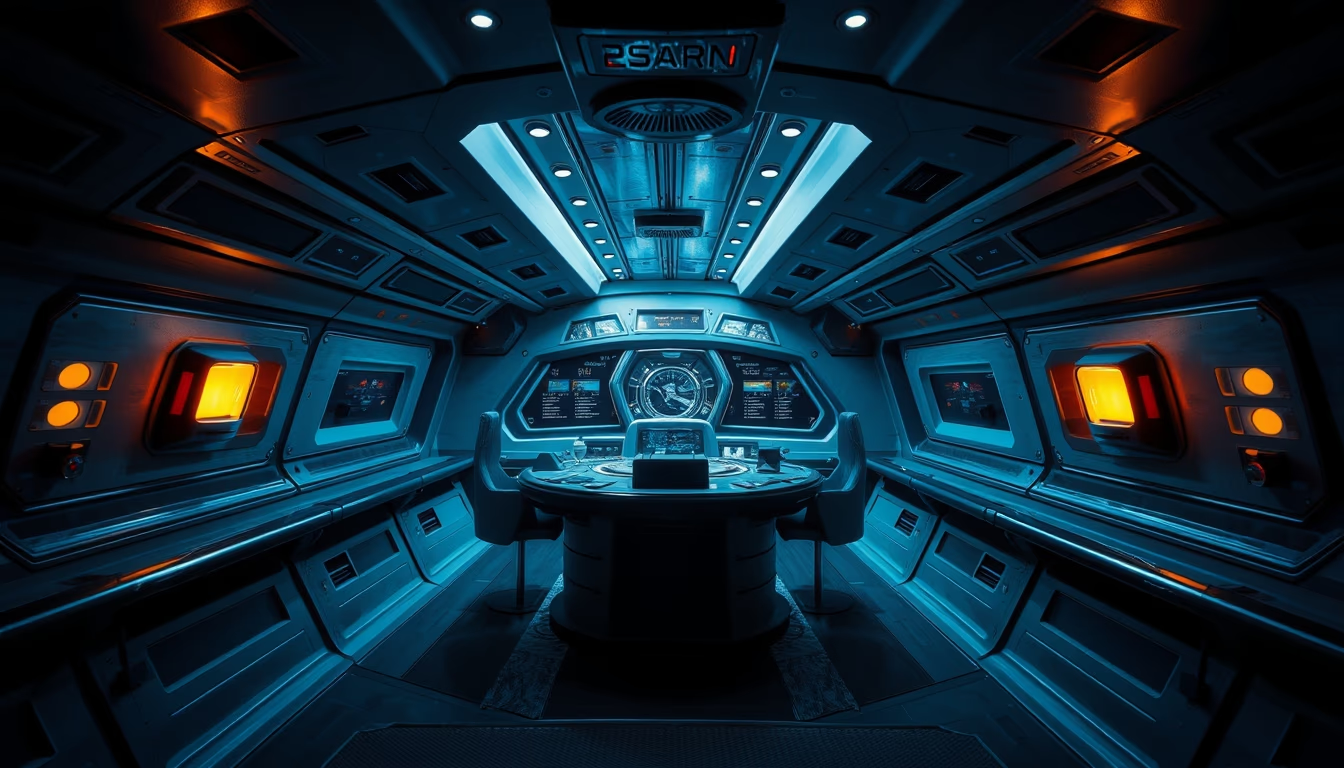
Space station futuristic
1344×768 · AVIF · CC BY 4.0

Futuristic space stations combine cutting-edge engineering with science fiction concepts to inhabit the cosmos.
About this subject
Futuristic space stations are hypothetical or conceptual structures designed to house humans in space for extended periods, going beyond the International Space Station (ISS). While the ISS orbits at about 400 km altitude, concepts like the O'Neill cylinder, proposed by Gerard K. O'Neill in the 1970s, aim to create self-sufficient habitats with artificial gravity through rotation, capable of sustaining thousands of people. These stations could serve as bases for planetary exploration, asteroid mining, or permanent space cities.
In science fiction, the Death Star from Star Wars and Space Station 5 from 2001: A Space Odyssey popularized the idea of orbital megastructures. Meanwhile, real projects like China's Tiangong space station and the Bigelow inflatable module show steps in that direction. Advanced materials such as carbon nanotubes and 3D printing are key to building lightweight, strong structures, while closed-loop life support systems (bioregenerative) recycle air, water, and waste.
Challenges include cosmic radiation, prolonged microgravity (causing bone and muscle loss), and psychological isolation. Solutions like water or lunar regolith shielding, centrifugal artificial gravity, and rotating habitation modules are studied. SpaceX, with its Starship, plans to assemble orbital stations for refueling en route to Mars. NASA, meanwhile, is developing the Gateway, a lunar orbiting station that will serve as an outpost for missions to the Moon's South Pole.
Economically, futuristic space stations could enable space tourism, microgravity manufacturing (optical fibers, protein crystals), and solar power collection beamed to Earth. Public-private partnerships, such as Axiom Space's with NASA, already plan commercial modules attached to the ISS, later independent. The concept of a space elevator, tethering a cable from the equator to a geostationary counterweight, could cheapen material transport, making these stations more feasible.
Frequently Asked Questions
How would artificial gravity work on a futuristic space station?
Artificial gravity can be created by rotating the entire station or specific modules. Centrifugal force pushes occupants toward the outer wall, simulating gravity. The radius and rotation speed must be adjusted to avoid discomfort (e.g., slow rotation in large radii).
What materials would be used to build futuristic space stations?
Lightweight, strong materials like aluminum-lithium alloys, carbon fiber composites, and carbon nanotubes are candidates. 3D printing with lunar or Martian regolith could reduce transport costs, enabling on-site manufacturing.
Which real space stations are closest to the futuristic concept?
The International Space Station (ISS) is the current baseline, but inflatable modules like Bigelow's BEAM and the future Lunar Gateway orbital station are steps toward more advanced habitats. Axiom Space plans a commercial station independent by 2030.
Direct URL
https://pub-c7d6a6ea828543ac903a74a341ccb2e1.r2.dev/imagens/space-station-futuristic-magazine-editorial-fresh9.avifHow to credit
Include a visible link back to UtilizAí. Copy one of the snippets below:
<a href="https://xn--utiliza-eza.com/en/midia/imagens/space-station-futuristic-magazine-editorial-fresh9">Space station futuristic</a> by <a href="https://xn--utiliza-eza.com">UtilizAí</a>, licensed under <a href="https://creativecommons.org/licenses/by/4.0/">CC BY 4.0</a>.
[Space station futuristic](https://xn--utiliza-eza.com/en/midia/imagens/space-station-futuristic-magazine-editorial-fresh9) by [UtilizAí](https://xn--utiliza-eza.com), CC BY 4.0
License: CC-BY-4.0