Space station futuristic
1344×768 · AVIF · CC BY 4.0
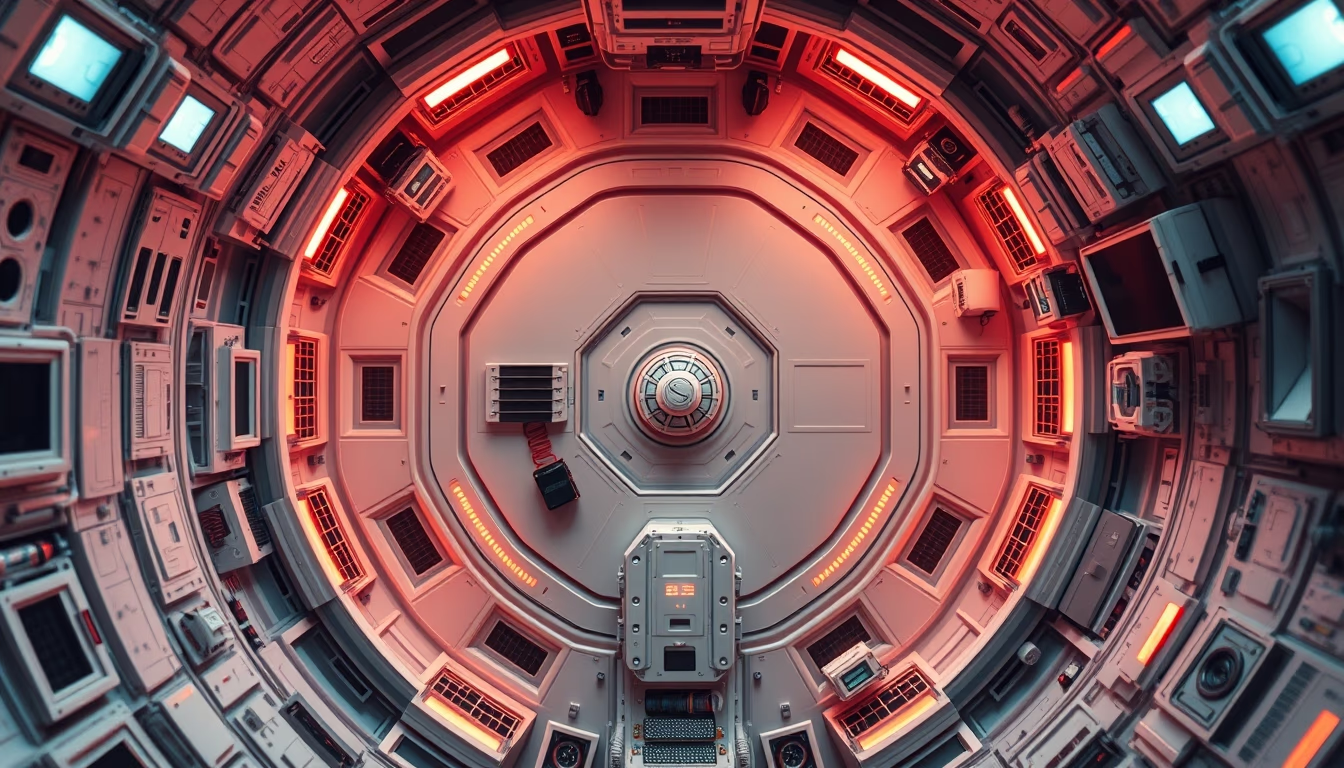
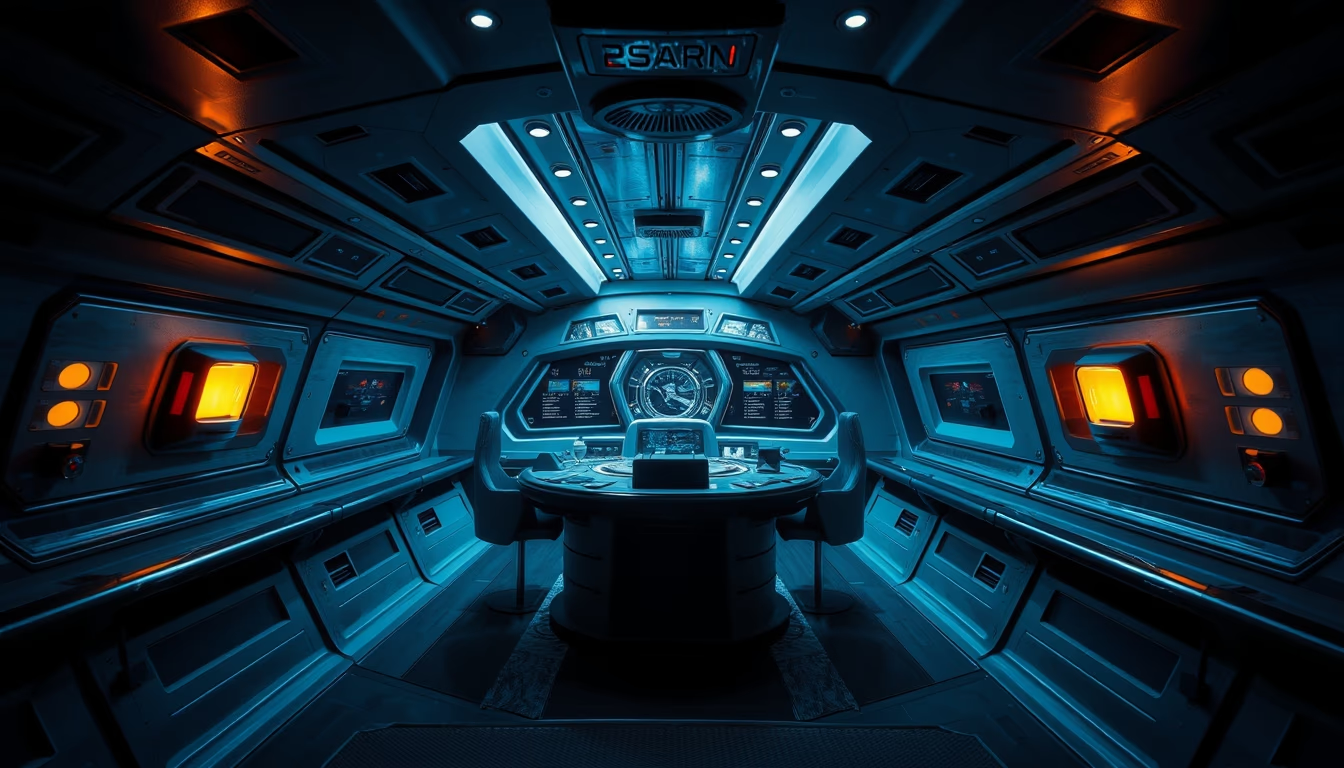
Futuristic space stations represent the next frontier of human exploration, combining advanced technology and modular design for orbital habitation and research.
About this subject
Space stations are artificial structures designed to house humans in space for extended periods. From the Soviet Salyut to the International Space Station (ISS), these outposts have evolved significantly. Futuristic concepts, such as Gerard K. O'Neill's rotating ring or NASA's planned Gateway station, propose self-sustaining habitats with artificial gravity, space agriculture, and closed-loop recycling systems. Such projects aim to reduce launch costs and enable long-duration missions to Mars and beyond.
The engineering behind these structures involves inflatable modules, like the Bigelow Expandable Activity Module (BEAM), and advanced materials such as titanium alloys and carbon composites. Private companies like SpaceX and Blue Origin are developing reusable spacecraft capable of carrying large payloads for orbital assembly. In the near future, constructing stations in lunar orbit and at Lagrange points could serve as bases for asteroid mining and space tourism.
The feasibility of futuristic space stations relies on innovations in electric propulsion, radiation shielding, and life support. Classic large-scale habitat designs include the Stanford Torus and Bernal Sphere. Currently, China operates its own Tiangong station, while India and the United Arab Emirates are planning their orbital forays. These multilateral efforts indicate that humanity's future in space will become increasingly permanent and diverse.
Frequently Asked Questions
Why is the International Space Station important?
The ISS is a microgravity laboratory where scientists study biology, physics, and astronomy. It also serves as a testbed for technologies needed for longer missions, such as to Mars.
How could artificial gravity be generated on a space station?
By rotating the station around its axis, centrifugal force simulates gravity. Concepts like O'Neill's rotating ring use rotation to create a 1g environment at the rim.
What challenges exist for building self-sustaining space stations?
Key challenges include protection from cosmic radiation, efficient recycling of water and air, food production in space, and mitigating the effects of microgravity on the human body.
Direct URL
https://pub-c7d6a6ea828543ac903a74a341ccb2e1.r2.dev/imagens/space-station-futuristic-isometric-flat-lay-fresh18.avifHow to credit
Include a visible link back to UtilizAí. Copy one of the snippets below:
<a href="https://xn--utiliza-eza.com/en/midia/imagens/space-station-futuristic-isometric-flat-lay-fresh18">Space station futuristic</a> by <a href="https://xn--utiliza-eza.com">UtilizAí</a>, licensed under <a href="https://creativecommons.org/licenses/by/4.0/">CC BY 4.0</a>.
[Space station futuristic](https://xn--utiliza-eza.com/en/midia/imagens/space-station-futuristic-isometric-flat-lay-fresh18) by [UtilizAí](https://xn--utiliza-eza.com), CC BY 4.0
License: CC-BY-4.0