Space station futuristic
1344×768 · AVIF · CC BY 4.0
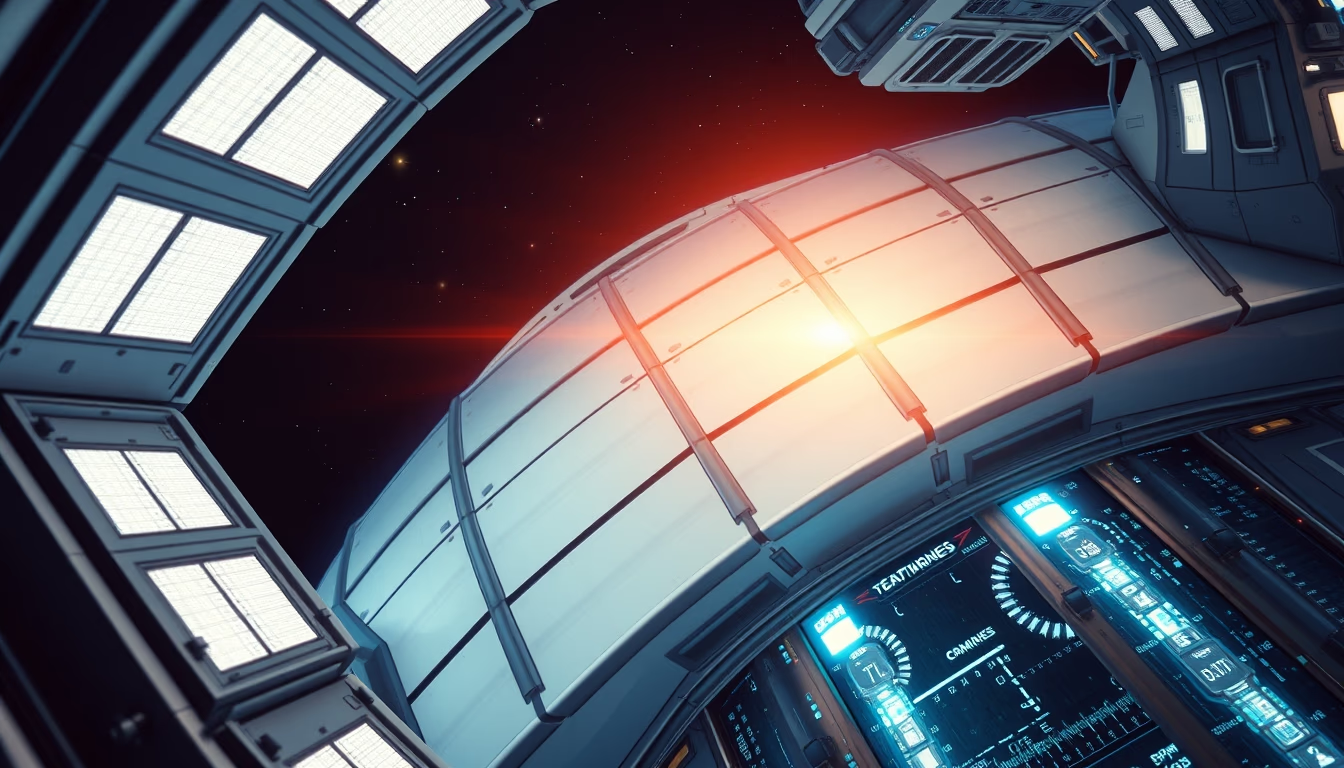
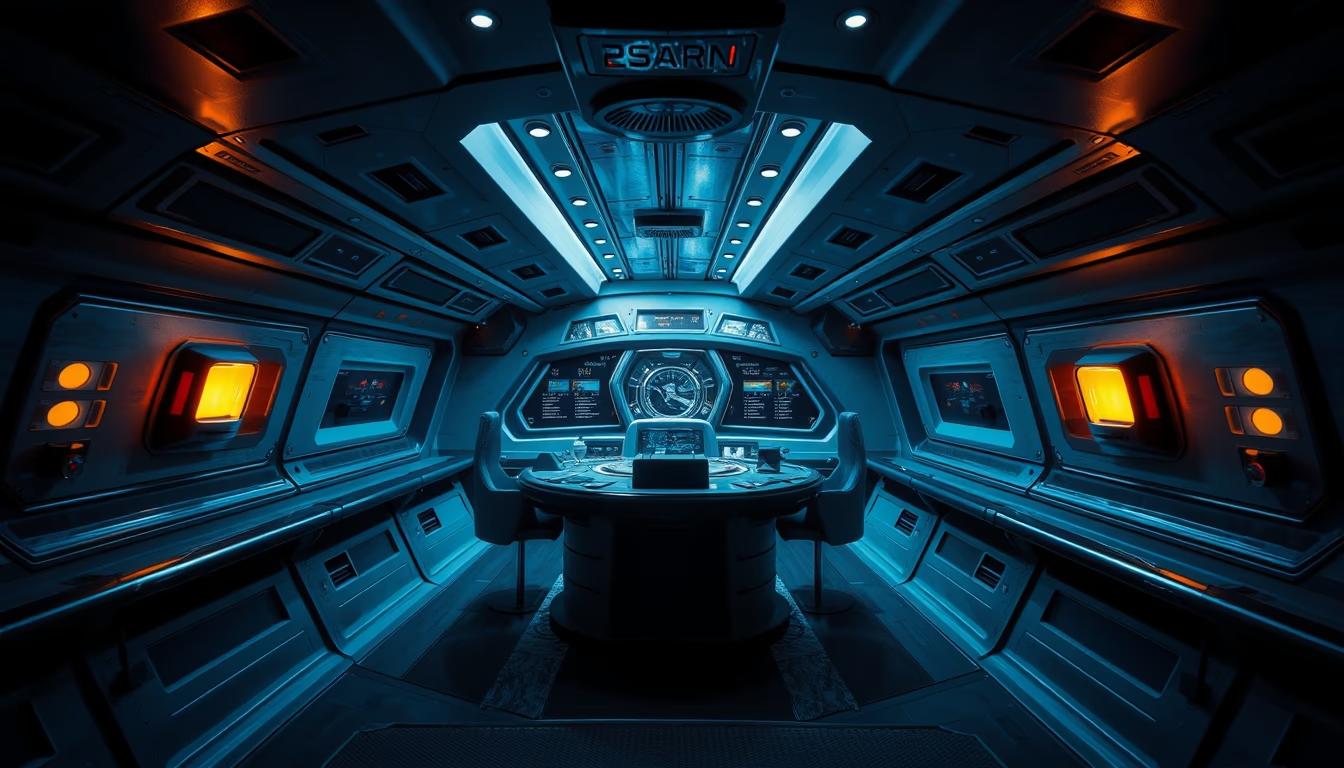
Futuristic space stations represent the next frontier of human exploration beyond low Earth orbit.
About this subject
Futuristic space stations go far beyond the current International Space Station. Concepts like the O'Neill cylinder, proposed by physicist Gerard K. O'Neill in the 1970s, envision rotating habitats that generate artificial gravity through centrifugal force, allowing humans to live in Earth-like gravity. These massive structures, kilometers long, would be self-sufficient, with space agriculture, water and air recycling systems, and protection against cosmic radiation.
Today, agencies such as NASA and ESA are studying projects for stations in lunar orbit or at Lagrange points, like the Gateway, which will serve as a waypoint for missions to Mars. Private companies like SpaceX and Blue Origin are also developing concepts for space habitats for tourism and asteroid mining. One of the biggest challenges is radiation shielding, as outside Earth's magnetic field levels are lethal. Solutions include using lunar regolith or artificial magnetic fields.
Futuristic designs often feature inflatable modules, next-generation solar panels, and electric or nuclear propulsion systems. The idea of a self-sustaining space station is inspired by orbital colonies described by science fiction writers, but today it is the subject of research in materials science and biology. Large-scale construction would require orbital manufacturing and utilization of extraterrestrial resources, such as water from asteroids, to produce fuel and oxygen.
Frequently Asked Questions
How would artificial gravity work in a futuristic space station?
Artificial gravity would be generated by rotating the station, creating centrifugal force that pushes occupants toward the outer walls. The larger the radius and rotation speed, the closer the sensation would be to Earth's gravity.
What are the main challenges for building a self-sustaining space station?
Key challenges include protection from space radiation, highly efficient air and water recycling systems, food production in reduced gravity, and obtaining construction materials without full dependence on Earth.
Could futuristic stations serve as bases for Mars exploration?
Yes, NASA's Lunar Gateway and similar projects are designed as staging points for Mars missions, enabling spacecraft assembly, refueling, and research on the effects of radiation and long-duration isolation.
Direct URL
https://pub-c7d6a6ea828543ac903a74a341ccb2e1.r2.dev/imagens/space-station-futuristic-fine-art-photography-fresh8.avifHow to credit
Include a visible link back to UtilizAí. Copy one of the snippets below:
<a href="https://xn--utiliza-eza.com/en/midia/imagens/space-station-futuristic-fine-art-photography-fresh8">Space station futuristic</a> by <a href="https://xn--utiliza-eza.com">UtilizAí</a>, licensed under <a href="https://creativecommons.org/licenses/by/4.0/">CC BY 4.0</a>.
[Space station futuristic](https://xn--utiliza-eza.com/en/midia/imagens/space-station-futuristic-fine-art-photography-fresh8) by [UtilizAí](https://xn--utiliza-eza.com), CC BY 4.0
License: CC-BY-4.0