Space station futuristic
1344×768 · AVIF · CC BY 4.0
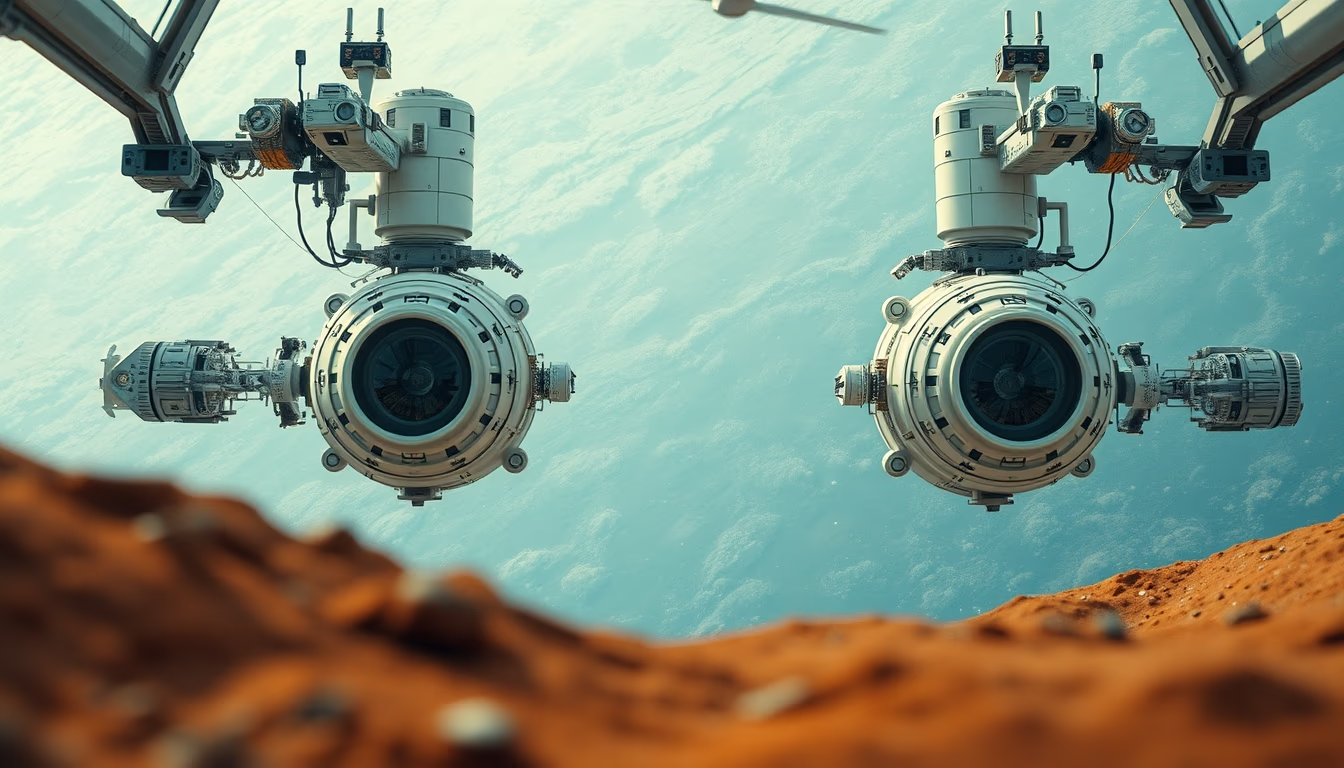
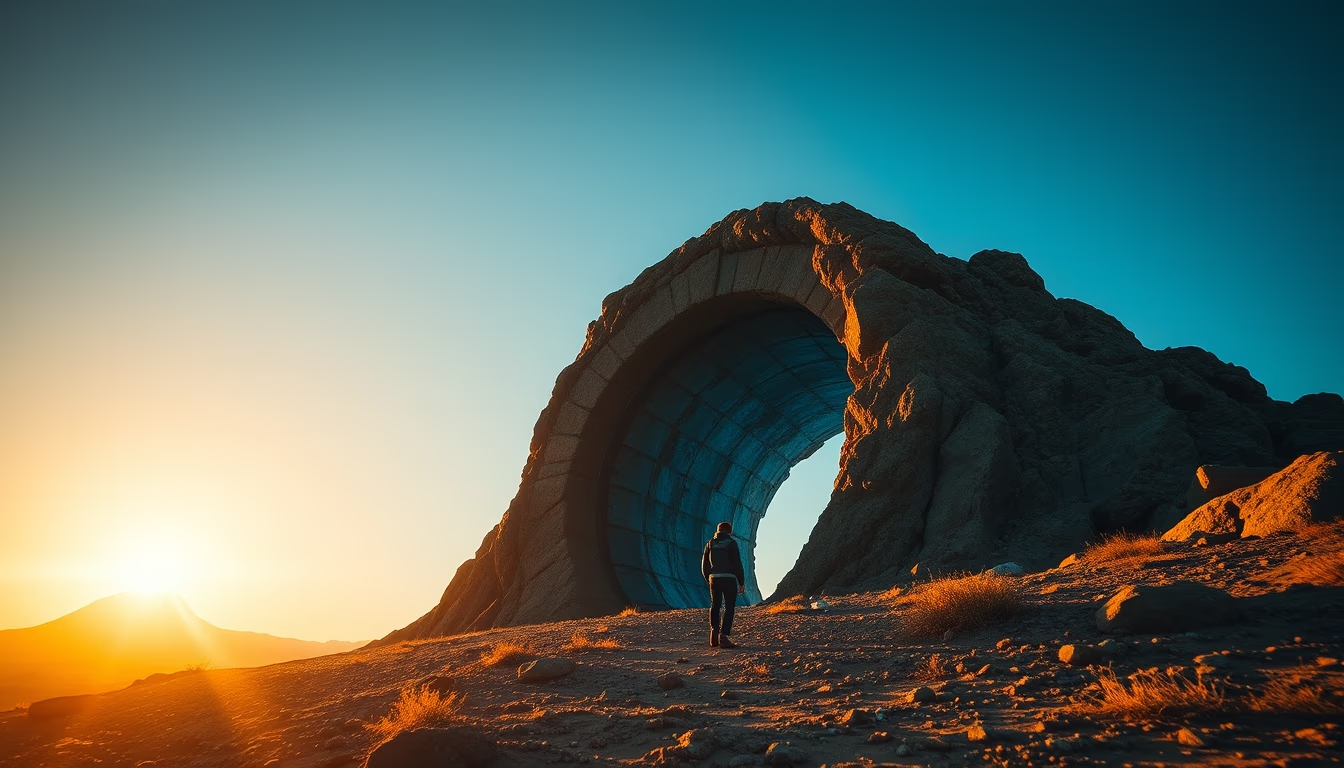
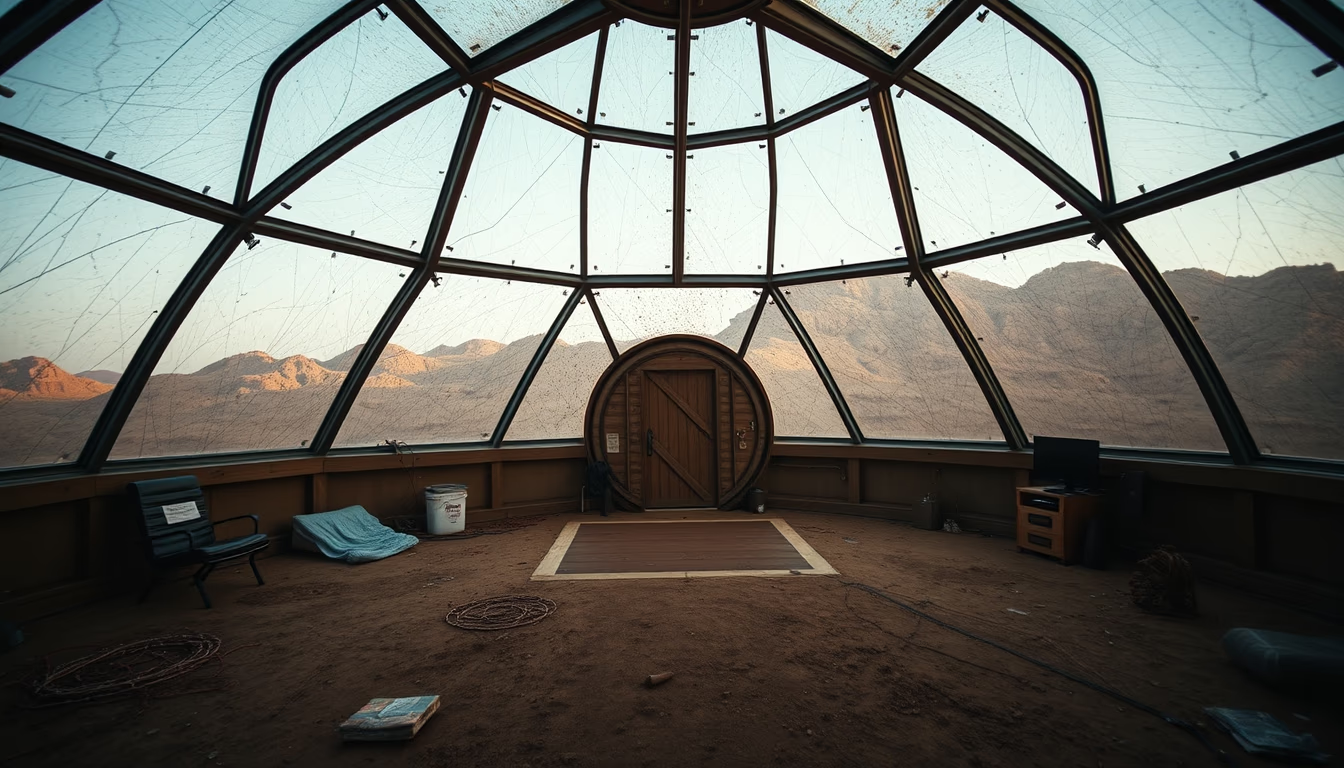
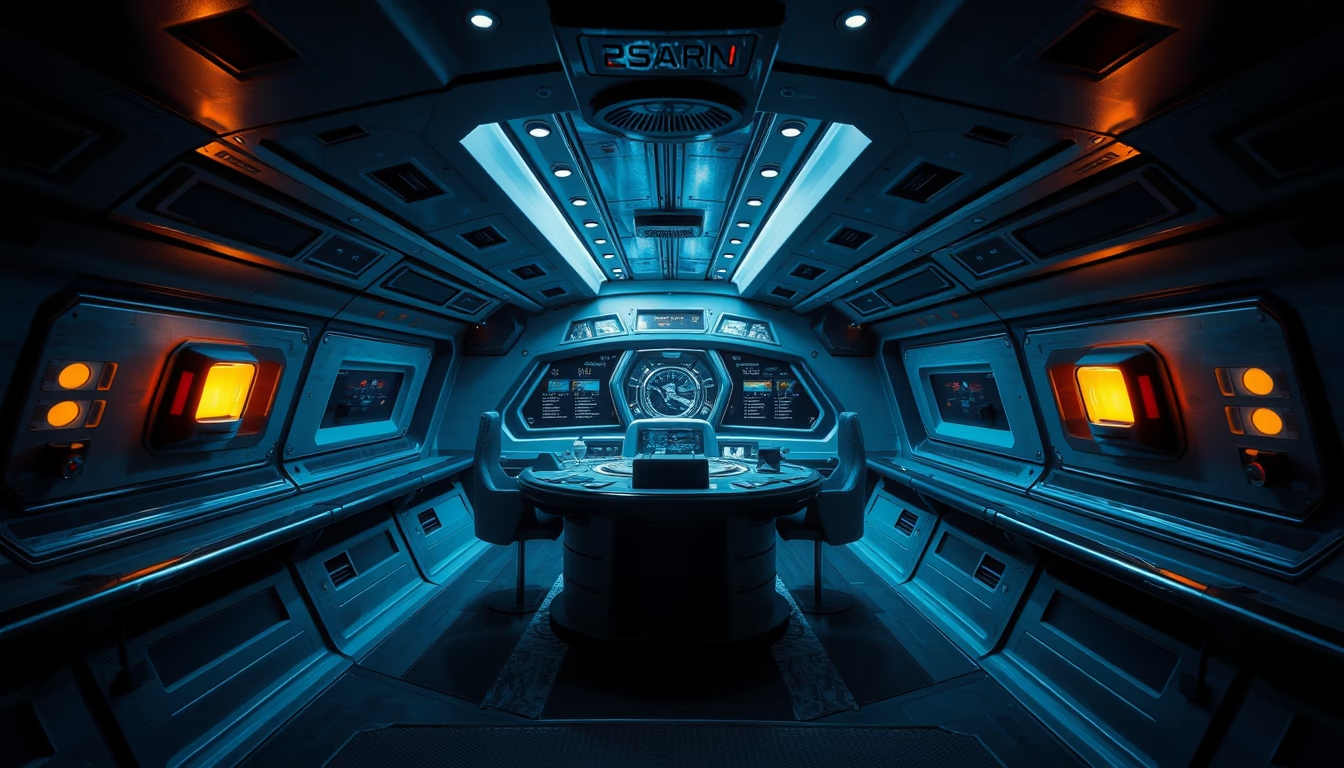
Future space stations promise to be self-sustaining orbital habitats, combining cutting-edge technologies with modular design to support long interplanetary missions.
About this subject
Future space stations represent an evolutionary leap from the current International Space Station (ISS). While the ISS orbits at about 400 km altitude and depends on constant resupply from Earth, future designs aim for full autonomy. Concepts like NASA's planned Gateway lunar orbital station and Bigelow Aerospace's inflatable habitats already test modules that can be expanded in space. Engineers are also studying rotating structures to create artificial gravity, mitigating the physiological effects of microgravity on crews who will spend years in space.
Modular architecture is a key pillar for these new stations. Modules manufactured on Earth would be launched separately and assembled in orbit, allowing the station to grow as needed. Companies like SpaceX and Blue Origin are developing heavy-lift vehicles capable of transporting these components. 3D printing in space is also promising: future stations could manufacture spare parts and even food from local resources, such as lunar regolith or asteroids.
Sustainability is another central focus. State-of-the-art water and air recycling systems, like those tested on the ISS, will be improved. High-efficiency solar panels and compact nuclear reactors will ensure continuous power. Hydroponic plant cultivation will provide fresh food and oxygen. These technologies not only reduce logistics costs but also pave the way for colonies on Mars and beyond. China's Space Station (CSS) already incorporates some of these advancements, serving as a laboratory for long-duration experiments.
Finally, futuristic space stations will serve not only for scientific research. They will act as spaceports for assembling interplanetary ships, bases for asteroid mining, and even tourist destinations. Projects like the Von Braun Rotating Space Station (a concept by the Gateway Foundation) aim to provide space tourism with partial gravity. Although many of these plans are still conceptual, technological progress and private investment are steadily turning such visions into reality.
Frequently Asked Questions
What is the Gateway space station?
Gateway is a planned NASA space station that will orbit the Moon. It will serve as an outpost for long-duration missions, enabling lunar landings and future trips to Mars. Its modules will be built in partnership with international space agencies and private companies.
How can artificial gravity be generated on a space station?
Artificial gravity can be created by rotating all or part of the station. Centrifugal force pushes objects against the outer walls, simulating the sensation of weight. Studies suggest a rotation rate of 2 to 4 revolutions per minute may be tolerable for humans.
What are the main challenges for building self-sufficient space stations?
Key challenges include closed-loop resource recycling systems, protection from cosmic radiation, food production in space, and maintaining crew health during prolonged microgravity. Each requires innovative solutions and extensive testing before implementation.
Direct URL
https://pub-c7d6a6ea828543ac903a74a341ccb2e1.r2.dev/imagens/space-station-futuristic-documentary-nature-style-fresh11.avifHow to credit
Include a visible link back to UtilizAí. Copy one of the snippets below:
<a href="https://xn--utiliza-eza.com/en/midia/imagens/space-station-futuristic-documentary-nature-style-fresh11">Space station futuristic</a> by <a href="https://xn--utiliza-eza.com">UtilizAí</a>, licensed under <a href="https://creativecommons.org/licenses/by/4.0/">CC BY 4.0</a>.
[Space station futuristic](https://xn--utiliza-eza.com/en/midia/imagens/space-station-futuristic-documentary-nature-style-fresh11) by [UtilizAí](https://xn--utiliza-eza.com), CC BY 4.0
License: CC-BY-4.0