Space station futuristic
1344×768 · AVIF · CC BY 4.0
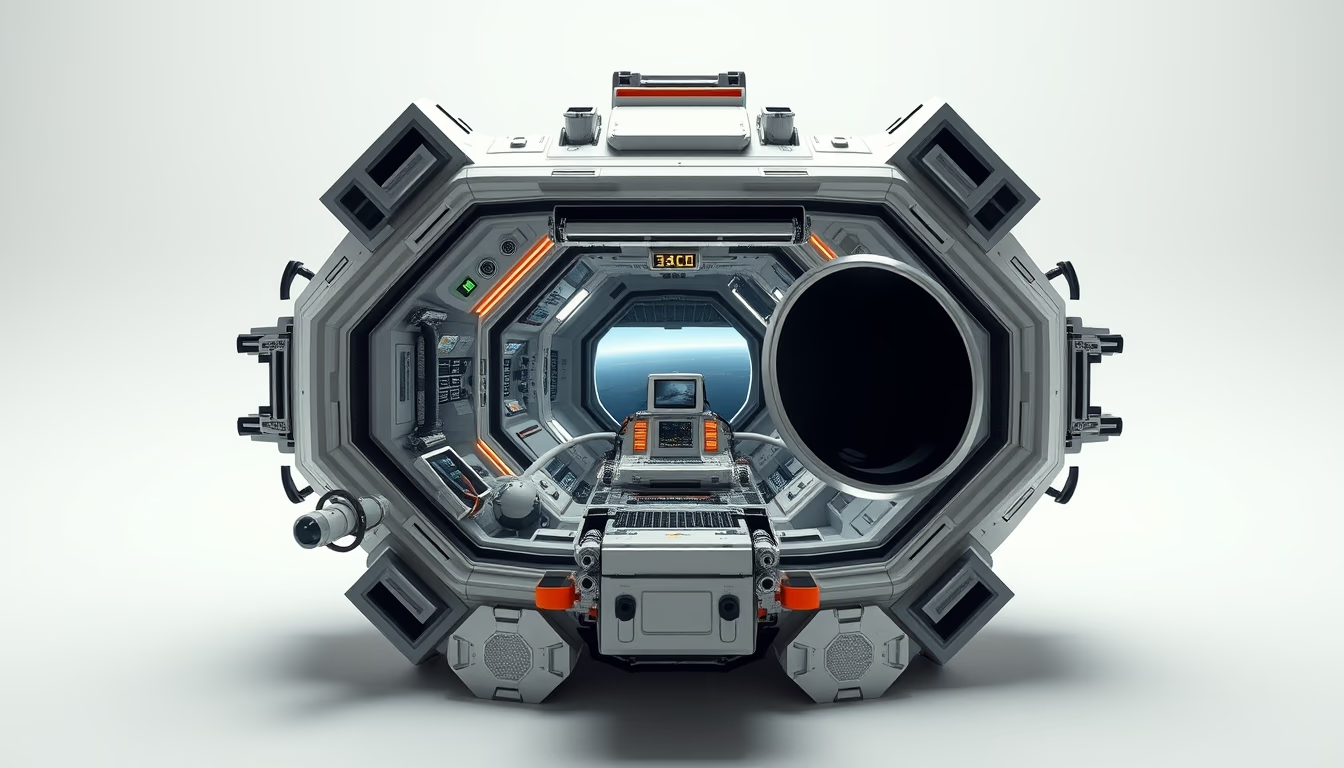
Futuristic space stations represent the pinnacle of engineering and human exploration, designed for habitation and research in orbit.
About this subject
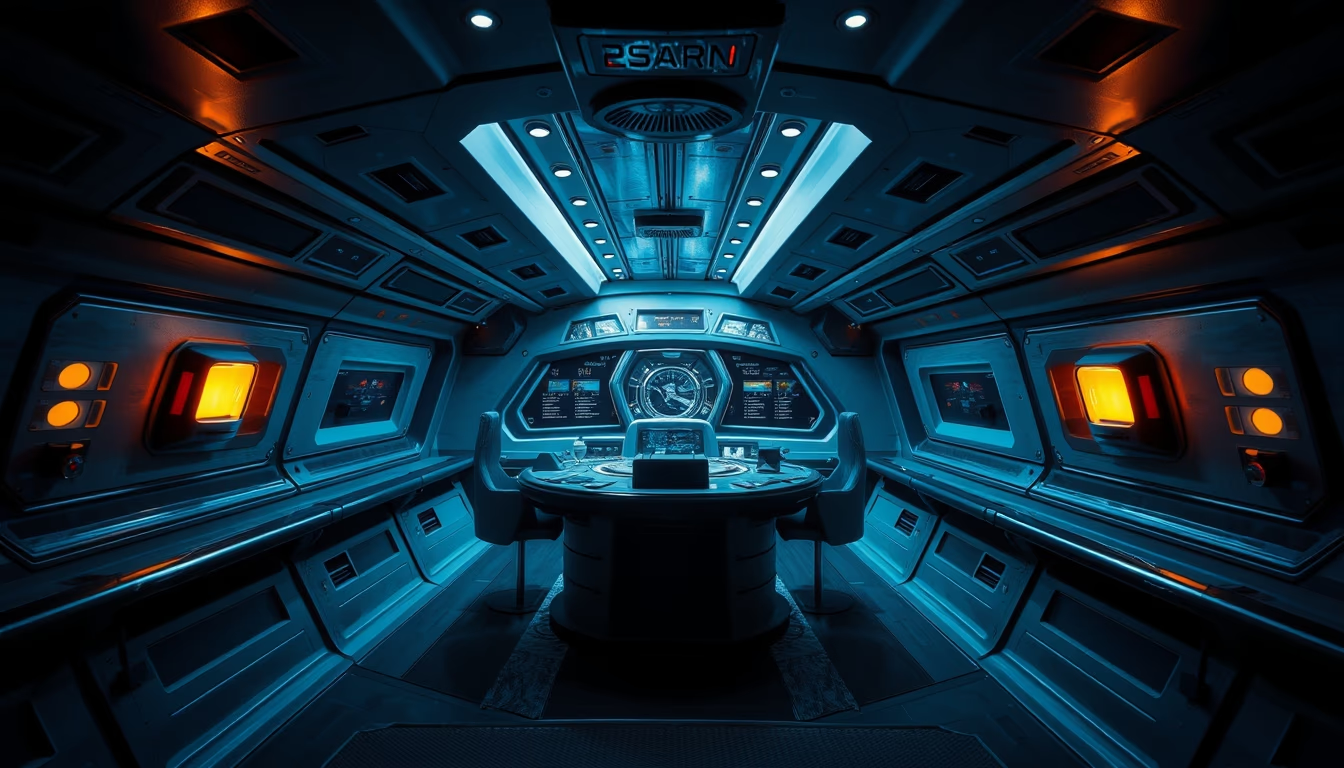
Space stations are artificial structures placed in orbit around Earth or other celestial bodies, serving as bases for scientific research, astronomical observation, and, in futuristic concepts, as permanent human habitats. Unlike current stations such as the International Space Station (ISS), futuristic models incorporate advanced technologies like artificial gravity through rotation, closed-loop life support systems, and self-healing materials. These innovations would enable long-duration missions to Mars and beyond, reducing reliance on Earth supplies.
The design of a futuristic space station often includes expandable modules, giant solar panels, and robotic arms for maintenance. Concepts like the Stanford torus or O'Neill cylinder propose habitats capable of sustaining thousands of people, with internal agriculture and artificial ecosystems. Placement at Lagrange points, such as L1 or L2, offers gravitational advantages for observation and interplanetary launches. Construction of such megastructures would require asteroid mining and 3D printing in zero gravity, technologies already under development by private companies and space agencies.
The importance of futuristic space stations extends beyond science: they are seen as stepping stones for the colonization of the Solar System. The International Space Station, operational since 1998, has demonstrated the viability of continuous human presence in space, but its modules are limited. Projects like the Lunar Gateway (in lunar orbit) and China's Tiangong station represent intermediate steps. In science fiction, films like '2001: A Space Odyssey' and series like 'The Expanse' have popularized realistic designs that influence current engineers. The future holds modular, self-sufficient stations capable of housing entire communities, transforming humanity into a multiplanetary species.
Frequently Asked Questions
How would artificial gravity work on a futuristic space station?
Artificial gravity would be generated by rotating the station or its modules, creating centrifugal force that mimics Earth's gravity. This would prevent health issues like bone and muscle loss on long missions.
What are the main challenges in building a futuristic space station?
Challenges include high costs, protection from cosmic radiation, closed-loop life support systems, and orbital assembly logistics. Asteroid mining and 3D printing could reduce reliance on Earth launches.
What materials would be used in constructing future space stations?
Lightweight, strong materials such as aluminum-lithium alloys, carbon fiber composites, and metals from asteroids (nickel, iron). Also self-healing materials and radiation-resistant coatings.
Direct URL
https://pub-c7d6a6ea828543ac903a74a341ccb2e1.r2.dev/imagens/space-station-futuristic-commercial-product-photography-fresh10.avifHow to credit
Include a visible link back to UtilizAí. Copy one of the snippets below:
<a href="https://xn--utiliza-eza.com/en/midia/imagens/space-station-futuristic-commercial-product-photography-fresh10">Space station futuristic</a> by <a href="https://xn--utiliza-eza.com">UtilizAí</a>, licensed under <a href="https://creativecommons.org/licenses/by/4.0/">CC BY 4.0</a>.
[Space station futuristic](https://xn--utiliza-eza.com/en/midia/imagens/space-station-futuristic-commercial-product-photography-fresh10) by [UtilizAí](https://xn--utiliza-eza.com), CC BY 4.0
License: CC-BY-4.0