Space station futuristic
1344×768 · AVIF · CC BY 4.0
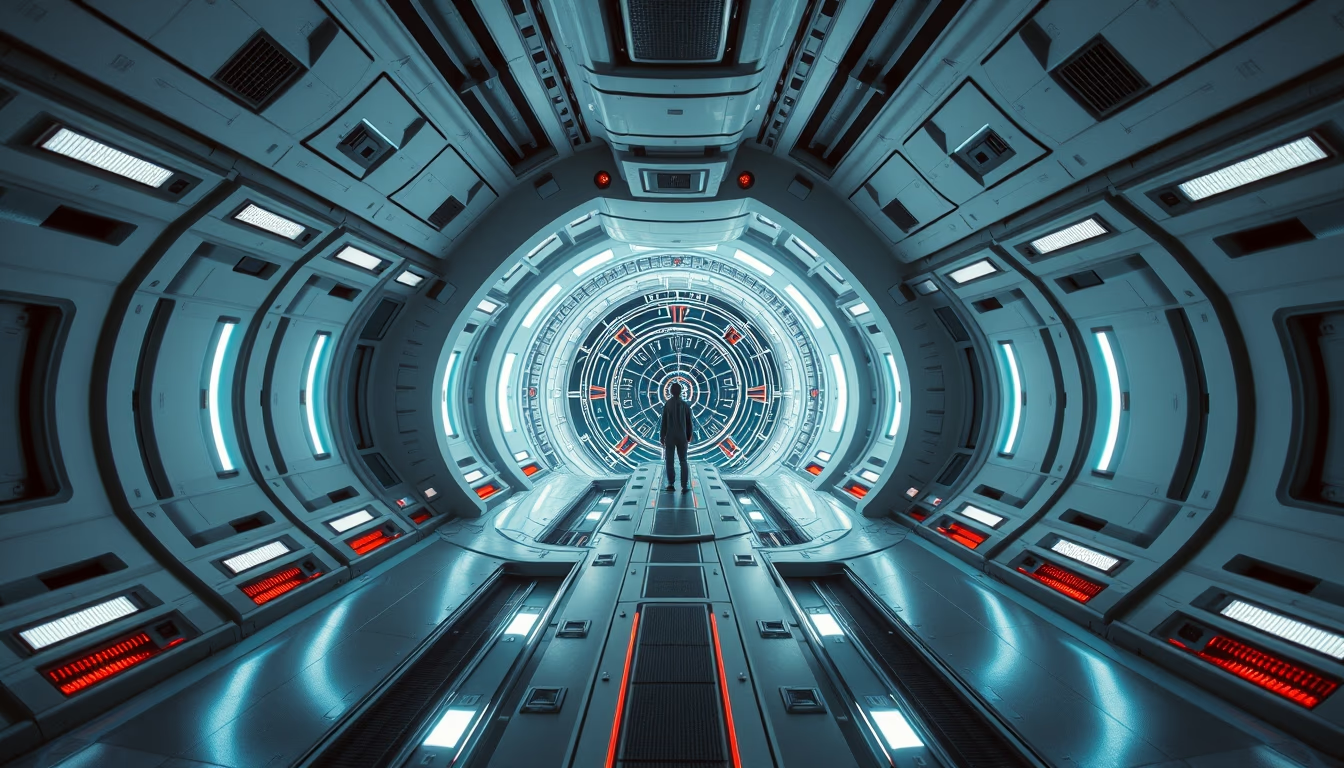
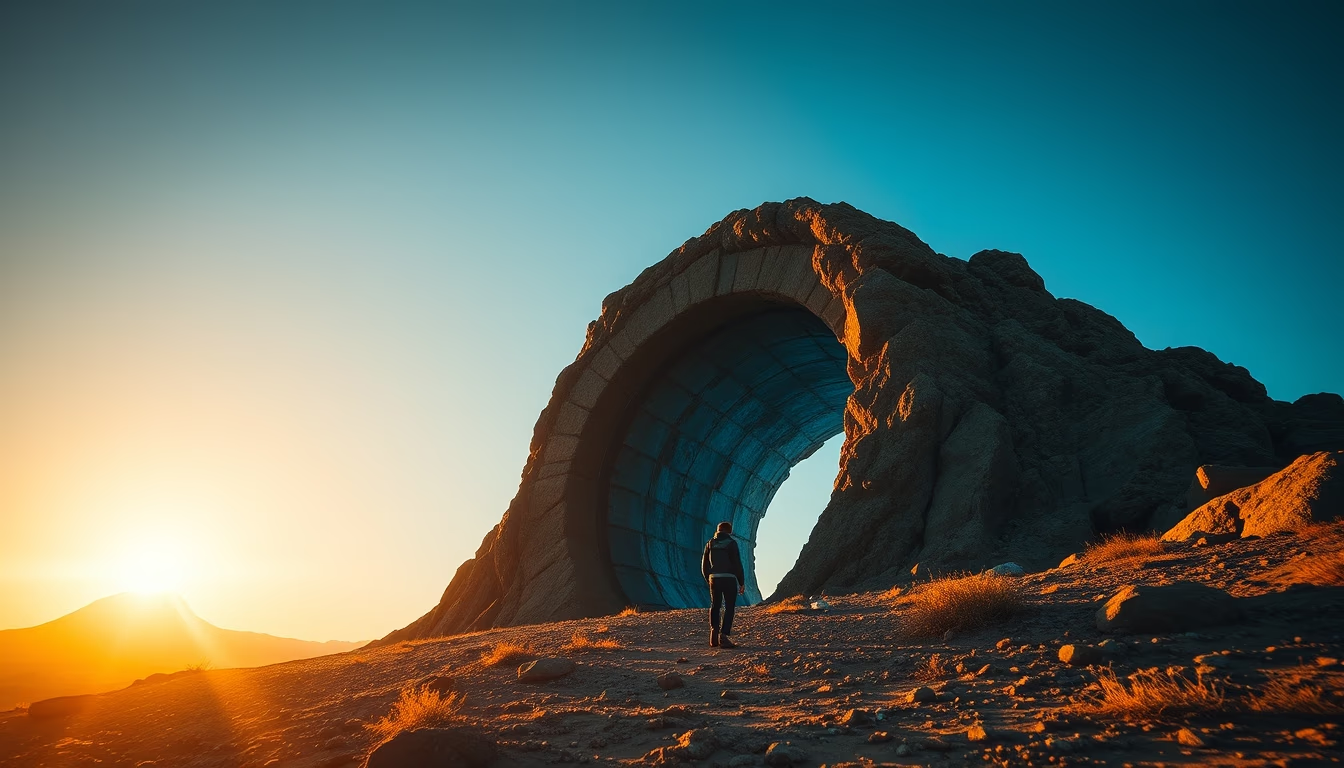
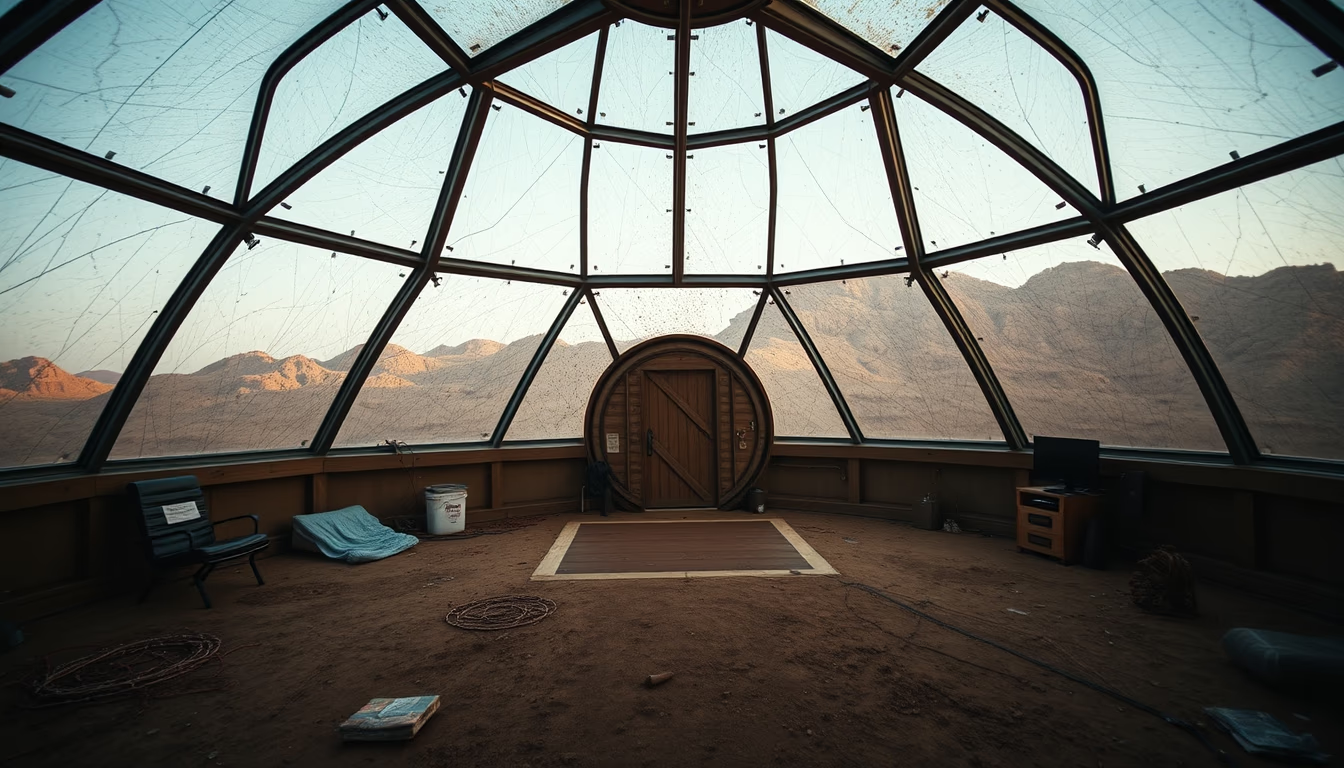
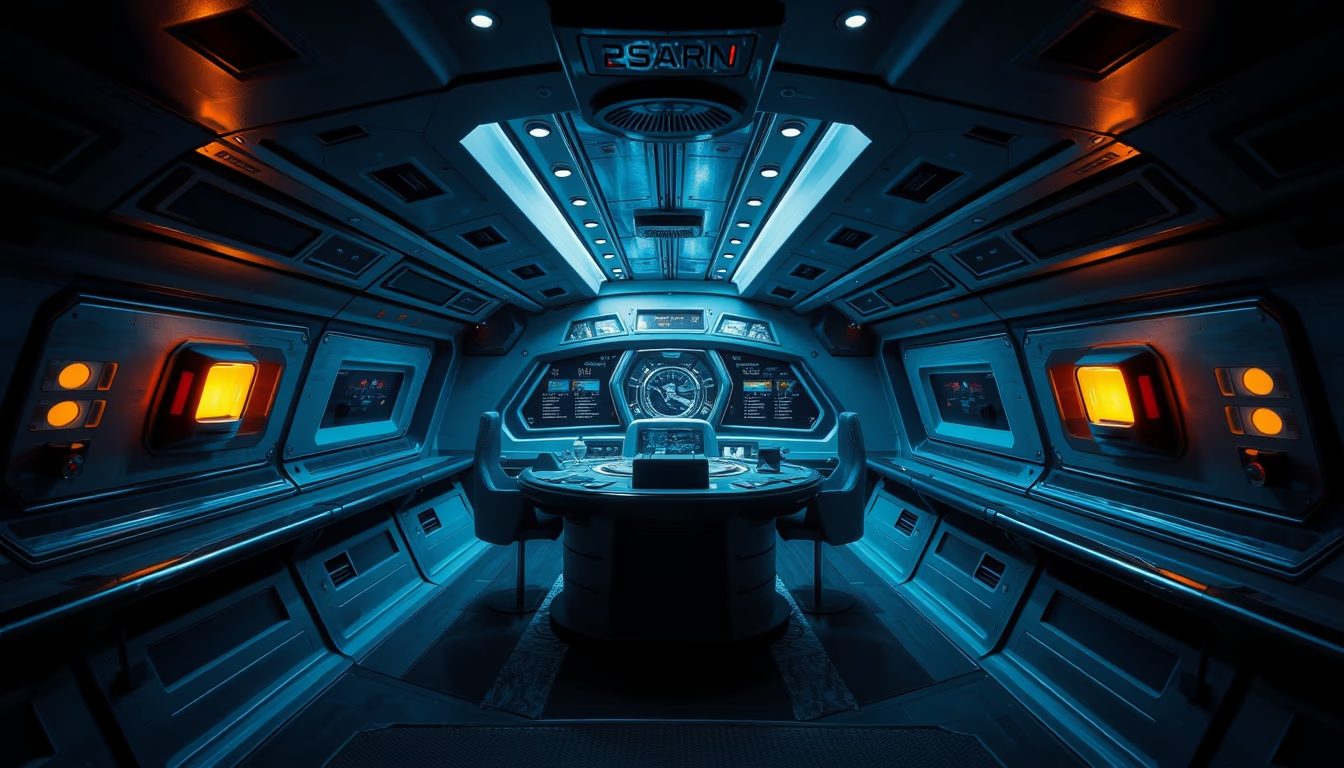
Futuristic space stations blend real engineering and science fiction, envisioning human habitats in orbit beyond Earth.
About this subject
Since the first concepts by Wernher von Braun in the 1950s, space stations evolved from rudimentary platforms to complex international laboratories. The International Space Station (ISS), the largest artificial object in orbit, hosts astronauts from 15 countries at 400 km altitude, but its modular structure and lifespan until 2030 inspire bolder projects. NASA's Gateway program plans an orbital base around the Moon by 2028, serving as a staging post for manned Mars missions. Meanwhile, SpaceX proposes the Starship as a vehicle capable of building rotating stations simulating artificial gravity, and China completed the Tiangong station in 2023 with scientific modules and a robotic arm. Private companies like Axiom Space and Bigelow Aerospace design inflatable modules and space hotels for orbital tourism by 2025. Technologies such as closed-loop water and air recycling, hydroponic agriculture, and cosmic radiation shielding are key challenges for long-term habitation. Scientists also study the rotation of structures to create artificial gravity, reducing microgravity effects like muscle and bone loss. Science fiction, with films like '2001: A Space Odyssey' and 'Interstellar', popularized ring or cylinder designs, which engineers adapt into realistic projects combining solar array efficiency and ion propulsion. Space exploration increasingly relies on these orbital bases for manufacturing drugs in microgravity, repairing satellites, and serving as launch points for interplanetary travel.
Frequently Asked Questions
What is the most advanced space station today?
The International Space Station (ISS) is the most advanced, with research modules, docking ports, and life support systems. However, China's Tiangong (2023) includes cutting-edge technology like a robotic arm and flexible solar panels.
What would a space station with artificial gravity look like?
It would be a rotating ring or cylinder, as in '2001: A Space Odyssey'. Rotation creates centrifugal force simulating gravity. Engineers design modules connected by long tethers, spun by thrusters, to create a partial gravity environment.
What are the main challenges for building future space stations?
Cosmic radiation shielding, efficient resource recycling, astronaut health in microgravity, and launch costs. New materials and in-orbit 3D printing could reduce costs and increase self-sufficiency.
Direct URL
https://pub-c7d6a6ea828543ac903a74a341ccb2e1.r2.dev/imagens/space-station-futuristic-architectural-photography-fresh13.avifHow to credit
Include a visible link back to UtilizAí. Copy one of the snippets below:
<a href="https://xn--utiliza-eza.com/en/midia/imagens/space-station-futuristic-architectural-photography-fresh13">Space station futuristic</a> by <a href="https://xn--utiliza-eza.com">UtilizAí</a>, licensed under <a href="https://creativecommons.org/licenses/by/4.0/">CC BY 4.0</a>.
[Space station futuristic](https://xn--utiliza-eza.com/en/midia/imagens/space-station-futuristic-architectural-photography-fresh13) by [UtilizAí](https://xn--utiliza-eza.com), CC BY 4.0
License: CC-BY-4.0