Space station futuristic
1344×768 · AVIF · CC BY 4.0
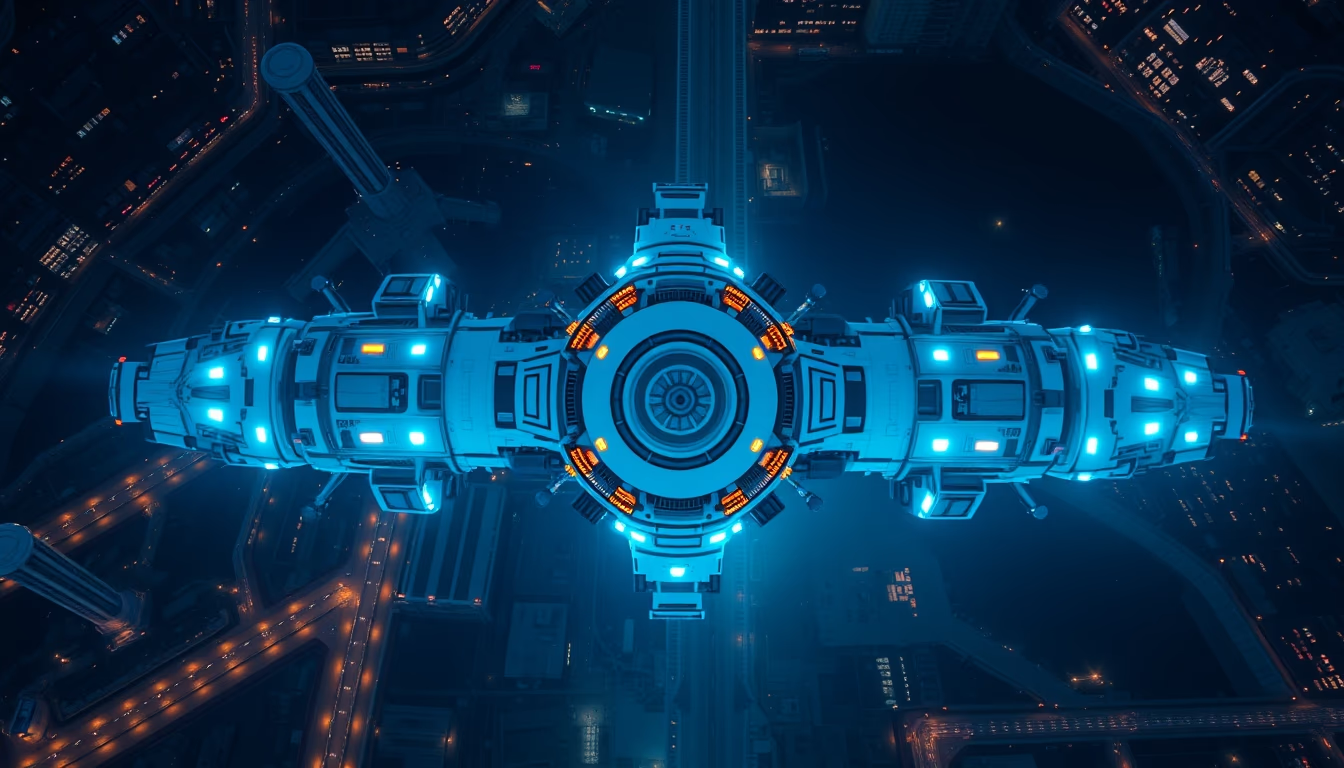
Futuristic space stations combine cutting-edge engineering and visionary concepts for human habitation in space.
About this subject
Futuristic space stations represent the next frontier of human exploration beyond Earth. Unlike the International Space Station (ISS), orbiting at 400 km altitude with pressurized modules, these concepts include rotating structures to generate artificial gravity, such as the O'Neill Cylinder or Stanford torus. Proposed in the 1970s and 1980s, such projects remain unbuilt due to costs and technical hurdles, but they inspire current research.
Today, NASA and other agencies are developing plans for the lunar orbital station Gateway, which will serve as a staging point for missions to the Moon and Mars. Private companies like SpaceX and Blue Origin also present modular and inflatable designs, aiming for self-sustaining habitats. Key challenges include protection from cosmic radiation, food production, and closed-loop resource recycling, central themes in modern aerospace engineering.
Culturally, futuristic space stations populate the popular imagination through films like 2001: A Space Odyssey and series such as Star Trek, which have influenced generations of scientists and engineers. In reality, the ISS has demonstrated the feasibility of long-term human stays in space, with records exceeding one consecutive year in microgravity. The future points to habitats in low Earth orbit, lunar colonies, and even giant structures utilizing asteroid resources.
Frequently Asked Questions
What would future space stations be like?
They could include rotating designs to create artificial gravity, modular habitats, closed-loop life support systems, and advanced radiation shielding.
Are there any space stations under development beyond the ISS?
Yes, NASA is leading the Gateway project, a lunar orbital station, and companies like SpaceX plan habitats on Mars. China is also expanding its Tiangong station.
What is the main difference between current stations and futuristic concepts?
Current stations like the ISS operate in microgravity and rely on Earth supplies. Futuristic concepts aim for self-sufficiency and artificial gravity, enabling longer and more comfortable stays.
Direct URL
https://pub-c7d6a6ea828543ac903a74a341ccb2e1.r2.dev/imagens/space-station-futuristic-aerial-drone-shot-fresh5.avifHow to credit
Include a visible link back to UtilizAí. Copy one of the snippets below:
<a href="https://xn--utiliza-eza.com/en/midia/imagens/space-station-futuristic-aerial-drone-shot-fresh5">Space station futuristic</a> by <a href="https://xn--utiliza-eza.com">UtilizAí</a>, licensed under <a href="https://creativecommons.org/licenses/by/4.0/">CC BY 4.0</a>.
[Space station futuristic](https://xn--utiliza-eza.com/en/midia/imagens/space-station-futuristic-aerial-drone-shot-fresh5) by [UtilizAí](https://xn--utiliza-eza.com), CC BY 4.0
License: CC-BY-4.0