Smart contract code on monitor with solidity syntax highlighted
1344×768 · AVIF · CC BY 4.0
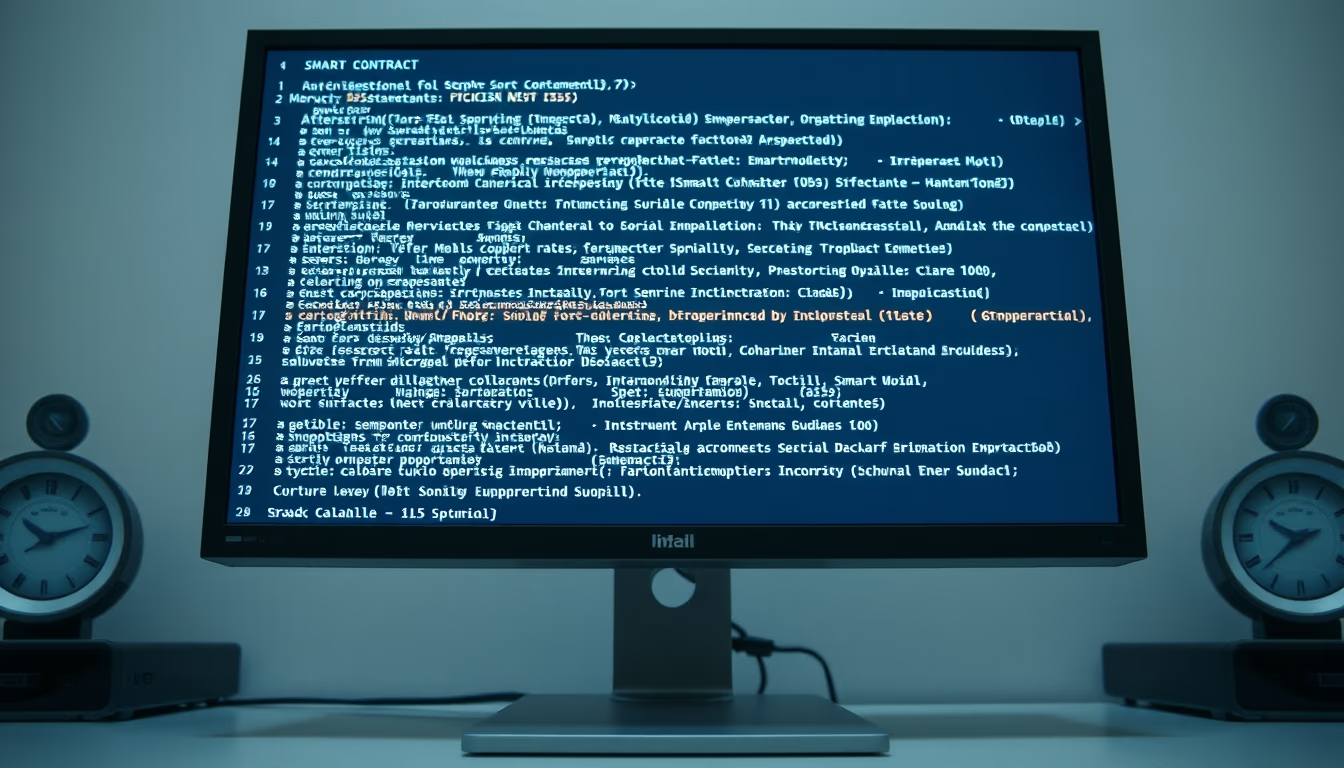
Smart contract code in Solidity displayed on a monitor with syntax highlighting for Ethereum blockchain programming.
About this subject
Solidity is a contract-oriented programming language designed specifically for the Ethereum platform, the most widely used blockchain for decentralized applications (dApps). It was proposed in 2014 by Gavin Wood, co-founder of Ethereum, and has since become the primary tool for writing smart contracts that automatically execute agreements when predefined conditions are met. The language is influenced by C++, Python, and JavaScript, and its compiler generates bytecode that runs on the Ethereum Virtual Machine (EVM).
Smart contracts written in Solidity enable everything from tokens (such as ERC-20 and ERC-721) to complex decentralized finance (DeFi) systems, automated exchanges, and blockchain games. Each contract is immutable once deployed, requiring rigorous testing and security auditing. The syntax highlighting on the monitor reflects the common practice among developers who use editors like Visual Studio Code with specific Solidity extensions.
Ethereum, launched in 2015, revolutionized the blockchain concept by introducing programmability. Today, millions of contracts are active on the network, moving billions of dollars. The language has evolved with versions like Solidity 0.8, which introduced security improvements and overflow prevention. The image represents the heart of decentralized development, where each line of code can represent financial rules or digital governance.
Fun fact: the term "Solidity" was inspired by the word "solid," reflecting the intention to create robust and reliable contracts. Although it is the most popular language for Ethereum, alternatives exist such as Vyper (also for EVM) and Rust (for blockchains like Solana).
Frequently Asked Questions
What is Solidity?
Solidity is a high-level programming language used to write smart contracts on the Ethereum blockchain. It is statically typed and supports inheritance, libraries, and complex user-defined types.
What are smart contracts used for?
Smart contracts are self-executing programs that automate agreements without intermediaries. They are used in tokens, DeFi, NFTs, decentralized governance, and more.
What are the main features of Solidity?
Solidity is influenced by C++ and JavaScript, compiles to EVM bytecode, and includes features like modifiers, events, and error handling with require/revert.
Direct URL
https://pub-c7d6a6ea828543ac903a74a341ccb2e1.r2.dev/imagens/smart-contract-code-on-monitor-with-solidity-syntax-highlighted-symmetric-composition-overcast-soft-daylight.avifHow to credit
Include a visible link back to UtilizAí. Copy one of the snippets below:
<a href="https://xn--utiliza-eza.com/en/midia/imagens/smart-contract-code-on-monitor-with-solidity-syntax-highlighted-symmetric-composition-overcast-soft-daylight">Smart contract code on monitor with solidity syntax highlighted</a> by <a href="https://xn--utiliza-eza.com">UtilizAí</a>, licensed under <a href="https://creativecommons.org/licenses/by/4.0/">CC BY 4.0</a>.
[Smart contract code on monitor with solidity syntax highlighted](https://xn--utiliza-eza.com/en/midia/imagens/smart-contract-code-on-monitor-with-solidity-syntax-highlighted-symmetric-composition-overcast-soft-daylight) by [UtilizAí](https://xn--utiliza-eza.com), CC BY 4.0
License: CC-BY-4.0
Tags
Related images
 Smart contract code on monitor with solidity syntax highlighted
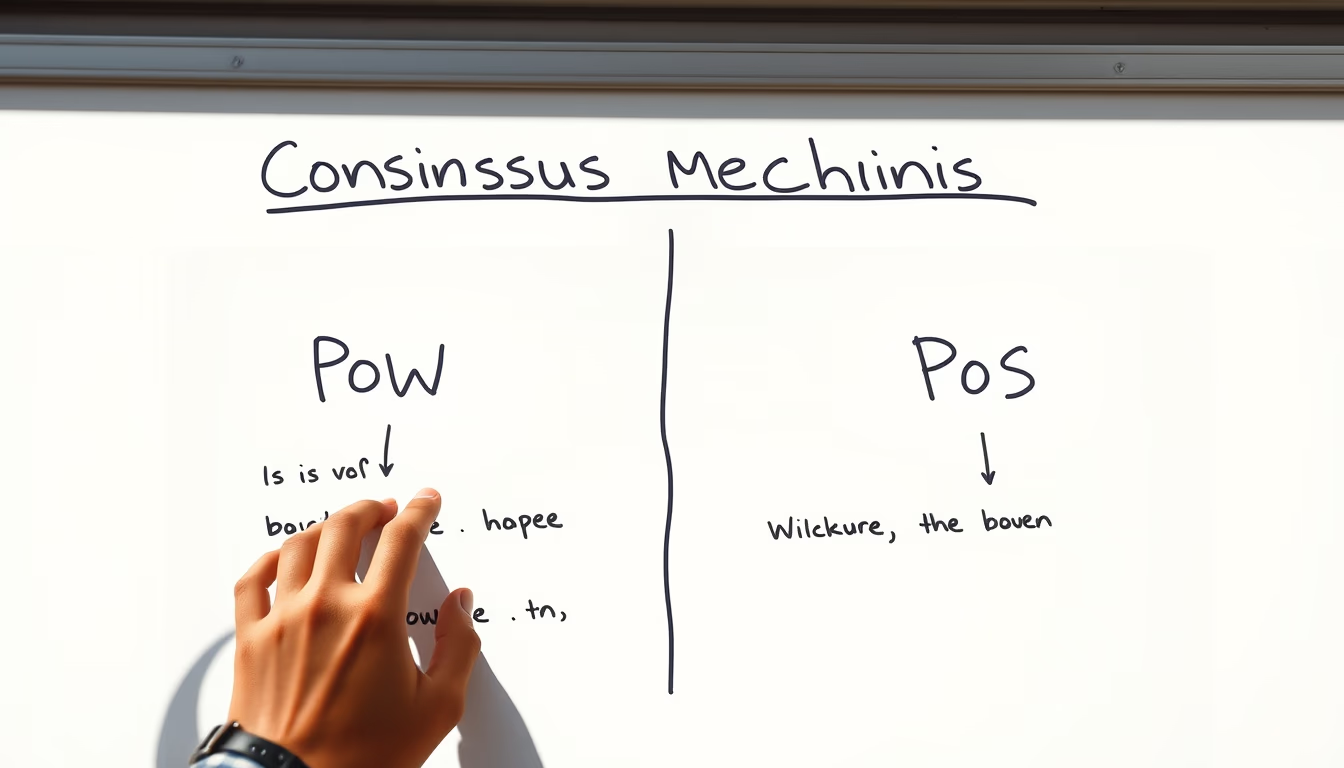 Consensus mechanism diagram on whiteboard showing PoW vs PoS
 Distributed ledger multiple servers in data center
 Hash function visualization cryptographic equations on glass screen
 Hash function visualization cryptographic equations on glass screen
 Hash function visualization cryptographic equations on glass screen