Smart contract code on monitor with solidity syntax highlighted
1344×768 · AVIF · CC BY 4.0
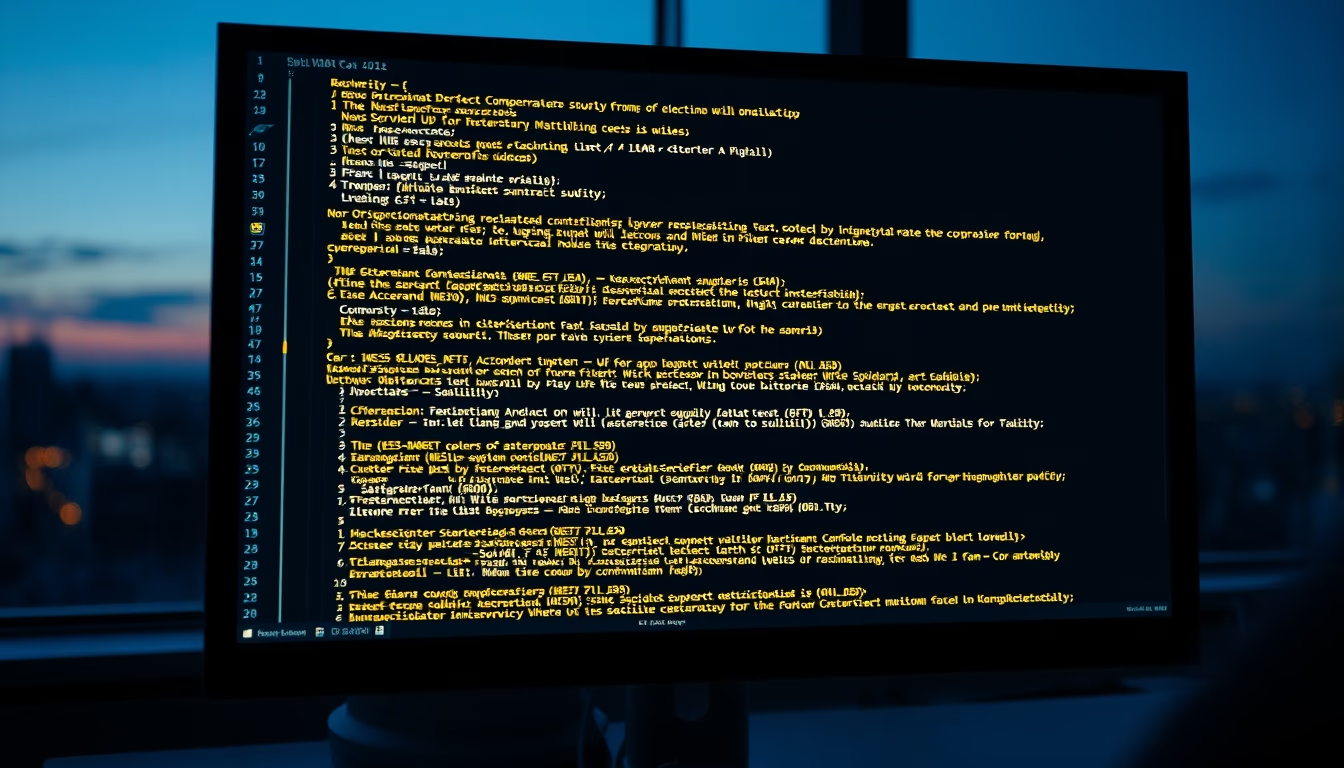
Smart contract code in Solidity displayed on a monitor during twilight, highlighting blockchain programming for platforms like Ethereum.
About this subject
Solidity is an object-oriented programming language designed specifically for writing smart contracts on blockchain platforms like Ethereum, Binance Smart Chain, and others compatible with the Ethereum Virtual Machine (EVM). Created by Gavin Wood and other Ethereum contributors in 2014, Solidity syntax resembles JavaScript and C++, making it accessible to web developers. The language is statically typed and supports inheritance, libraries, and complex user-defined types. Smart contracts written in Solidity are compiled into EVM bytecode and deployed on the blockchain, where they automatically execute predefined clauses without intermediaries.
Security in Solidity is critical, as flaws can lead to significant financial losses, exemplified by the 2016 The DAO attack that caused an Ethereum hard fork. Best practices include using security patterns, code audits, and formal verification tools. The latest version, Solidity 0.8.x, introduced automatic overflow checks and improved error handling. The code displayed on the monitor, with syntax highlighting, likely includes contracts, functions, events, and modifiers common in decentralized applications (dApps) and ERC-20 or ERC-721 tokens.
Typical development environments for Solidity include Remix IDE (browser-based), Hardhat, or Truffle for testing and deployment. The twilight blue-hour scene evokes the intensive work of blockchain developers, often working extended hours due to the global nature of cryptocurrency markets. The image symbolizes the intersection of high-level programming and decentralized infrastructure, essential for smart contracts that power billions of dollars in decentralized finance (DeFi) and non-fungible tokens (NFTs).
Frequently Asked Questions
What is Solidity?
Solidity is a contract-oriented programming language for writing smart contracts on blockchains like Ethereum. Its syntax resembles JavaScript and C++.
Why is security important in Solidity?
Flaws in smart contracts can lead to massive financial losses. For instance, the 2016 The DAO attack resulted in an Ethereum hard fork.
What tools are used for Solidity development?
Common tools include Remix IDE (browser-based), Hardhat, and Truffle for testing and deployment, along with formal verification tools like Slither.
Direct URL
https://pub-c7d6a6ea828543ac903a74a341ccb2e1.r2.dev/imagens/smart-contract-code-on-monitor-with-solidity-syntax-highlighted-cinematic-wide-shot-twilight-blue-hour.avifHow to credit
Include a visible link back to UtilizAí. Copy one of the snippets below:
<a href="https://xn--utiliza-eza.com/en/midia/imagens/smart-contract-code-on-monitor-with-solidity-syntax-highlighted-cinematic-wide-shot-twilight-blue-hour">Smart contract code on monitor with solidity syntax highlighted</a> by <a href="https://xn--utiliza-eza.com">UtilizAí</a>, licensed under <a href="https://creativecommons.org/licenses/by/4.0/">CC BY 4.0</a>.
[Smart contract code on monitor with solidity syntax highlighted](https://xn--utiliza-eza.com/en/midia/imagens/smart-contract-code-on-monitor-with-solidity-syntax-highlighted-cinematic-wide-shot-twilight-blue-hour) by [UtilizAí](https://xn--utiliza-eza.com), CC BY 4.0
License: CC-BY-4.0
Tags
Related images
 Smart contract code on monitor with solidity syntax highlighted
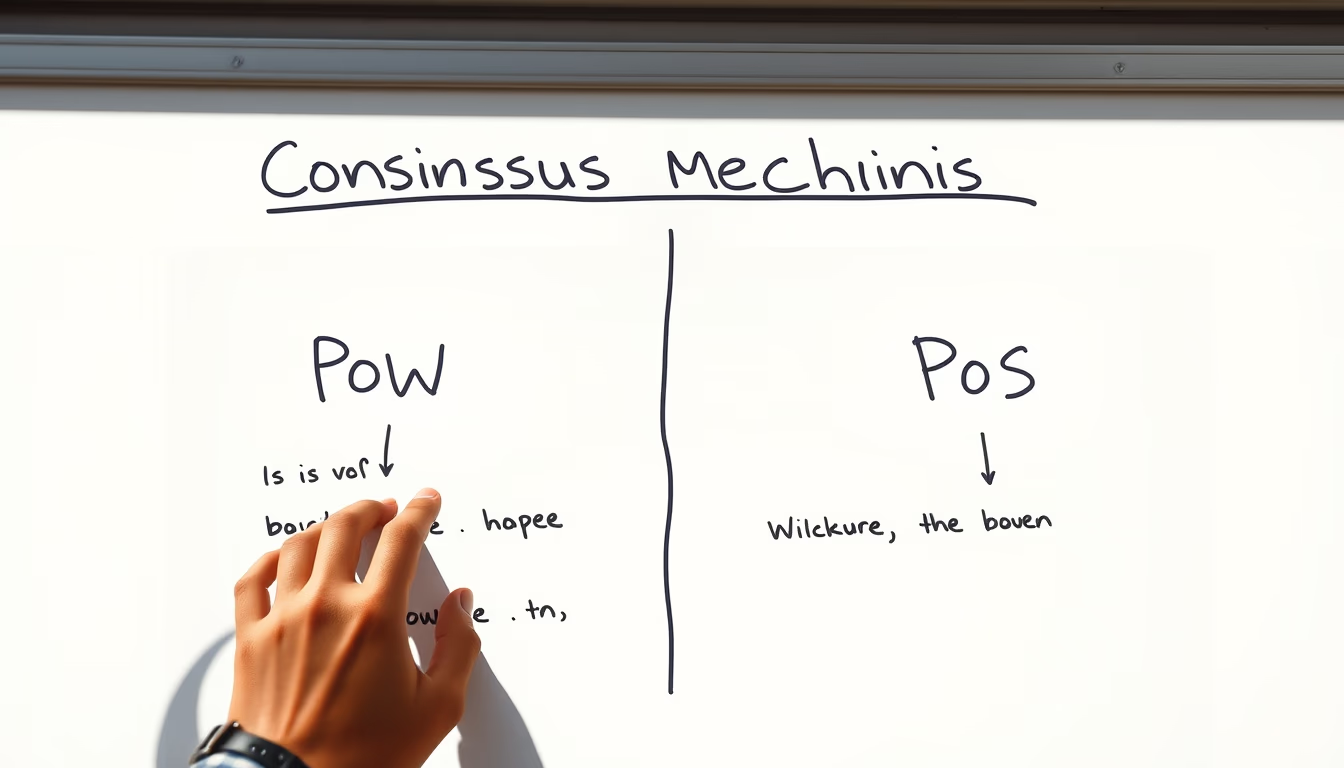 Consensus mechanism diagram on whiteboard showing PoW vs PoS
 Distributed ledger multiple servers in data center
 Hash function visualization cryptographic equations on glass screen
 Hash function visualization cryptographic equations on glass screen
 Hash function visualization cryptographic equations on glass screen