Smart contract code on monitor with solidity syntax highlighted
1344×768 · AVIF · CC BY 4.0
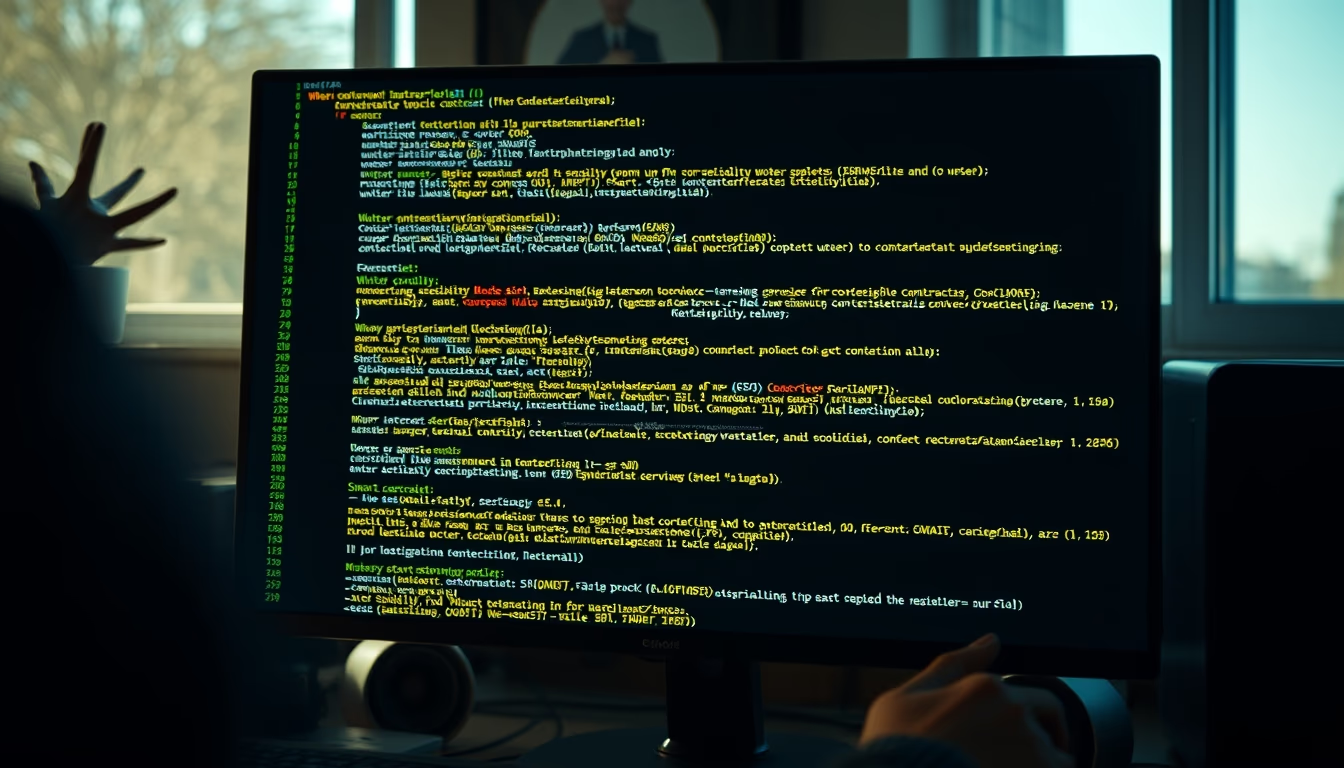
Smart contracts are self-executing programs on blockchains like Ethereum, written in Solidity, automating agreements without intermediaries.
About this subject
Smart contracts have revolutionized the way digital agreements are executed. Unlike traditional contracts, they do not rely on intermediaries like lawyers or notaries. Once deployed on a blockchain such as Ethereum, they automatically execute programmed clauses when predefined conditions are met. Solidity, a language created specifically for Ethereum, is the most popular for writing these contracts, with syntax similar to JavaScript.
The concept was proposed by Ethereum's creator, Vitalik Buterin, in 2013, and has since been used in decentralized applications (dApps), decentralized finance (DeFi), non-fungible tokens (NFTs), and more. Each smart contract is immutable after deployment, ensuring transparency and security, but requiring extreme care in coding to avoid vulnerabilities. The bug in The DAO contract in 2016, for example, led to the theft of millions of dollars in Ether.
Solidity is an object-oriented contract language supporting inheritance, libraries, and complex types. Developers use environments like Remix IDE or frameworks like Truffle and Hardhat to test and deploy contracts. The code is compiled into bytecode executed by the Ethereum Virtual Machine (EVM). Security is critical: code audits and static analysis tools like Slither and MythX help identify flaws.
Smart contracts are also used in supply chains, electronic voting, and decentralized identity systems. In Brazil, projects like the voting platform of the Pirate Party and agricultural product tracking initiatives explore their potential. Despite scalability challenges and gas costs, the technology continues to evolve with solutions like rollups and sidechains.
Frequently Asked Questions
What is Solidity?
Solidity is a high-level, object-oriented programming language used to write smart contracts on blockchains compatible with the Ethereum Virtual Machine (EVM).
Are smart contracts secure?
They are immutable and transparent, but vulnerabilities in the code can be exploited. Therefore, security audits and rigorous testing are essential before deployment.
What is the difference between a traditional contract and a smart contract?
Traditional contracts rely on third parties for execution and enforcement, while smart contracts automatically execute programmed clauses on a blockchain without intermediaries.
Direct URL
https://pub-c7d6a6ea828543ac903a74a341ccb2e1.r2.dev/imagens/smart-contract-code-on-monitor-with-solidity-syntax-highlighted-cinematic-wide-shot-morning-natural-light.avifHow to credit
Include a visible link back to UtilizAí. Copy one of the snippets below:
<a href="https://xn--utiliza-eza.com/en/midia/imagens/smart-contract-code-on-monitor-with-solidity-syntax-highlighted-cinematic-wide-shot-morning-natural-light">Smart contract code on monitor with solidity syntax highlighted</a> by <a href="https://xn--utiliza-eza.com">UtilizAí</a>, licensed under <a href="https://creativecommons.org/licenses/by/4.0/">CC BY 4.0</a>.
[Smart contract code on monitor with solidity syntax highlighted](https://xn--utiliza-eza.com/en/midia/imagens/smart-contract-code-on-monitor-with-solidity-syntax-highlighted-cinematic-wide-shot-morning-natural-light) by [UtilizAí](https://xn--utiliza-eza.com), CC BY 4.0
License: CC-BY-4.0
Tags
Related images
 Smart contract code on monitor with solidity syntax highlighted
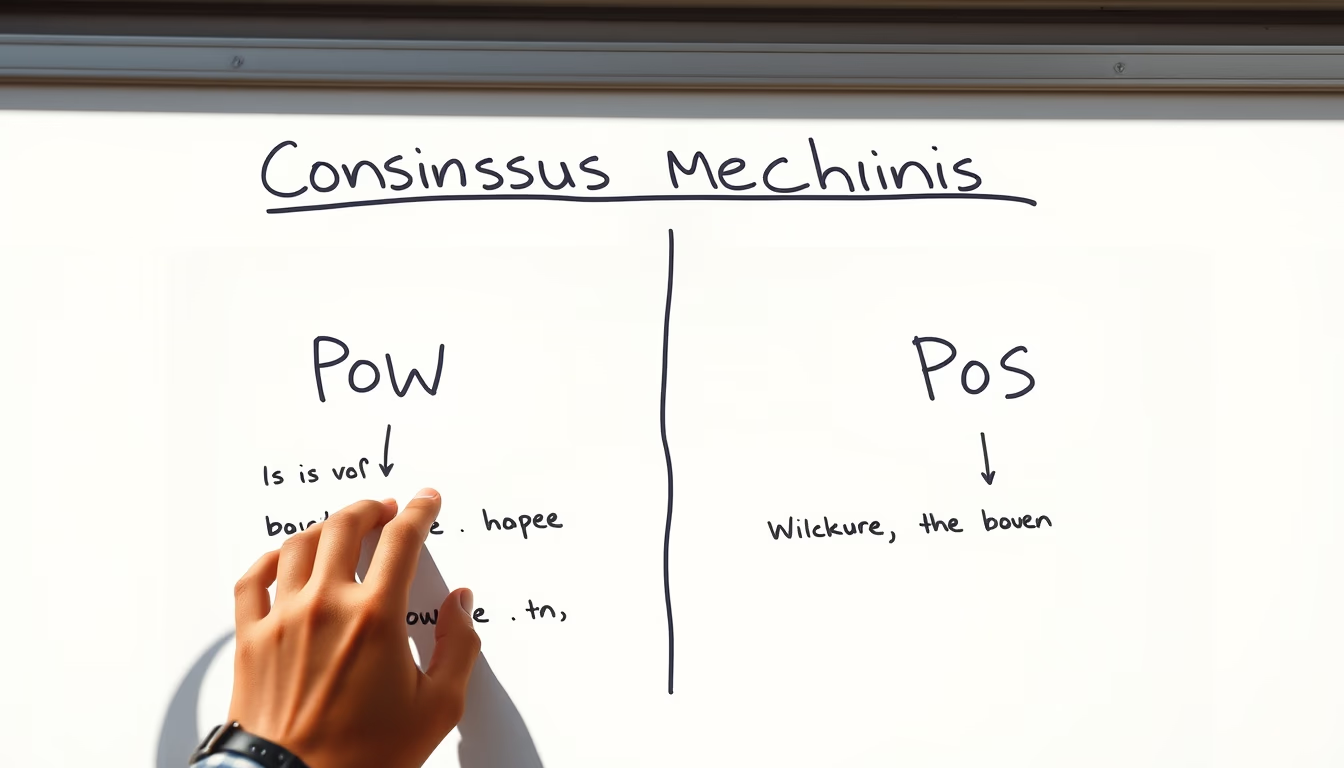 Consensus mechanism diagram on whiteboard showing PoW vs PoS
 Distributed ledger multiple servers in data center
 Hash function visualization cryptographic equations on glass screen
 Hash function visualization cryptographic equations on glass screen
 Hash function visualization cryptographic equations on glass screen