Smart contract code on monitor with solidity syntax highlighted
1344×768 · AVIF · CC BY 4.0
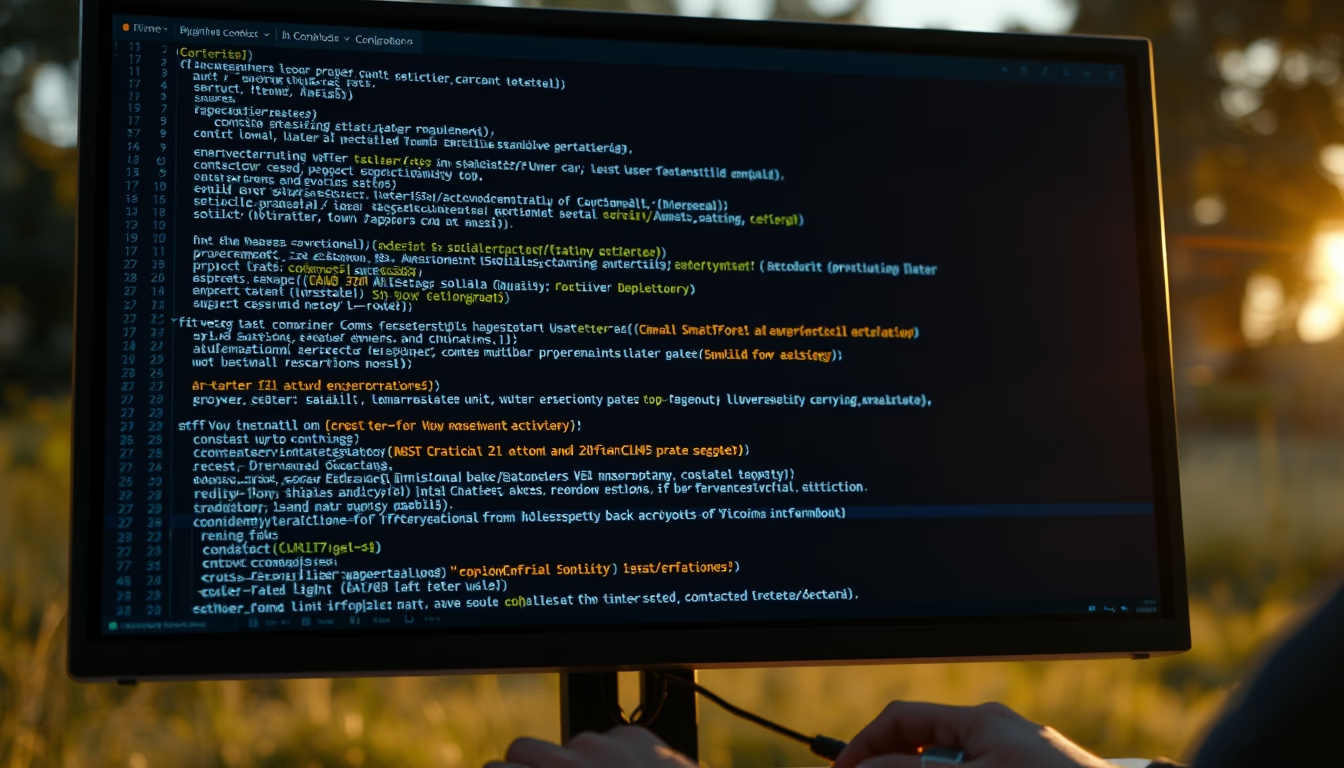
Smart contracts are self-executing contracts with terms written in code, running on blockchains like Ethereum.
About this subject
Smart contracts revolutionized how agreements are made and executed. Unlike traditional contracts, they do not rely on intermediaries like lawyers or notaries. Once deployed on a blockchain, the code is immutable and clauses are automatically executed when predefined conditions are met. This reduces costs, eliminates friction, and increases transparency.
Solidity is the most popular language for writing smart contracts on Ethereum, the leading blockchain for this purpose. Created in 2014 by Gavin Wood, Solidity is a high-level language influenced by C++, Python, and JavaScript. It allows defining variables, functions, events, and modifiers, and supports inheritance and libraries. The code is compiled into bytecode and executed on the Ethereum Virtual Machine (EVM).
Smart contracts have diverse applications: decentralized finance (DeFi), non-fungible tokens (NFTs), voting systems, insurance, and supply chains. For instance, the Uniswap protocol uses smart contracts for decentralized token swaps. In Brazil, there are initiatives like using blockchain for property registration and smart contracts in consortiums.
Security is critical. Code flaws can lead to million-dollar losses, such as the 2016 DAO attack that resulted in a theft of 3.6 million ETH. Therefore, audits and best practices like thorough testing and using standards like OpenZeppelin are essential. Despite risks, the technology continues to grow, with new blockchains like Solana and Polkadot offering alternatives for greater scalability.
Frequently Asked Questions
What is a smart contract?
It is a program stored on a blockchain that automatically executes contract clauses when predefined conditions are met.
What is the difference between a smart contract and a traditional contract?
Smart contracts do not rely on intermediaries, are immutable and self-executing, while traditional contracts require third parties for validation and enforcement.
Is Solidity the only language for smart contracts?
No. There are others like Vyper (for Ethereum), Rust (for Solana), and Michelson (for Tezos), but Solidity is the most widely used.
Direct URL
https://pub-c7d6a6ea828543ac903a74a341ccb2e1.r2.dev/imagens/smart-contract-code-on-monitor-with-solidity-syntax-highlighted-cinematic-wide-shot-golden-hour-late-afternoon.avifHow to credit
Include a visible link back to UtilizAí. Copy one of the snippets below:
<a href="https://xn--utiliza-eza.com/en/midia/imagens/smart-contract-code-on-monitor-with-solidity-syntax-highlighted-cinematic-wide-shot-golden-hour-late-afternoon">Smart contract code on monitor with solidity syntax highlighted</a> by <a href="https://xn--utiliza-eza.com">UtilizAí</a>, licensed under <a href="https://creativecommons.org/licenses/by/4.0/">CC BY 4.0</a>.
[Smart contract code on monitor with solidity syntax highlighted](https://xn--utiliza-eza.com/en/midia/imagens/smart-contract-code-on-monitor-with-solidity-syntax-highlighted-cinematic-wide-shot-golden-hour-late-afternoon) by [UtilizAí](https://xn--utiliza-eza.com), CC BY 4.0
License: CC-BY-4.0
Tags
Related images
 Smart contract code on monitor with solidity syntax highlighted
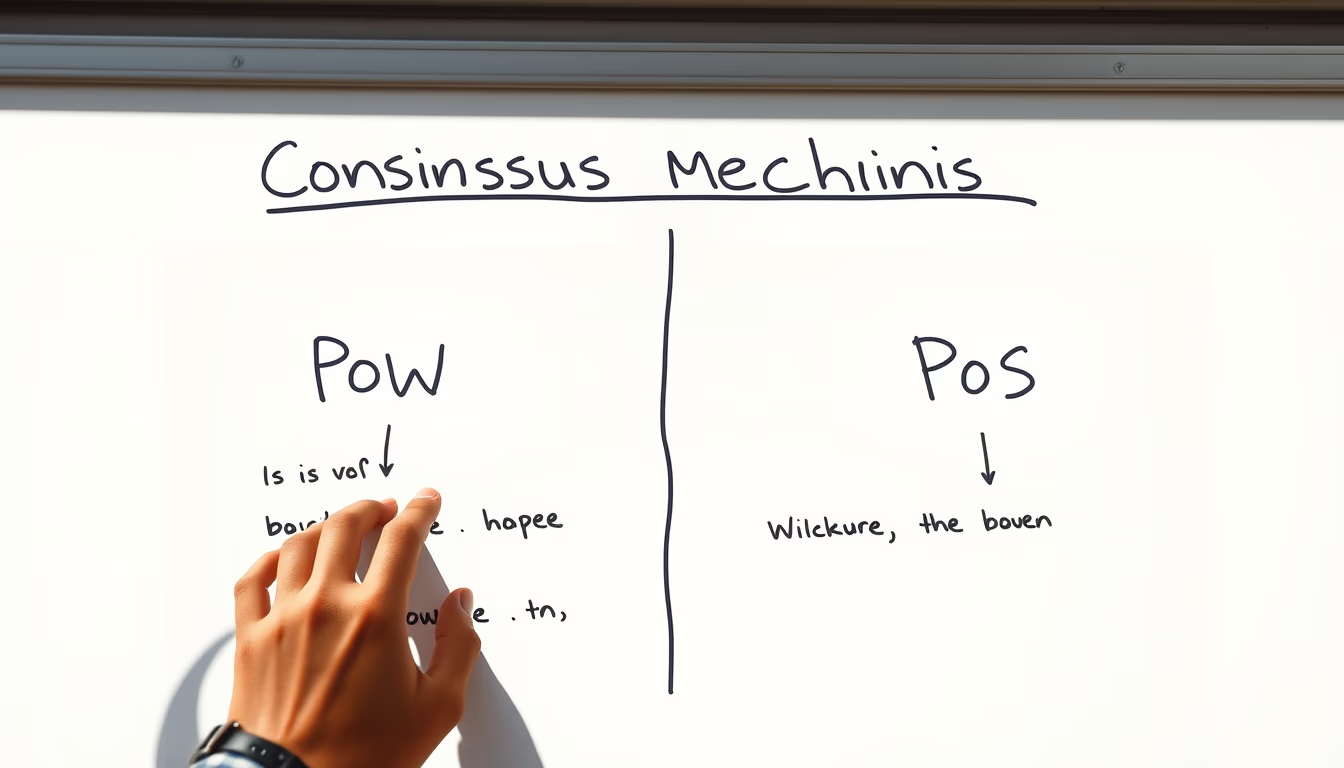 Consensus mechanism diagram on whiteboard showing PoW vs PoS
 Distributed ledger multiple servers in data center
 Hash function visualization cryptographic equations on glass screen
 Hash function visualization cryptographic equations on glass screen
 Hash function visualization cryptographic equations on glass screen