Smart contract code on monitor with solidity syntax highlighted
1344×768 · AVIF · CC BY 4.0
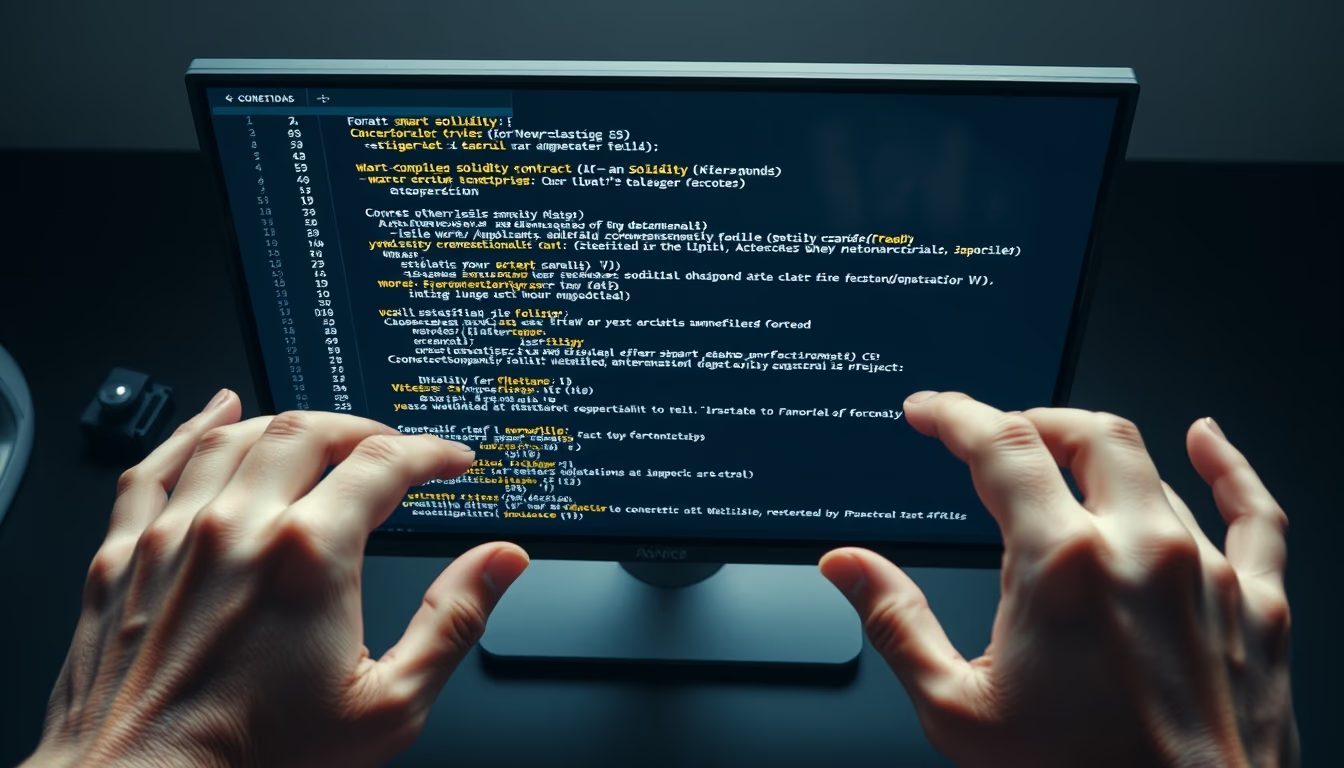
Smart contracts are self-executing contracts written in code, such as Solidity, that run on blockchains like Ethereum and automate agreements without intermediaries.
About this subject
Smart contracts are programs stored on a blockchain that automatically execute when predefined conditions are met. They eliminate the need for intermediaries like lawyers or banks, reducing costs and increasing transparency. Solidity, created in 2014 by developer Gavin Wood, is the primary language for writing smart contracts on Ethereum, the most popular blockchain for this purpose.
Solidity code is compiled into bytecode and deployed on the blockchain, where it becomes immutable and visible to all network participants. Each contract has a unique address and can interact with other contracts, forming decentralized applications (dApps). Famous examples include ERC-20 tokens like USDT and DeFi platforms like Uniswap, which process billions of dollars daily.
A curiosity about Solidity is that its syntax is heavily inspired by C++ and JavaScript, making it easy for experienced programmers to adopt. However, bugs in the code can lead to severe vulnerabilities, such as the 2016 DAO attack, which resulted in the theft of 3.6 million Ether (about $50 million at the time) and led to a hard fork of Ethereum. Therefore, contract auditing is an essential practice in the ecosystem.
Smart contracts are also used in supply chains, electronic voting, insurance, and more. Despite the name, they are not legal contracts in the traditional sense but programmable agreements that execute actions autonomously. The technology continues to evolve, with new languages like Rust (for Solana) and Move (for Aptos) competing with Solidity.
Frequently Asked Questions
What is Solidity?
Solidity is a contract-oriented programming language created for writing smart contracts on the Ethereum blockchain. Its syntax is similar to C++ and JavaScript.
Are smart contracts legal contracts?
No. Smart contracts are code that automatically executes actions on a blockchain. Although they can represent agreements, they are not legally binding unless integrated with a legal contract.
What is the difference between smart contract and blockchain?
Blockchain is the distributed ledger technology that stores data immutably. Smart contracts are programs that run on that blockchain, automating transactions and business rules.
Direct URL
https://pub-c7d6a6ea828543ac903a74a341ccb2e1.r2.dev/imagens/smart-contract-code-on-monitor-with-solidity-syntax-highlighted-aerial-drone-shot-studio-professional-lighting.avifHow to credit
Include a visible link back to UtilizAí. Copy one of the snippets below:
<a href="https://xn--utiliza-eza.com/en/midia/imagens/smart-contract-code-on-monitor-with-solidity-syntax-highlighted-aerial-drone-shot-studio-professional-lighting">Smart contract code on monitor with solidity syntax highlighted</a> by <a href="https://xn--utiliza-eza.com">UtilizAí</a>, licensed under <a href="https://creativecommons.org/licenses/by/4.0/">CC BY 4.0</a>.
[Smart contract code on monitor with solidity syntax highlighted](https://xn--utiliza-eza.com/en/midia/imagens/smart-contract-code-on-monitor-with-solidity-syntax-highlighted-aerial-drone-shot-studio-professional-lighting) by [UtilizAí](https://xn--utiliza-eza.com), CC BY 4.0
License: CC-BY-4.0
Tags
Related images
 Smart contract code on monitor with solidity syntax highlighted
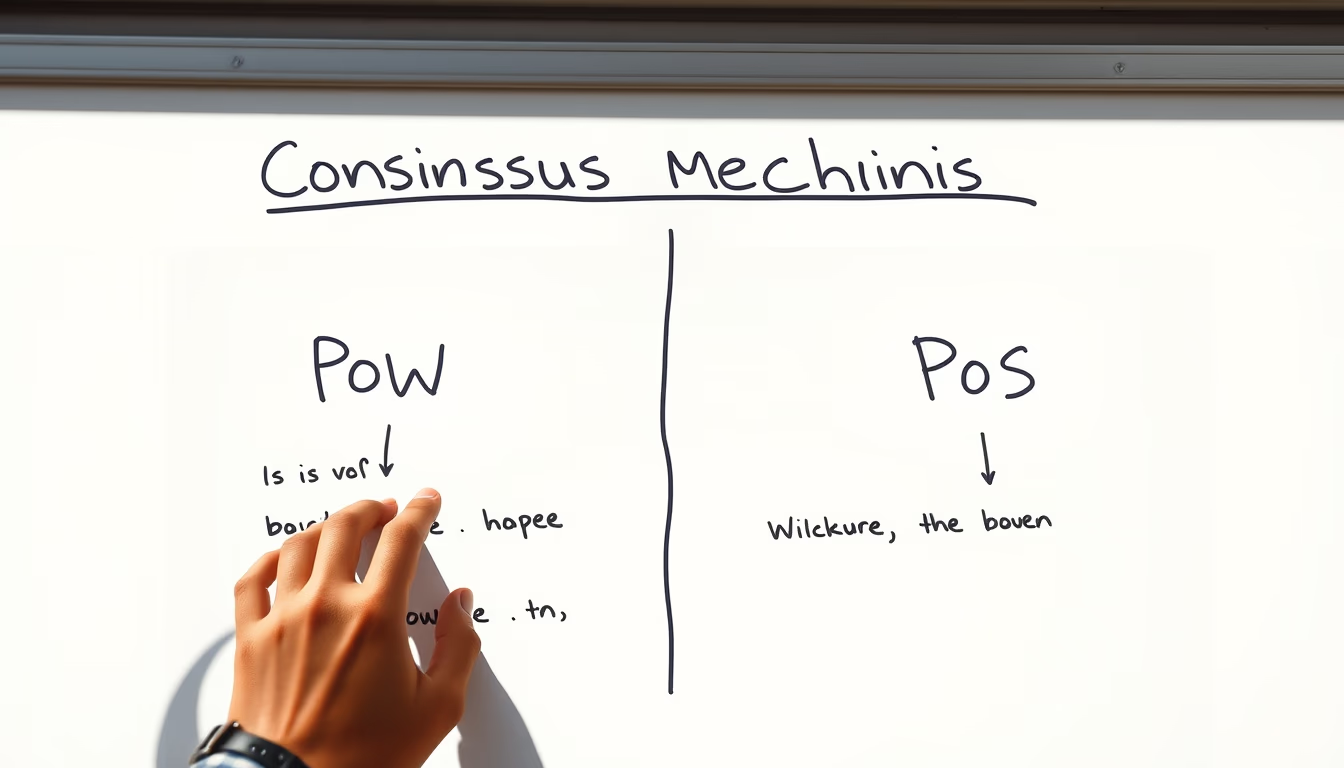 Consensus mechanism diagram on whiteboard showing PoW vs PoS
 Distributed ledger multiple servers in data center
 Hash function visualization cryptographic equations on glass screen
 Hash function visualization cryptographic equations on glass screen
 Hash function visualization cryptographic equations on glass screen