Ski poles modern
1344×768 · AVIF · CC BY 4.0
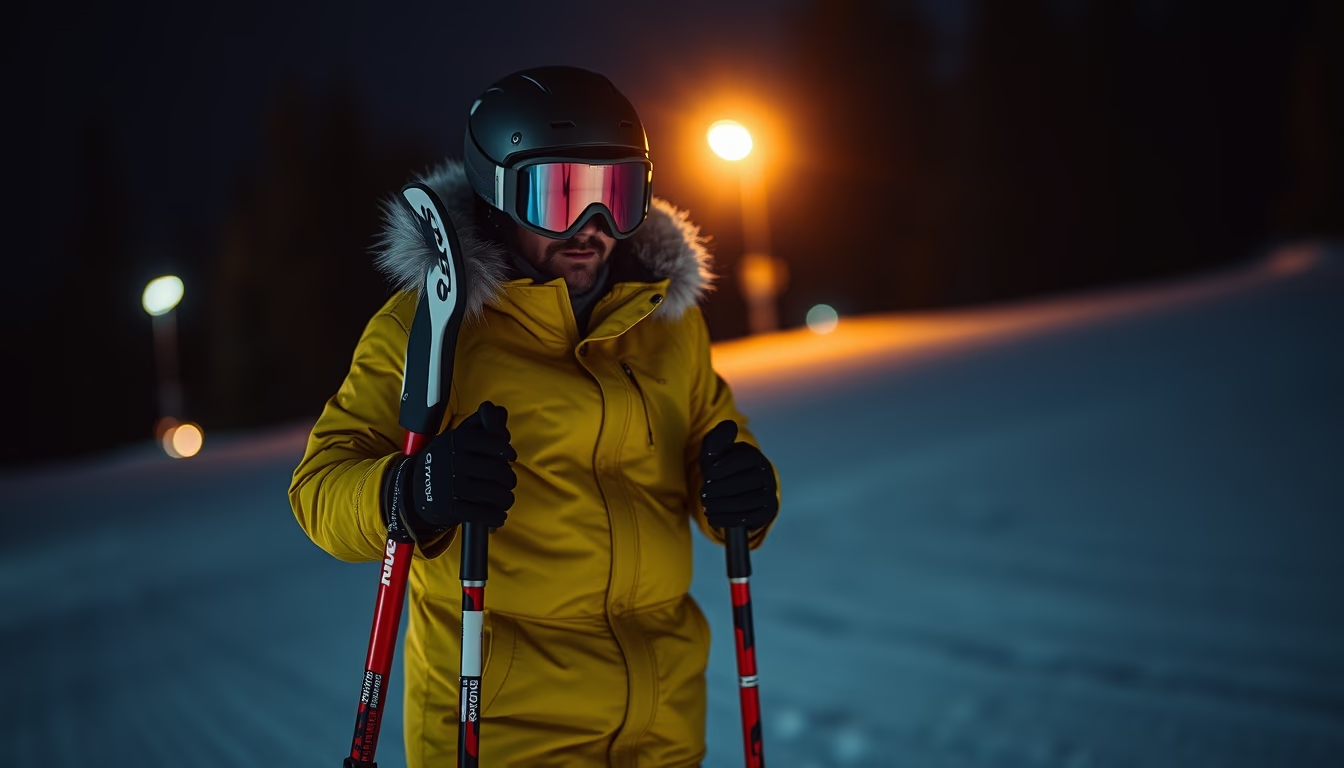
Modern ski poles combine lightweight materials and ergonomic design for enhanced performance across various skiing disciplines.
About this subject
Ski poles have evolved significantly from the rudimentary wooden or bamboo models used in the early 20th century. Today, modern ski poles are primarily made of aircraft-grade aluminum or carbon fiber, materials that offer high strength with reduced weight. Carbon fiber, in particular, provides superior vibration damping, which reduces arm fatigue during long descents and on uneven terrain. The design incorporates anatomically molded grips, typically made of rubber or cork, and adjustable straps that ensure security and comfort. The baskets at the base vary in diameter according to the discipline: smaller baskets for groomed slopes and larger ones for powder or off-piste skiing.
Technology has also brought innovations such as quick-release strap systems, which prevent injuries during falls, and telescopic adjustable poles, popular among ski touring and cross-country skiers. The stiffness of the shaft is calibrated for different styles: more flexible poles for beginners and stiffer poles for competitors who require precise power transfer. Additionally, the pole angle (the angle between the grip and the basket) is designed to optimize thrust in each phase of the pole plant.
Interestingly, standard length follows a rule of thumb: the ideal pole should form a 90-degree angle between the arm and forearm when held with the tip on the ground. In slalom and downhill competitions, athletes often use shorter poles to keep the center of gravity low and improve aerodynamics. In cross-country skiing, longer poles aid propulsion. The choice of material and design reflects not only the skier's level but also the specific snow and terrain conditions.
In the context of Brazil, although skiing is not a native sport, demand for modern equipment grows with winter tourism in countries like Argentina, Chile, and the United States. Specialized stores in Brazil offer poles from global brands such as Leki, Black Diamond, and Scott, which invest in research to reduce weight and increase durability. The continuous evolution of ski poles illustrates how small engineering details can transform the snow experience, whether for an Olympic athlete or a beginner.
Frequently Asked Questions
What is the difference between aluminum and carbon fiber ski poles?
Aluminum poles are more impact-resistant and affordable, suitable for beginners. Carbon fiber poles are lighter, absorb vibrations better, and offer higher stiffness, preferred by advanced and competitive skiers.
How do I choose the correct ski pole length?
Standing with arms at your sides and holding the pole by the strap, your forearm should form a right angle (90 degrees) with your upper arm. This typically corresponds to about 70-80% of your height.
Are telescopic poles recommended for all types of skiing?
Telescopic poles are excellent for ski touring and cross-country, as they allow length adjustment for terrain and climbs. For alpine skiing on groomed slopes, fixed poles are lighter and stiffer, providing better performance.
Direct URL
https://pub-c7d6a6ea828543ac903a74a341ccb2e1.r2.dev/imagens/ski-poles-modern-fine-art-photography-fresh9.avifHow to credit
Include a visible link back to UtilizAí. Copy one of the snippets below:
<a href="https://xn--utiliza-eza.com/en/midia/imagens/ski-poles-modern-fine-art-photography-fresh9">Ski poles modern</a> by <a href="https://xn--utiliza-eza.com">UtilizAí</a>, licensed under <a href="https://creativecommons.org/licenses/by/4.0/">CC BY 4.0</a>.
[Ski poles modern](https://xn--utiliza-eza.com/en/midia/imagens/ski-poles-modern-fine-art-photography-fresh9) by [UtilizAí](https://xn--utiliza-eza.com), CC BY 4.0
License: CC-BY-4.0