Ski poles modern
1344×768 · AVIF · CC BY 4.0
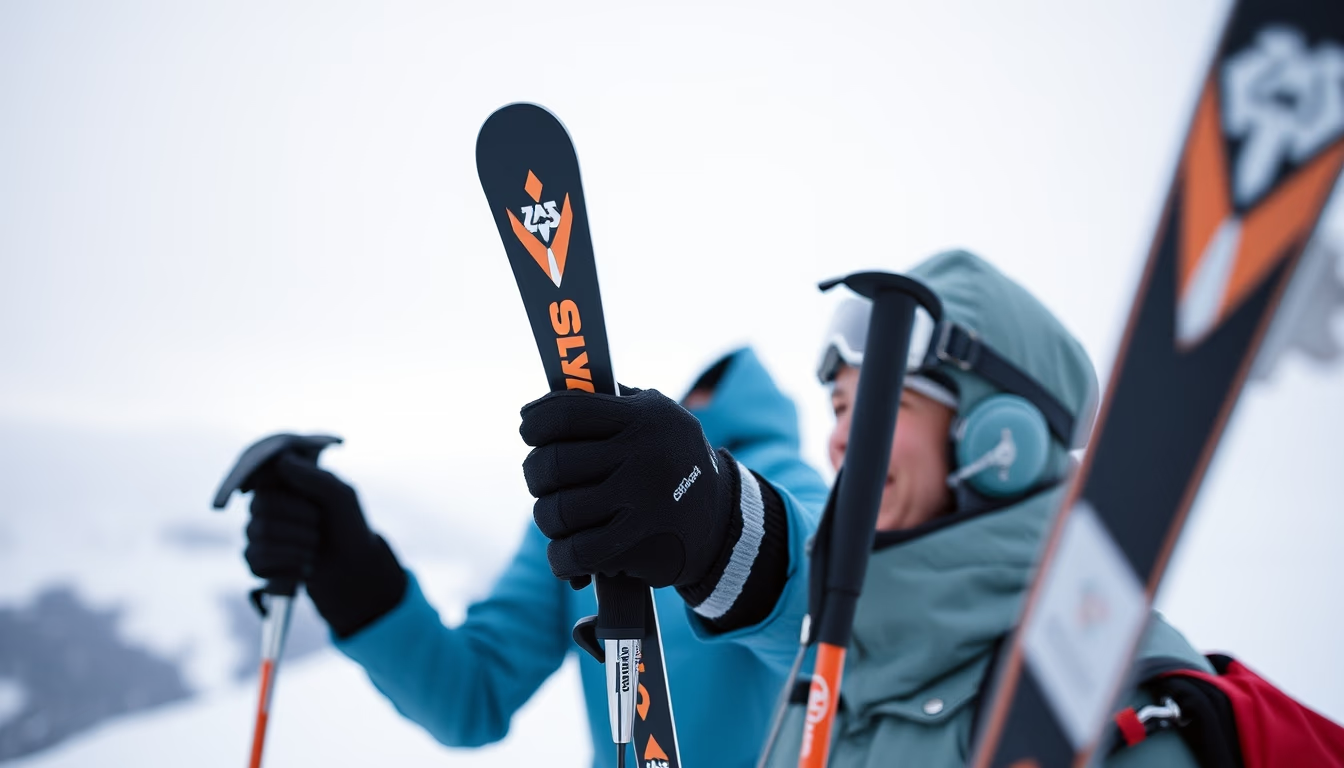
Modern ski poles are essential tools for balance, propulsion, and safety on snowy slopes, evolving from simple wooden sticks to high-tech equipment.
About this subject
Modern ski poles are far more than simple accessories. They play a crucial role in stability, movement coordination, and energy efficiency for skiers. Originally made of bamboo or wood, ski poles underwent a significant transformation starting in the 1960s, when materials like aluminum and fiberglass came into use. Today, most high-performance poles are made of carbon fiber or aeronautical-grade aluminum alloys, combining lightness and strength.
Current design includes ergonomic grips with adjustable straps that provide a comfortable and secure fit, preventing pole loss during descents. The tips are usually made of tungsten carbide, an extremely hard material that ensures grip on icy surfaces and packed snow. Baskets vary in size and shape depending on the discipline: wide baskets for powder snow and smaller baskets for groomed trails.
A technical curiosity is the concept of "ideal pole length," which should typically reach between the skier's shoulder and chin. In disciplines like ski cross or alpine racing, poles are shorter to facilitate quick movements and tight turns. In cross-country skiing, poles are longer to maximize propulsion with each stride.
The evolution of poles also reflects safety advancements. Modern models feature quick-release mechanisms or straps that detach during a fall, reducing the risk of thumb and wrist injuries. Additionally, the integration with adjustable trekking poles shows the equipment's versatility, adapting to various snow conditions and skier profiles.
Frequently Asked Questions
What is the main function of ski poles?
Ski poles help with balance, propulsion (especially on flat terrain or uphills), and movement coordination. They also assist in maintaining rhythm and distributing body weight during turns.
How do I choose the correct length of ski poles?
The ideal length depends on the discipline. For alpine skiing, the pole should reach between the shoulder (when held upside down) and the chin. For cross-country, the pole tip should touch the ground with the arm forming a 90-degree angle at the elbow.
What materials are modern ski poles made of?
Modern poles are mainly made of aluminum (lightweight and durable) or carbon fiber (lighter and stiffer, but more expensive). Grips are made of rubber, cork, or thermomolded plastic, and tips use tungsten carbide for greater durability.
Direct URL
https://pub-c7d6a6ea828543ac903a74a341ccb2e1.r2.dev/imagens/ski-poles-modern-film-grain-authentic-fresh15.avifHow to credit
Include a visible link back to UtilizAí. Copy one of the snippets below:
<a href="https://xn--utiliza-eza.com/en/midia/imagens/ski-poles-modern-film-grain-authentic-fresh15">Ski poles modern</a> by <a href="https://xn--utiliza-eza.com">UtilizAí</a>, licensed under <a href="https://creativecommons.org/licenses/by/4.0/">CC BY 4.0</a>.
[Ski poles modern](https://xn--utiliza-eza.com/en/midia/imagens/ski-poles-modern-film-grain-authentic-fresh15) by [UtilizAí](https://xn--utiliza-eza.com), CC BY 4.0
License: CC-BY-4.0