Ski poles modern
1344×768 · AVIF · CC BY 4.0
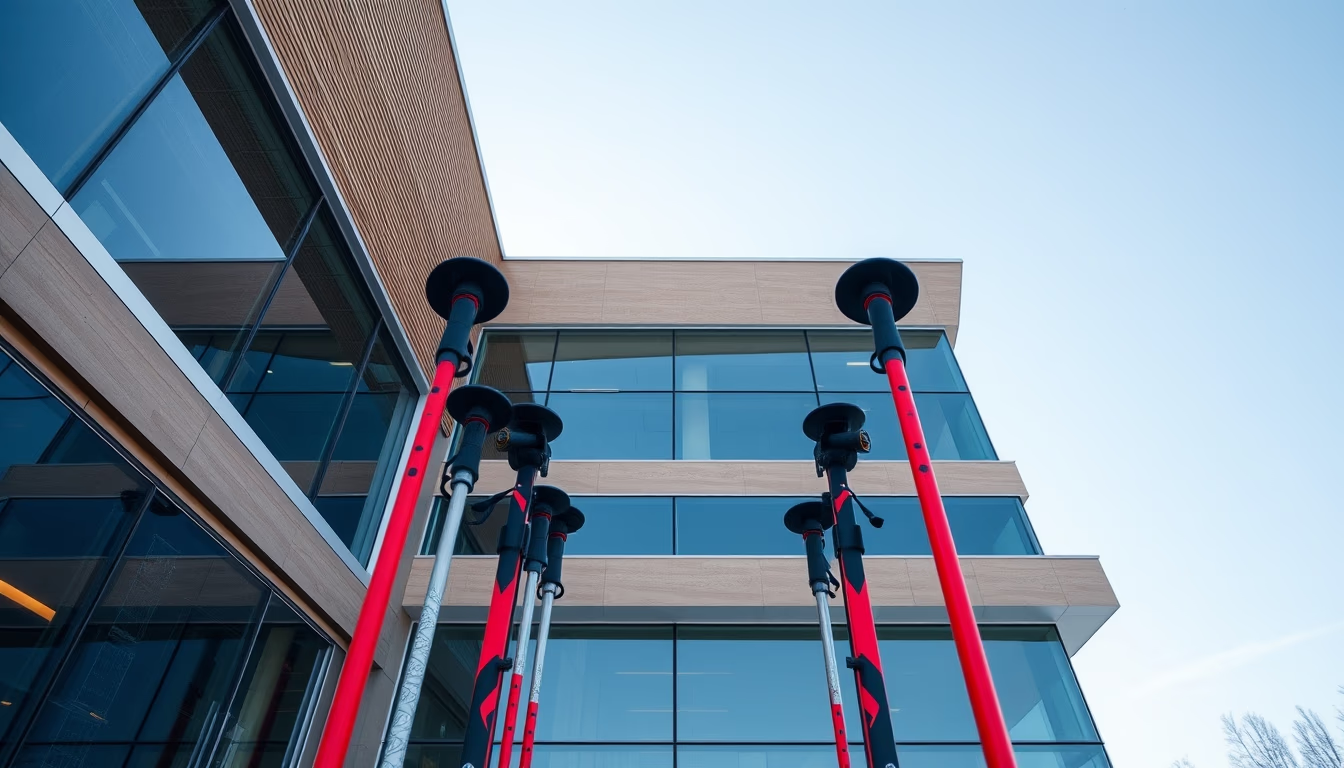
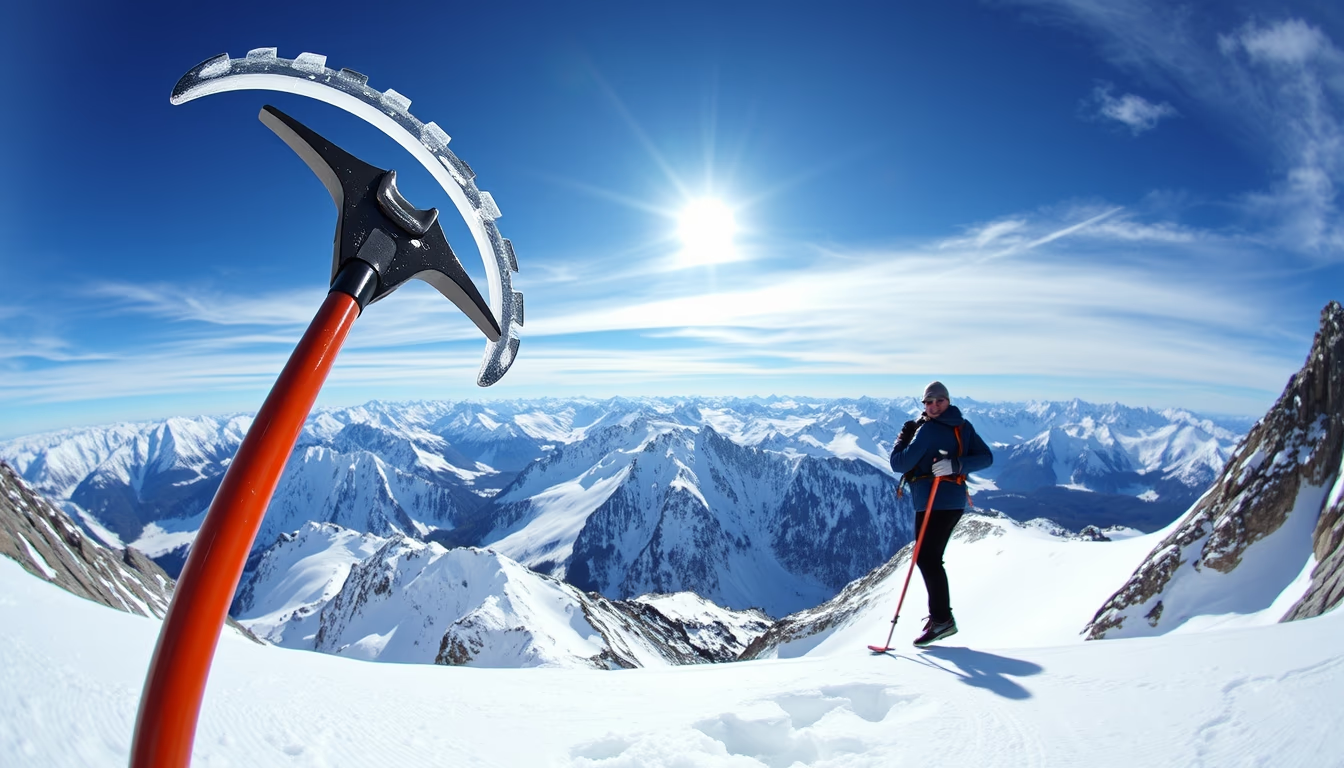
Modern ski poles combine materials like carbon fiber and aluminum for lightness and durability, essential for balance and propulsion on snow.
About this subject
Modern ski poles have evolved significantly from the bamboo and steel models used in the early 20th century. Today, predominant materials are carbon fiber and aluminum alloys 7075 or 7001, offering high strength-to-weight ratios. Carbon fiber, for instance, is up to 40% lighter than aluminum, reducing skier fatigue on long descents or cross-country trails. Aluminum, however, is more impact-resistant and less prone to bending, favored by beginners and freeride skiers.
Ergonomic grip design is another crucial advancement. Materials like thermoplastic rubber and cork conform to the hand, providing comfort and grip even with gloves. Strap systems, from standard straps to modern quick-release mechanisms, prevent pole loss during falls. Baskets vary by snow type: wide baskets for powder and smaller ones for packed slopes.
Anti-shock technology in some models uses internal springs to absorb vibrations on uneven terrain, reducing joint stress. Telescopic adjustable poles have become popular in ski mountaineering and ski touring, allowing quick height adjustment for ascents and descents. The current trend includes integration with navigation devices and heart rate monitors, though still a niche.
Interestingly, pole length selection follows a practical rule: standing with the tip on the ground, the elbow should form a 90-degree angle. This fine-tuning directly affects poling efficiency and posture. In high-level competitions, athletes customize even the basket angle and shaft stiffness to maximize force transfer.
Frequently Asked Questions
What is the best material for ski poles?
It depends on use. Carbon fiber is lighter and absorbs vibrations, ideal for long-duration skiing. Aluminum is more durable and cheaper, recommended for beginners and off-piste skiing.
How do I choose the correct ski pole length?
Stand with the pole held by the grip and the tip on the ground. Your elbow should form a 90-degree angle. For cross-country skiing, multiply your height by 0.85.
Are anti-shock ski poles worth it?
Yes, especially on uneven terrain or for skiers with joint issues. They reduce impact on hands and wrists, though they may be slightly heavier.
Direct URL
https://pub-c7d6a6ea828543ac903a74a341ccb2e1.r2.dev/imagens/ski-poles-modern-architectural-photography-fresh14.avifHow to credit
Include a visible link back to UtilizAí. Copy one of the snippets below:
<a href="https://xn--utiliza-eza.com/en/midia/imagens/ski-poles-modern-architectural-photography-fresh14">Ski poles modern</a> by <a href="https://xn--utiliza-eza.com">UtilizAí</a>, licensed under <a href="https://creativecommons.org/licenses/by/4.0/">CC BY 4.0</a>.
[Ski poles modern](https://xn--utiliza-eza.com/en/midia/imagens/ski-poles-modern-architectural-photography-fresh14) by [UtilizAí](https://xn--utiliza-eza.com), CC BY 4.0
License: CC-BY-4.0