Ski boots boots snow
1344×768 · AVIF · CC BY 4.0
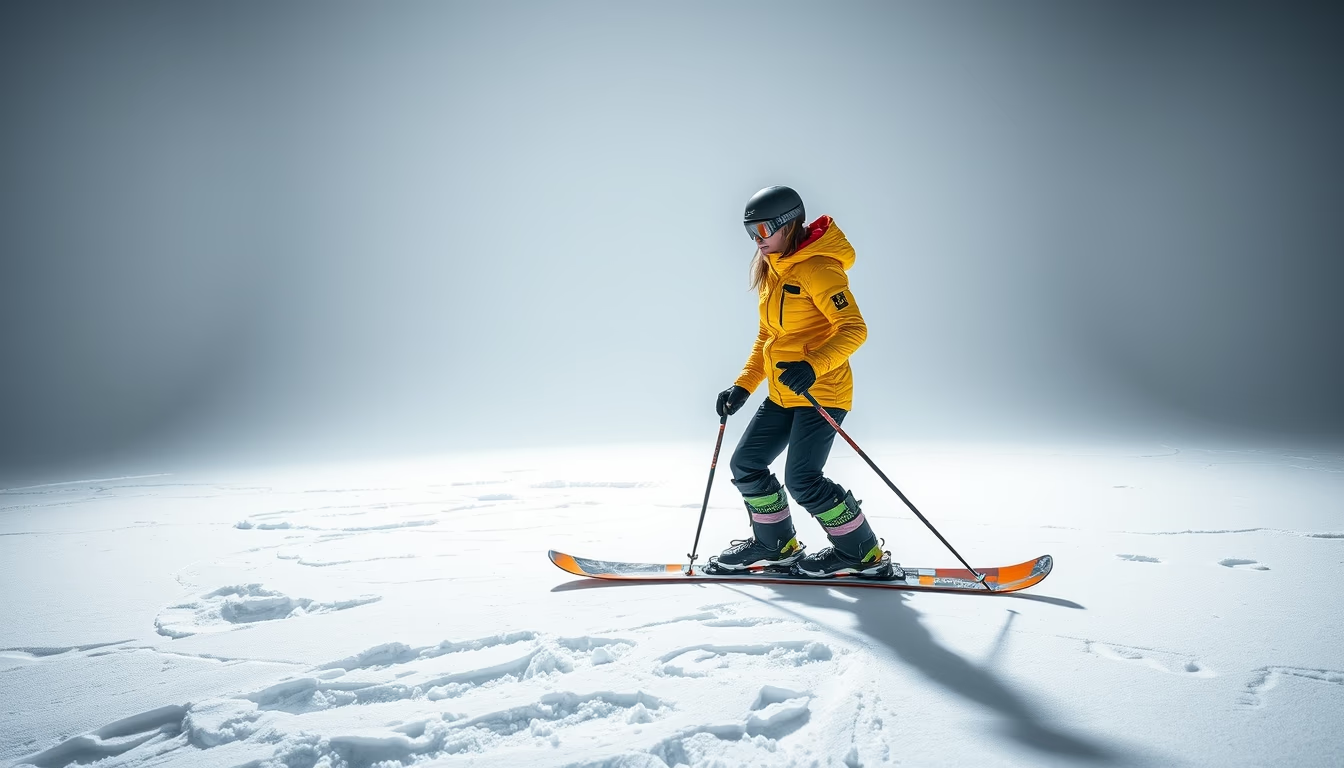
Ski boots are essential equipment connecting the skier to the skis, combining rigidity and comfort for precise control.
About this subject
Ski boots are the most critical component of a skier's gear, responsible for transmitting every leg movement to the skis. Made from rigid plastics (such as polyurethane or polyethylene) with moldable inner liners, they must provide lateral support without compromising circulation. Stiffness, measured by flex index (scale 50 to 150), varies by skill level: beginners use more flexible boots (50-70), while advanced skiers prefer stiffness above 110 for better response at high speeds.
Custom fitting is essential. Many shops offer heat molding of the liner and even the outer shell, adapting the boot to the foot's shape. This reduces pressure points and improves energy transfer. Additional components like buckles and power straps ensure a secure closure. Compatibility with bindings is standardized under ISO 5355 for alpine boots, but touring models (like Tech standards) allow ankle articulation for walking.
Historically, ski boots evolved from leather and laces in the 1950s to injected plastics in the 1970s, with the introduction of the three-buckle boot. Today, brands like Lange, Salomon, and Atomic dominate the market, offering models with thermal insulation and interchangeable soles (GripWalk) that enhance walking. Proper maintenance, drying after use, lubricating buckles, and storing at room temperature, extends lifespan. Choosing the right boot can prevent injuries like tibial fractures (boot top fracture) and significantly improve on-snow performance.
Frequently Asked Questions
How do I determine the correct ski boot size?
Measure your foot length in centimeters and consult the manufacturer's size chart. The fit should be snug, with no heel lift but not too tight on the toes. Try with thin ski socks and consider heat molding if available.
What is flex index and how to choose?
Flex index measures boot stiffness. Beginners use flex 50-70; intermediate 70-90; advanced 90-110; expert above 110. Choose based on your weight, height, and skiing style. Too stiff is exhausting, too soft lacks control.
Can I use any ski boot with any binding?
No. Alpine boots follow ISO 5355 standard for alpine bindings. Touring boots (Tech standard) require specific bindings. GripWalk or WTR soles need binding compatibility. Always check before renting or buying.
Direct URL
https://pub-c7d6a6ea828543ac903a74a341ccb2e1.r2.dev/imagens/ski-boots-boots-snow-studio-editorial-portrait-fresh7.avifHow to credit
Include a visible link back to UtilizAí. Copy one of the snippets below:
<a href="https://xn--utiliza-eza.com/en/midia/imagens/ski-boots-boots-snow-studio-editorial-portrait-fresh7">Ski boots boots snow</a> by <a href="https://xn--utiliza-eza.com">UtilizAí</a>, licensed under <a href="https://creativecommons.org/licenses/by/4.0/">CC BY 4.0</a>.
[Ski boots boots snow](https://xn--utiliza-eza.com/en/midia/imagens/ski-boots-boots-snow-studio-editorial-portrait-fresh7) by [UtilizAí](https://xn--utiliza-eza.com), CC BY 4.0
License: CC-BY-4.0