Ski boots boots snow
1344×768 · AVIF · CC BY 4.0
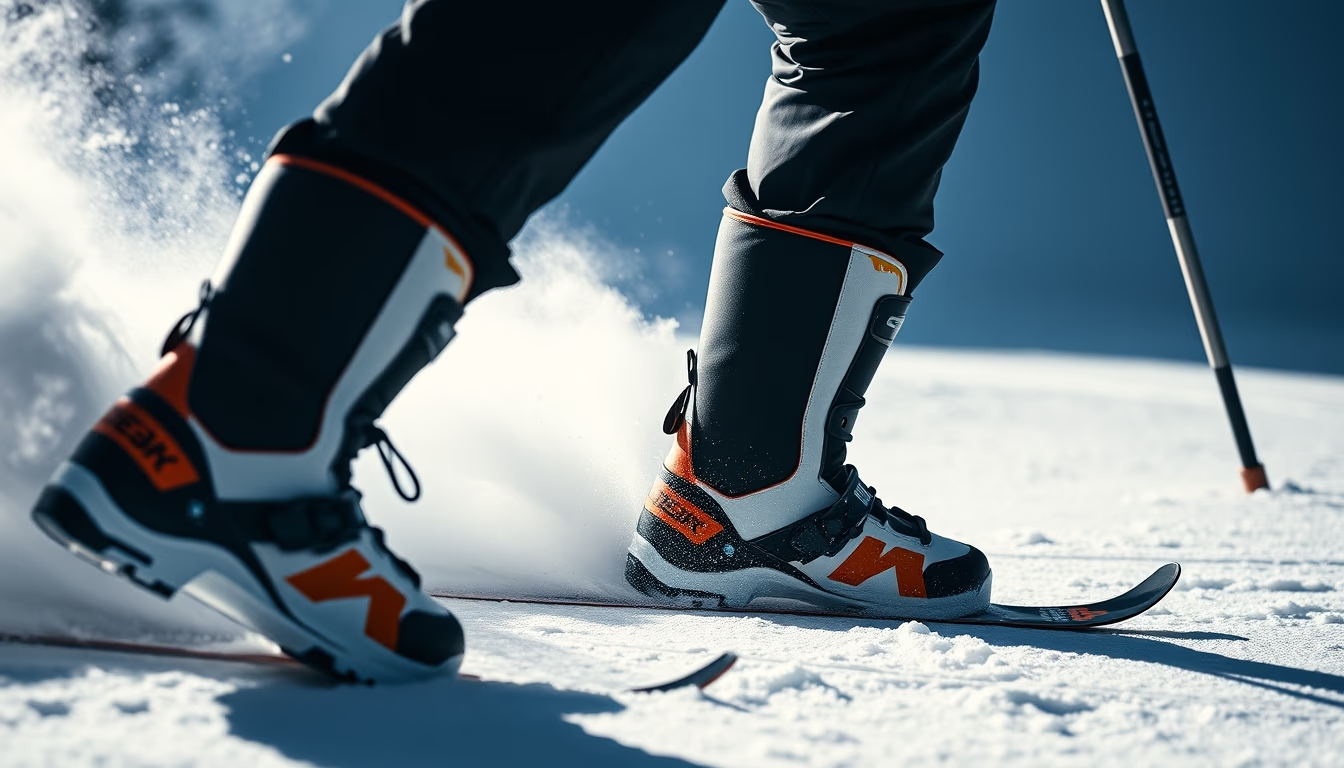
Ski boots are technical footwear that connect the skier to the equipment, ensuring control and safety on the slopes.
About this subject
Ski boots are essential components of ski equipment, acting as the interface between the skier and the skis. Unlike regular footwear, they are designed to transmit precise forces to the ski, enabling turns, braking, and maneuvers. The modern development of ski boots began in the 1960s when materials like plastic and polyurethane replaced leather, offering greater stiffness and durability. Today, most boots are made from injected thermoplastics with adjustable components to customize the fit.
There are different categories of ski boots classified by flexibility (flex index) and type of skiing. Beginner boots have a softer flex (60-80), while advanced and competition models reach flex 130-150. Innovations such as walk mode allow ankle articulation for easier movement off skis, common in touring boots. Renowned brands like Lange, Dalbello, Salomon, and Nordica invest in shell, liner, and buckle technology to improve comfort and performance.
Proper boot selection is crucial for skiing safety and enjoyment. A poorly fitted boot can cause discomfort, loss of control, and even injuries. Heat molding is common in intermediate to advanced boots, where the liner is heated to adapt to the foot's shape. Another curiosity is that on snow, boots must be kept dry and warm to prevent frostbite, and wearing specific ski socks (thin, wool or synthetic) is recommended for better temperature regulation.
Frequently Asked Questions
How to choose the right size of ski boots?
Ski boot size is measured in mondopoint (foot length in cm). The boot should be snug but not painful. It is recommended to try them on with thin ski socks and gradually tighten the buckles.
What is the difference between alpine and touring ski boots?
Alpine ski boots are stiff and focused on on-piste performance, with no ankle articulation. Touring boots have a walk mode, soles compatible with touring bindings, and greater mobility for uphill travel.
How to maintain ski boots after use?
Dry boots at room temperature, away from heat sources. Store with buckles closed to maintain shape. Avoid prolonged sun exposure and lubricate buckles periodically.
Direct URL
https://pub-c7d6a6ea828543ac903a74a341ccb2e1.r2.dev/imagens/ski-boots-boots-snow-rembrandt-lighting-dramatic-shadows-fresh4.avifHow to credit
Include a visible link back to UtilizAí. Copy one of the snippets below:
<a href="https://xn--utiliza-eza.com/en/midia/imagens/ski-boots-boots-snow-rembrandt-lighting-dramatic-shadows-fresh4">Ski boots boots snow</a> by <a href="https://xn--utiliza-eza.com">UtilizAí</a>, licensed under <a href="https://creativecommons.org/licenses/by/4.0/">CC BY 4.0</a>.
[Ski boots boots snow](https://xn--utiliza-eza.com/en/midia/imagens/ski-boots-boots-snow-rembrandt-lighting-dramatic-shadows-fresh4) by [UtilizAí](https://xn--utiliza-eza.com), CC BY 4.0
License: CC-BY-4.0