Ski boots boots snow
1344×768 · AVIF · CC BY 4.0
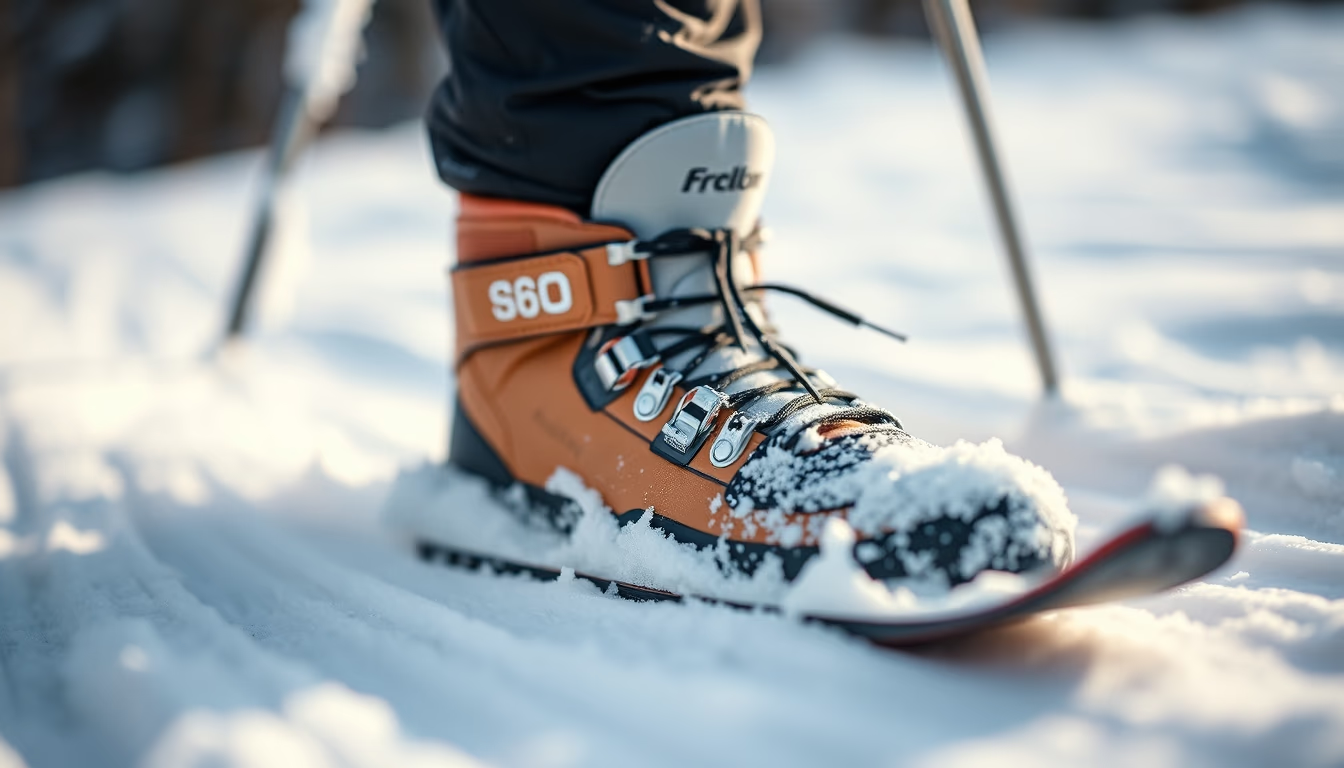
Ski boots are essential gear for control and safety on snowy slopes, combining rigidity and thermal comfort.
About this subject
Ski boots are the most critical link between the skier and their equipment. They transfer every leg movement to the skis, enabling precise turns, speed control, and safe stops. Unlike ordinary footwear, ski boots feature rigid plastic shells (typically polyurethane or polyethylene) that encase the foot and lower leg, providing lateral support and impact absorption.
The inner construction includes a liner made of moldable foam or heat-moldable materials that adapt to the wearer's foot shape. This custom fit is essential to eliminate pressure points and ensure warmth. Many modern boots incorporate electric heating systems or advanced insulating materials, as hours on the snow demand protection against cold.
The evolution of ski boots reflects biomechanical and material advancements. Current models offer adjustable flex (stiffness) to match the skier's level: beginners use softer, more comfortable boots, while experts prefer stiffer shells for immediate response. Micro-adjustable buckles and power straps allow precise pressure tuning to optimize performance.
Interestingly, ski boot design also influences safety during collisions and falls. International standards like ISO 5355 regulate strength and compatibility with bindings. Moreover, choosing the correct size is one of the biggest challenges for beginners: boots that are too tight can cause numbness, while loose ones compromise control. Professionals always recommend trying boots with appropriate ski socks (thin and technical) to simulate real conditions.
Frequently Asked Questions
How do I choose the correct size of ski boots?
The correct size is when your toes lightly touch the front of the boot while standing, but after flexing your knees (skiing position), your heels remain locked. Never buy loose boots for comfort, as this compromises control.
What is the difference between flex 70, 90, and 120?
Flex indicates boot stiffness. Flex 70 is for beginners, offering comfort and smooth progression. Flex 90 is intermediate, balancing comfort and response. Flex 120 or higher is for advanced skiers, requiring leg strength and providing direct power transfer.
Can I use rental ski boots?
Yes, but rental boots typically have a generic fit and may not adapt perfectly to your foot. For frequent use or performance, it is advisable to buy your own boots, as custom molding and consistency prevent discomfort and improve safety.
Direct URL
https://pub-c7d6a6ea828543ac903a74a341ccb2e1.r2.dev/imagens/ski-boots-boots-snow-macro-closeup-fresh9.avifHow to credit
Include a visible link back to UtilizAí. Copy one of the snippets below:
<a href="https://xn--utiliza-eza.com/en/midia/imagens/ski-boots-boots-snow-macro-closeup-fresh9">Ski boots boots snow</a> by <a href="https://xn--utiliza-eza.com">UtilizAí</a>, licensed under <a href="https://creativecommons.org/licenses/by/4.0/">CC BY 4.0</a>.
[Ski boots boots snow](https://xn--utiliza-eza.com/en/midia/imagens/ski-boots-boots-snow-macro-closeup-fresh9) by [UtilizAí](https://xn--utiliza-eza.com), CC BY 4.0
License: CC-BY-4.0