Ski boots boots snow
1344×768 · AVIF · CC BY 4.0
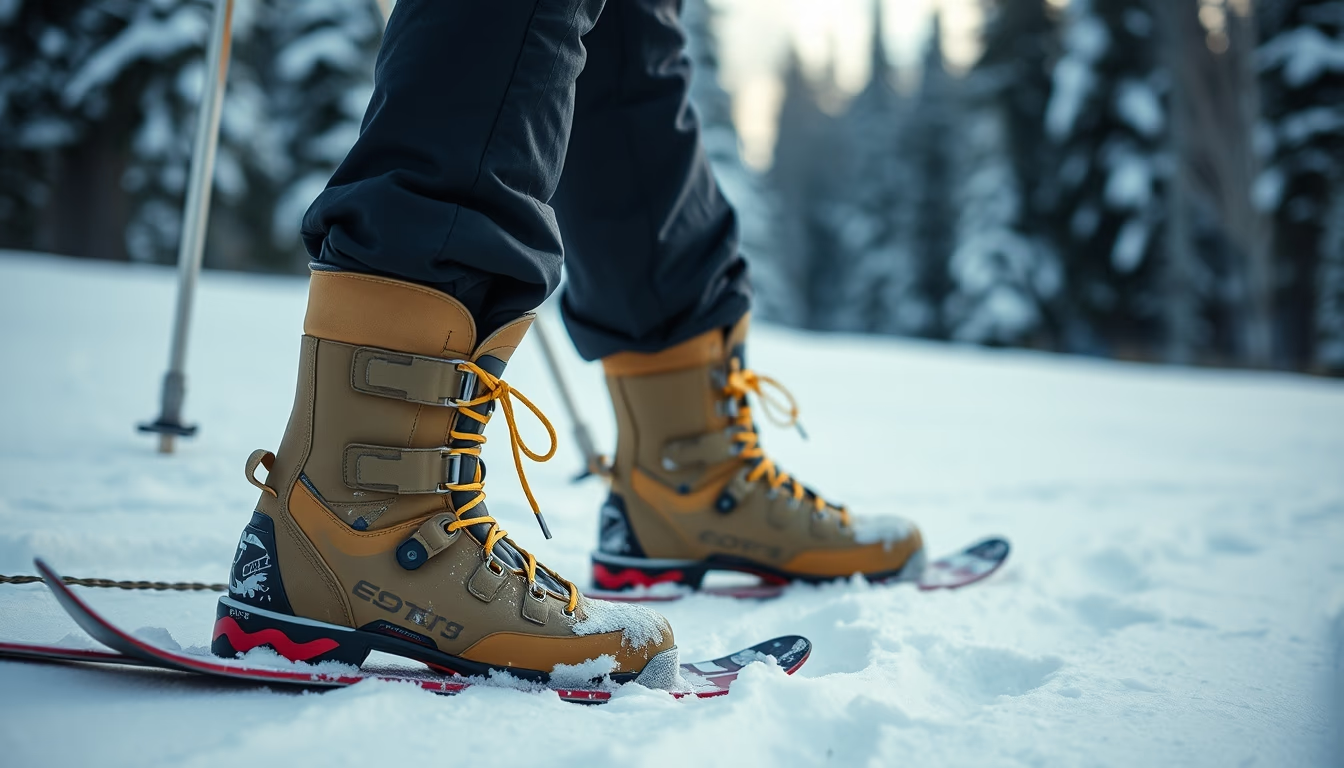
Ski boots are essential equipment for the sport, combining rigidity, comfort, and safety on the snow.
About this subject
Ski boots are fundamental pieces of equipment for a skier, designed to transfer leg movements to the skis with precision. Unlike regular footwear, they feature a rigid construction, usually made of injected plastic, which provides ankle support and allows control over the ski edges. There are two main types: alpine boots (downhill), which are stiffer and have flat soles; and cross-country ski boots, which are more flexible and allow heel movement. Alpine boots are compatible with alpine ski bindings, while cross-country boots use specific bindings that free the heel.
The evolution of ski boots began with leather models in the early 20th century, offering little support. In the 1960s, plastic revolutionized design, enabling greater stiffness and durability. Modern boots feature adjustable buckles, heat-moldable liners, and materials like carbon fiber to reduce weight. Choosing the ideal boot depends on the skier's level, terrain type, and preference for comfort or performance. Boots too tight cause discomfort, while too loose compromise control.
In Brazil, skiing is not practiced due to lack of natural snow, but many Brazilians travel to ski resorts in South America (e.g., Chile and Argentina) or the Northern Hemisphere. Therefore, boot rental is common, but experienced skiers prefer owning their pair for a customized fit. Proper maintenance includes drying after use and storing in a dry place to avoid damage to the plastic and liner.
Frequently Asked Questions
What is the difference between alpine and cross-country ski boots?
Alpine boots are stiffer, with a flat sole and heel fixation, ideal for downhill skiing. Cross-country boots are more flexible, allow heel movement, and have a sole that fits into specific bindings for gliding on flat or rolling terrain.
How to choose the correct size for ski boots?
Size is measured in mondopoint (foot length in cm). The boot should be snug but not painful. Toes should lightly touch the front when standing, and when flexing knees, the heel should stay fixed. Always try with appropriate ski socks.
Do ski boots need to be heated or molded?
Boots with heat-moldable liners can be heated to conform to the foot shape, improving comfort and performance. This is done at specialized shops. Boots without this feature require a break-in period.
Direct URL
https://pub-c7d6a6ea828543ac903a74a341ccb2e1.r2.dev/imagens/ski-boots-boots-snow-documentary-photography-fresh5.avifHow to credit
Include a visible link back to UtilizAí. Copy one of the snippets below:
<a href="https://xn--utiliza-eza.com/en/midia/imagens/ski-boots-boots-snow-documentary-photography-fresh5">Ski boots boots snow</a> by <a href="https://xn--utiliza-eza.com">UtilizAí</a>, licensed under <a href="https://creativecommons.org/licenses/by/4.0/">CC BY 4.0</a>.
[Ski boots boots snow](https://xn--utiliza-eza.com/en/midia/imagens/ski-boots-boots-snow-documentary-photography-fresh5) by [UtilizAí](https://xn--utiliza-eza.com), CC BY 4.0
License: CC-BY-4.0