Ski boots boots snow
1344×768 · AVIF · CC BY 4.0
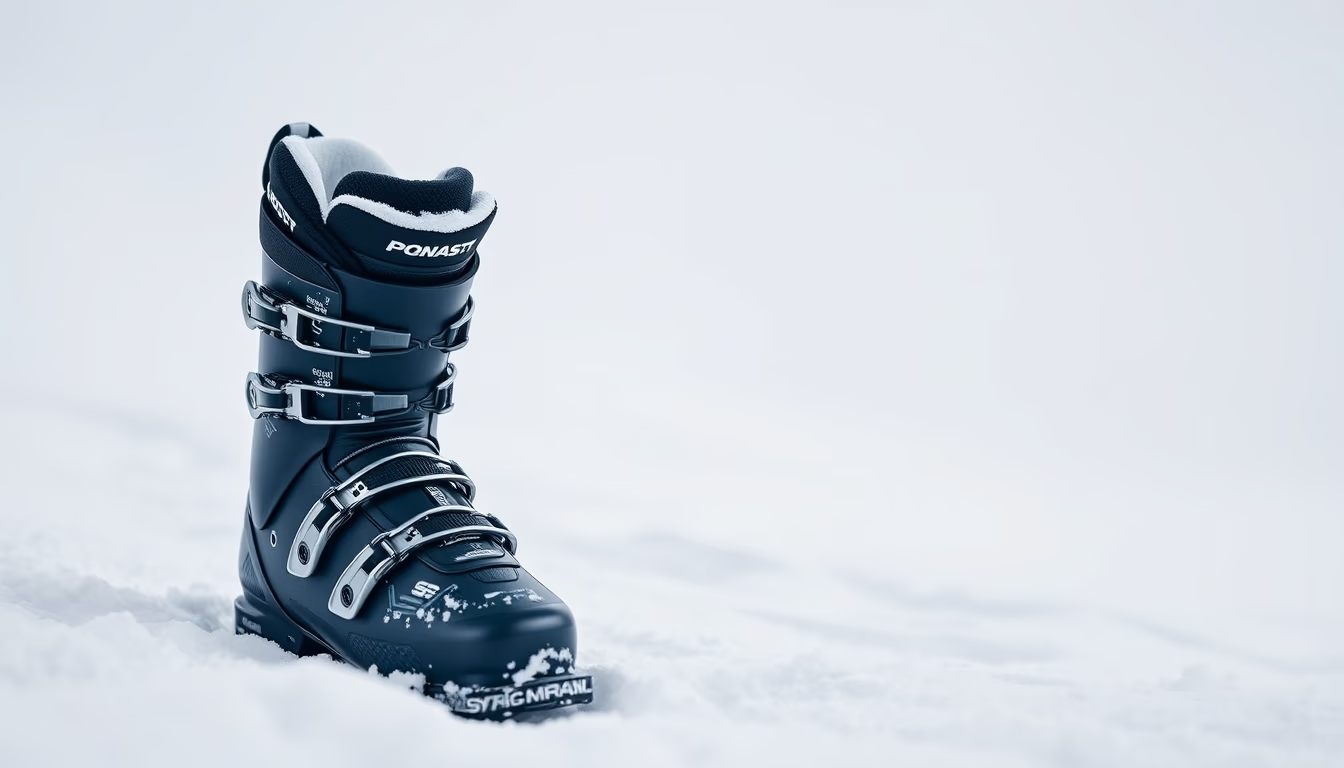
Ski boots are essential equipment for skiing, combining stiffness, comfort, and safety to transmit precise movements to the skis.
About this subject
Ski boots are one of the most critical components of a skier's equipment, linking the body to the skis and enabling directional control. Unlike ordinary footwear, they are made from rigid materials such as injection-molded plastics and feature a shell that encases the foot and lower leg. There are two main types: alpine (downhill) boots, which have a flat sole and are designed to lock into bindings, and touring (backcountry) boots, which allow ankle articulation for walking and have rubber soles for grip on varied terrain.
Proper fit is crucial for performance and safety. Boots that are too loose compromise force transmission, while overly tight boots cause discomfort and potential injury. The flex index ranges from 50 (soft, for beginners) to 140 (stiff, for experts). Advanced skiers favor stiffer boots for greater precision at high speeds. Modern technology includes built-in heating systems, heat-moldable liners, and micro-adjustable buckles for fine-tuning.
Interestingly, the design of ski boots evolved from leather-and-wood models in the early 20th century. The breakthrough came with plastics in the 1960s, enabling greater durability and standardization. Leading brands include Lange, Salomon, and Tecnica. Choosing the right boot depends on the type of skiing (piste, off-piste, freeride) and skill level. It is advisable to purchase boots at specialty shops where custom fitting, including thermal molding of the liner, is available.
Frequently Asked Questions
How do I choose the correct size for ski boots?
Size is measured in mondopoint (foot length in cm). The boot should feel snug but not painful, with toes lightly touching the front when standing. It is best to try with thin ski socks and purchase from shops offering custom fitting.
What is the difference between alpine and touring ski boots?
Alpine boots have a flat sole and are stiffer, ideal for downhill runs on piste. Touring boots feature ankle articulation (walk mode) and a rubber sole, allowing walking and climbing, used in backcountry skiing.
What does the flex index mean on ski boots?
The flex index indicates boot stiffness, ranging from 50 (soft) to 140 (stiff). Beginners use low flex for comfort and forgiveness; experts use high flex for quick response at high speeds.
Direct URL
https://pub-c7d6a6ea828543ac903a74a341ccb2e1.r2.dev/imagens/ski-boots-boots-snow-commercial-product-photography-fresh13.avifHow to credit
Include a visible link back to UtilizAí. Copy one of the snippets below:
<a href="https://xn--utiliza-eza.com/en/midia/imagens/ski-boots-boots-snow-commercial-product-photography-fresh13">Ski boots boots snow</a> by <a href="https://xn--utiliza-eza.com">UtilizAí</a>, licensed under <a href="https://creativecommons.org/licenses/by/4.0/">CC BY 4.0</a>.
[Ski boots boots snow](https://xn--utiliza-eza.com/en/midia/imagens/ski-boots-boots-snow-commercial-product-photography-fresh13) by [UtilizAí](https://xn--utiliza-eza.com), CC BY 4.0
License: CC-BY-4.0