Shrimp farm aerial
1344×768 · AVIF · CC BY 4.0
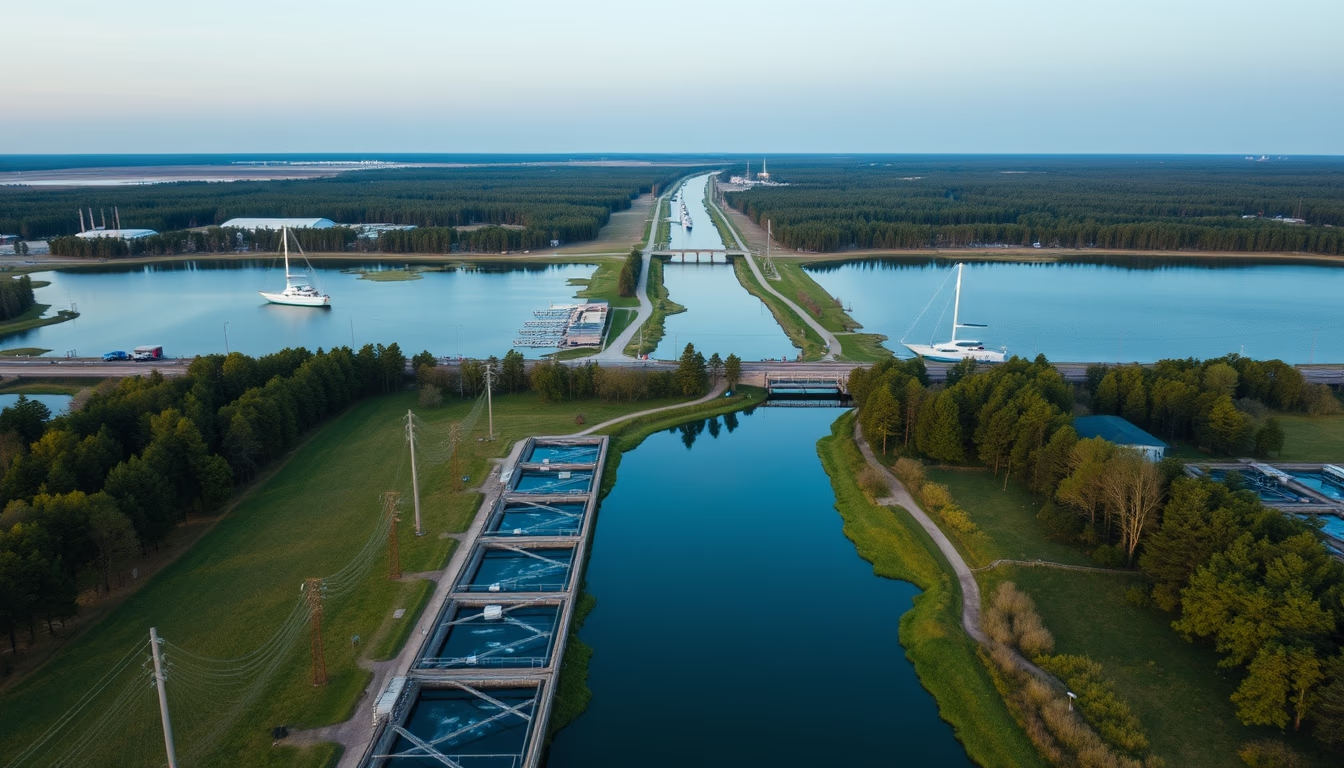
Aerial view of a shrimp farm reveals the geometry of rectangular ponds, essential for global aquaculture production.
About this subject
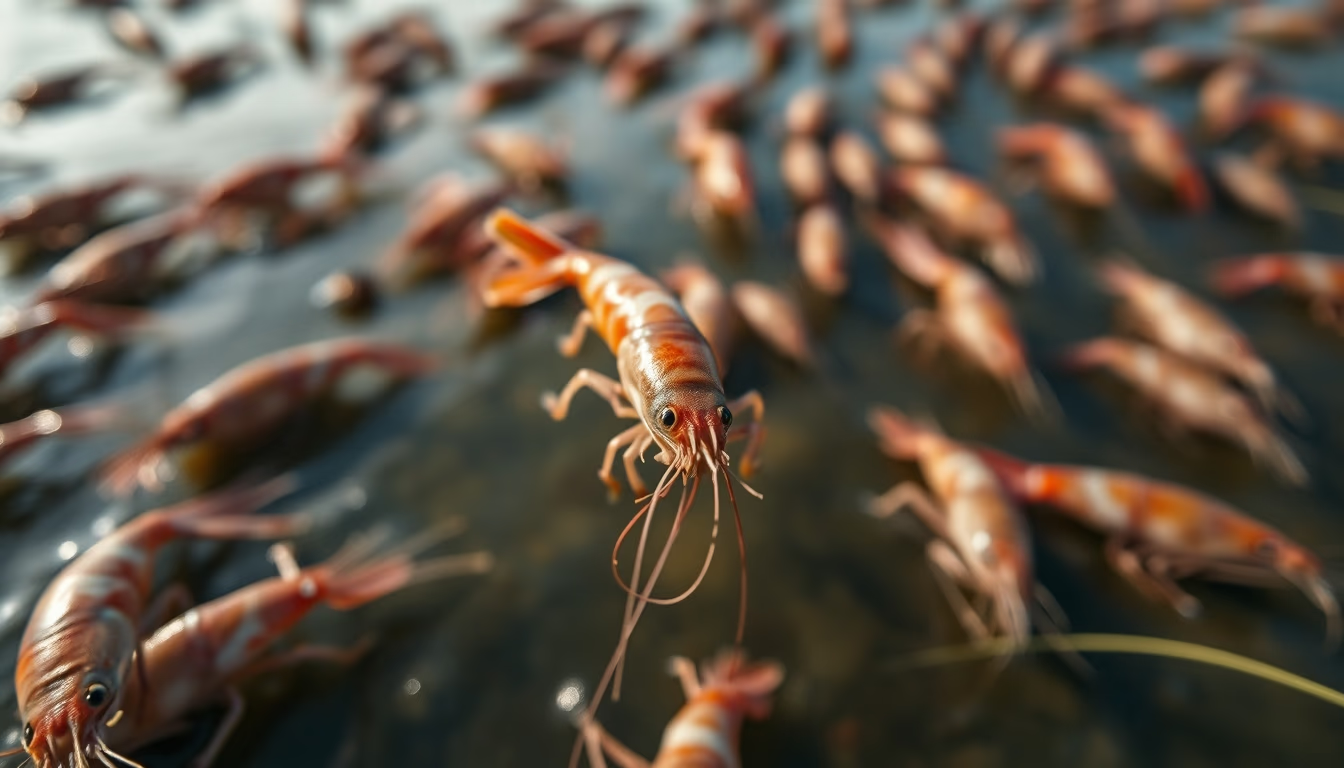
Shrimp farms are production units that occupy vast coastal areas, especially in tropical and subtropical countries. The aerial view highlights the geometric arrangement of the ponds, typically rectangular or square, excavated and supplied by canals from sea or estuarine water. Brazil is one of the world's largest producers of farmed shrimp, with emphasis on the states of Rio Grande do Norte, Ceará, and Bahia. Brazilian shrimp farming began to expand in the 1990s and now accounts for about 10% of national aquaculture production.
The spatial organization of these farms is crucial for efficient management: each pond has independent water supply and drainage systems, allowing control of water quality, feeding, and disease prevention. The most commonly farmed shrimp is Litopenaeus vannamei (Pacific white shrimp), a species adapted to different salinities. Farms can be intensive (high stocking density) or semi-intensive, with environmental impacts including soil salinization and nutrient-rich effluent discharge.
Globally, shrimp farming is a billion-dollar industry: world production exceeded 6 million tons in 2022, led by China, Ecuador, Thailand, and Vietnam. Demand for shrimp grows annually, driven by markets like the United States and Europe. Technologies such as biofloc and recirculation systems aim to reduce environmental impacts, while certifications like the Aquaculture Stewardship Council promote sustainable practices. The aerial view, therefore, is not just aesthetic: it reveals the engineering behind one of the main protein sources of the future.
Frequently Asked Questions
What is a shrimp farm?
It is an aquaculture facility where shrimp are cultivated in controlled ponds, typically in coastal areas, for human consumption.
What are the main environmental impacts of shrimp farming?
They include soil salinization, mangrove deforestation (in cases of unplanned expansion), and discharge of nutrient-rich effluents that can cause eutrophication.
How much farmed shrimp does Brazil produce?
Brazil produces about 70 thousand tons per year, making it one of the largest producers in the Americas, especially in the Northeast region.
Direct URL
https://pub-c7d6a6ea828543ac903a74a341ccb2e1.r2.dev/imagens/shrimp-farm-aerial-macro-closeup-fresh3.avifHow to credit
Include a visible link back to UtilizAí. Copy one of the snippets below:
<a href="https://xn--utiliza-eza.com/en/midia/imagens/shrimp-farm-aerial-macro-closeup-fresh3">Shrimp farm aerial</a> by <a href="https://xn--utiliza-eza.com">UtilizAí</a>, licensed under <a href="https://creativecommons.org/licenses/by/4.0/">CC BY 4.0</a>.
[Shrimp farm aerial](https://xn--utiliza-eza.com/en/midia/imagens/shrimp-farm-aerial-macro-closeup-fresh3) by [UtilizAí](https://xn--utiliza-eza.com), CC BY 4.0
License: CC-BY-4.0