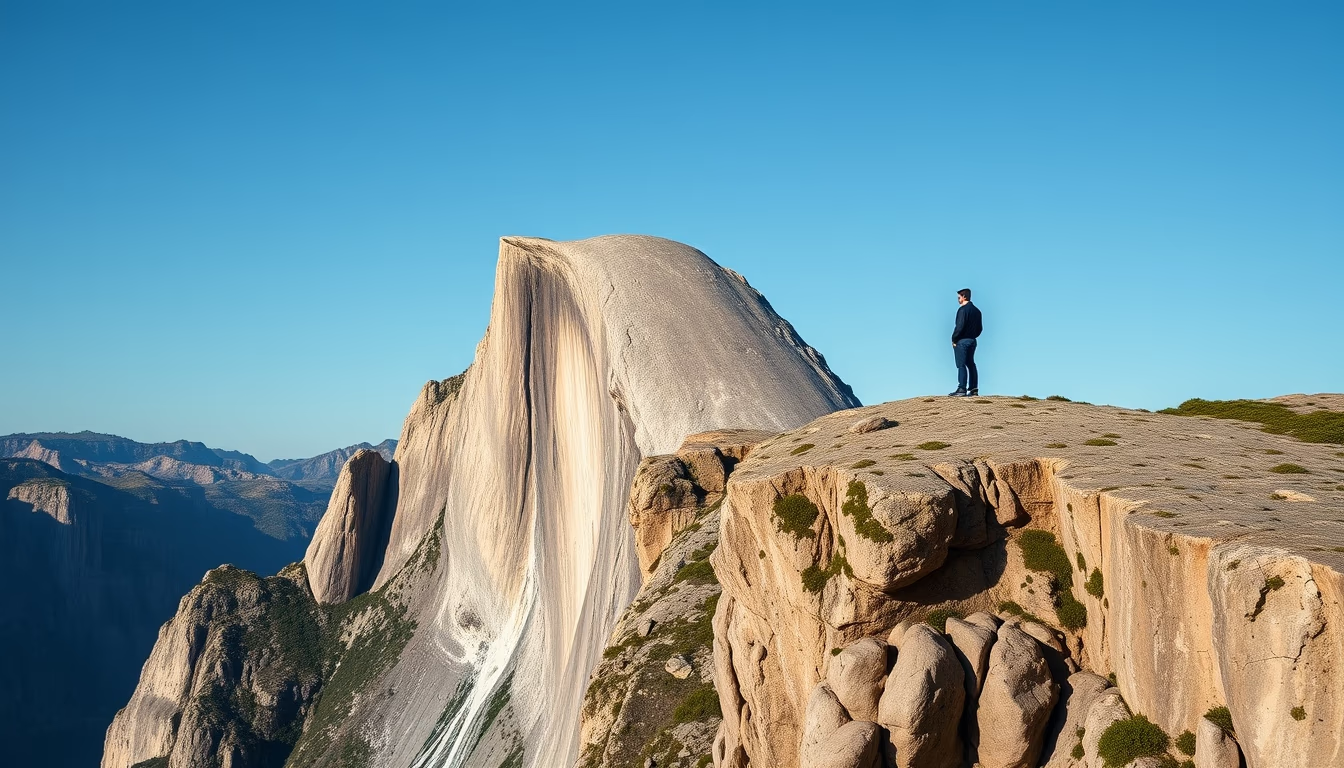
Sequoia giant tree
1344×768 · AVIF · CC BY 4.0
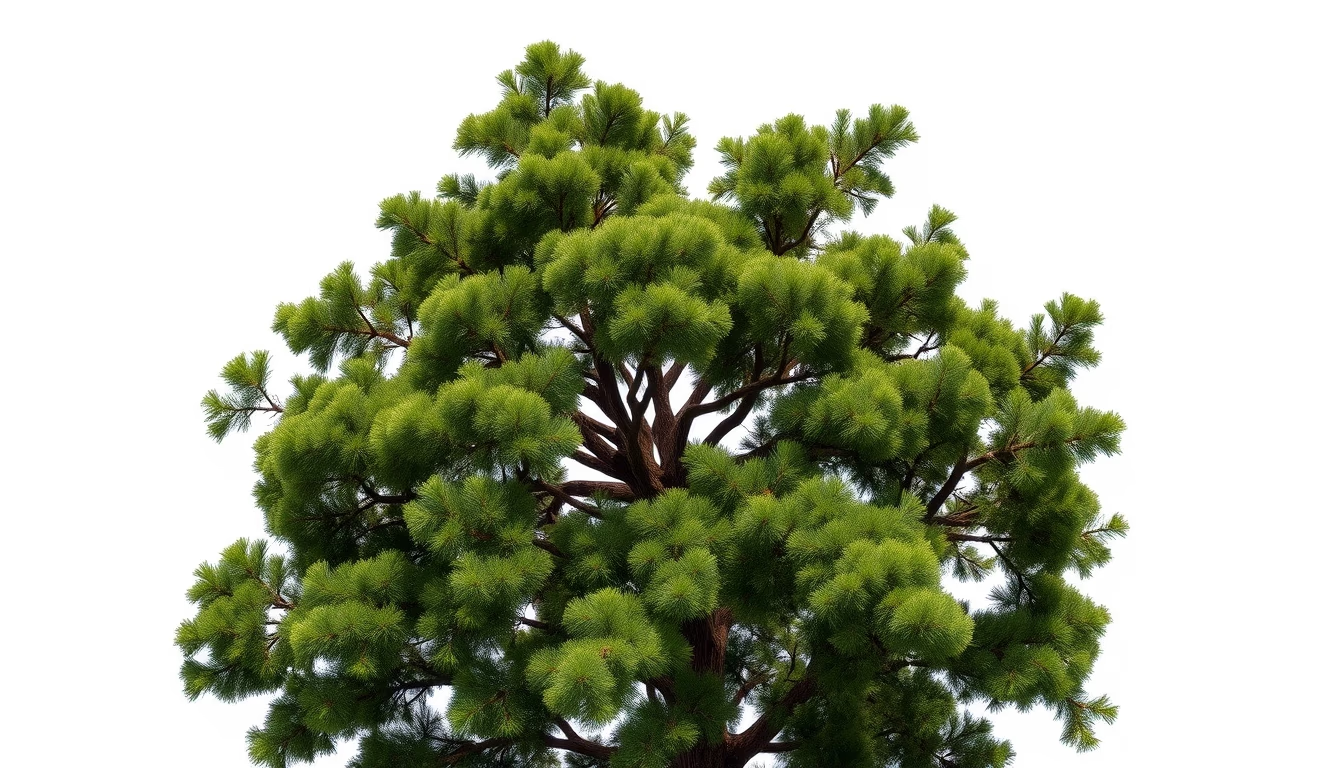
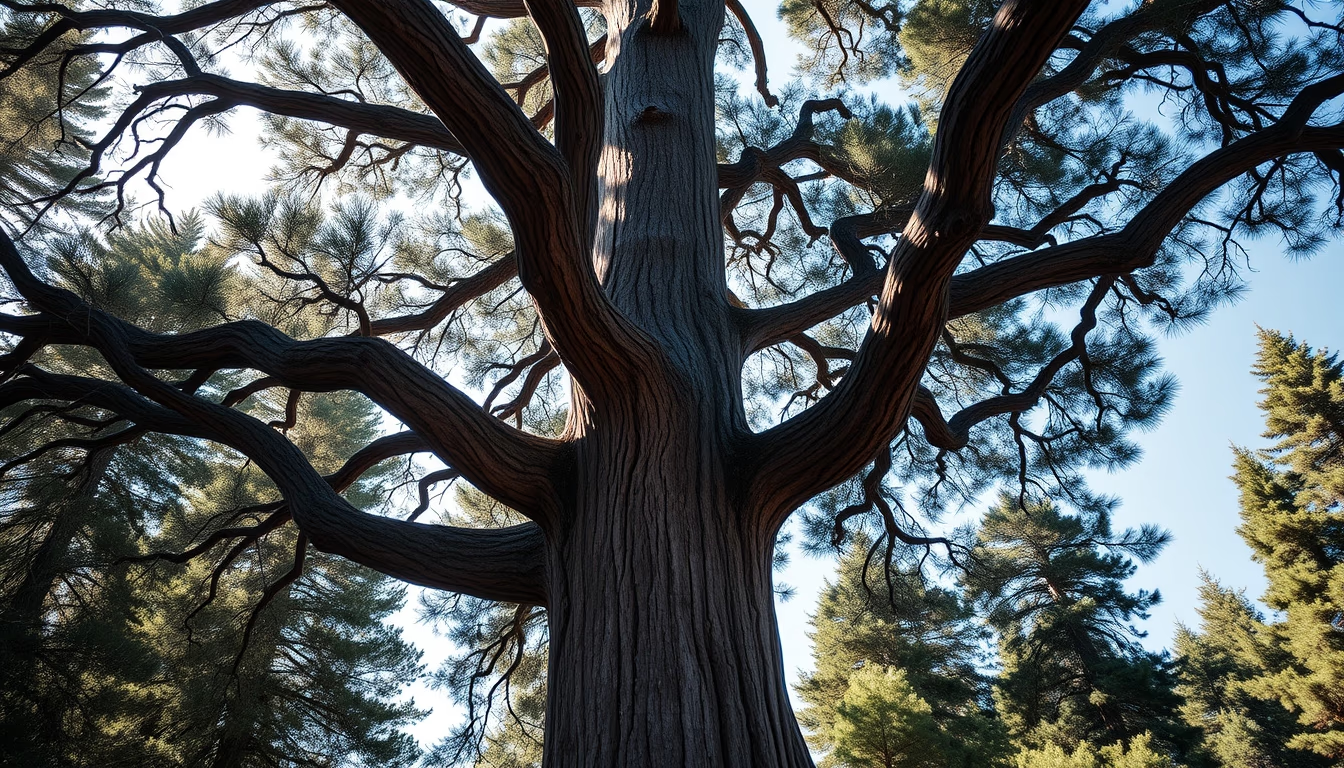
The giant sequoia (Sequoiadendron giganteum) is the world's largest tree by volume, native to the Sierra Nevada in California.
About this subject
Giant sequoias are the most massive trees on Earth, reaching over 80 meters in height and diameters exceeding 10 meters. The specimen known as General Sherman in Sequoia National Park has an estimated volume of 1,487 cubic meters. These trees can live for more than 3,000 years, with some examples contemporary to the Roman Empire.
Endemic to the western slopes of the Sierra Nevada in California, sequoias occur in only about 75 natural groves. Their distribution is restricted to elevations between 1,400 and 2,400 meters, where the climate is temperate with heavy winter snow and dry summers. The thick, fibrous bark (up to 60 cm) protects them from fire, which is essential for seed germination.
Historically, sequoias were heavily logged during the California Gold Rush, but today they are protected in national and state parks. Their scientific name honors Sequoyah, a Cherokee leader who created a writing system. The wood is rot-resistant but brittle for construction, mainly used for shingles and fence posts.
Fun fact: the giant sequoia should not be confused with the coast redwood (Sequoia sempervirens), which is taller but less voluminous. Carbon sequestration by these trees is immense: a single mature sequoia can store hundreds of tons of CO₂ over its lifetime.
Frequently Asked Questions
What is the difference between giant sequoia and coast redwood?
The giant sequoia (Sequoiadendron giganteum) is larger in volume and more robust, while the coast redwood (Sequoia sempervirens) is taller and slender. Redwoods live on the California coast; giant sequoias in the Sierra Nevada.
Where can I see giant sequoias in Brazil?
There are no native giant sequoias in Brazil, but a few specimens have been planted in botanical gardens, such as the São Paulo Botanical Garden and the Horto Florestal in Campos do Jordão, though they do not reach California size.
Why are sequoias so fire-resistant?
Their thick, fibrous bark with high tannin content acts as thermal insulation. Additionally, high canopies keep flames away from leaves. Fire helps open cones and release seeds.
Direct URL
https://pub-c7d6a6ea828543ac903a74a341ccb2e1.r2.dev/imagens/sequoia-giant-tree-isometric-flat-lay-p1.avifHow to credit
Include a visible link back to UtilizAí. Copy one of the snippets below:
<a href="https://xn--utiliza-eza.com/en/midia/imagens/sequoia-giant-tree-isometric-flat-lay-p1">Sequoia giant tree</a> by <a href="https://xn--utiliza-eza.com">UtilizAí</a>, licensed under <a href="https://creativecommons.org/licenses/by/4.0/">CC BY 4.0</a>.
[Sequoia giant tree](https://xn--utiliza-eza.com/en/midia/imagens/sequoia-giant-tree-isometric-flat-lay-p1) by [UtilizAí](https://xn--utiliza-eza.com), CC BY 4.0
License: CC-BY-4.0