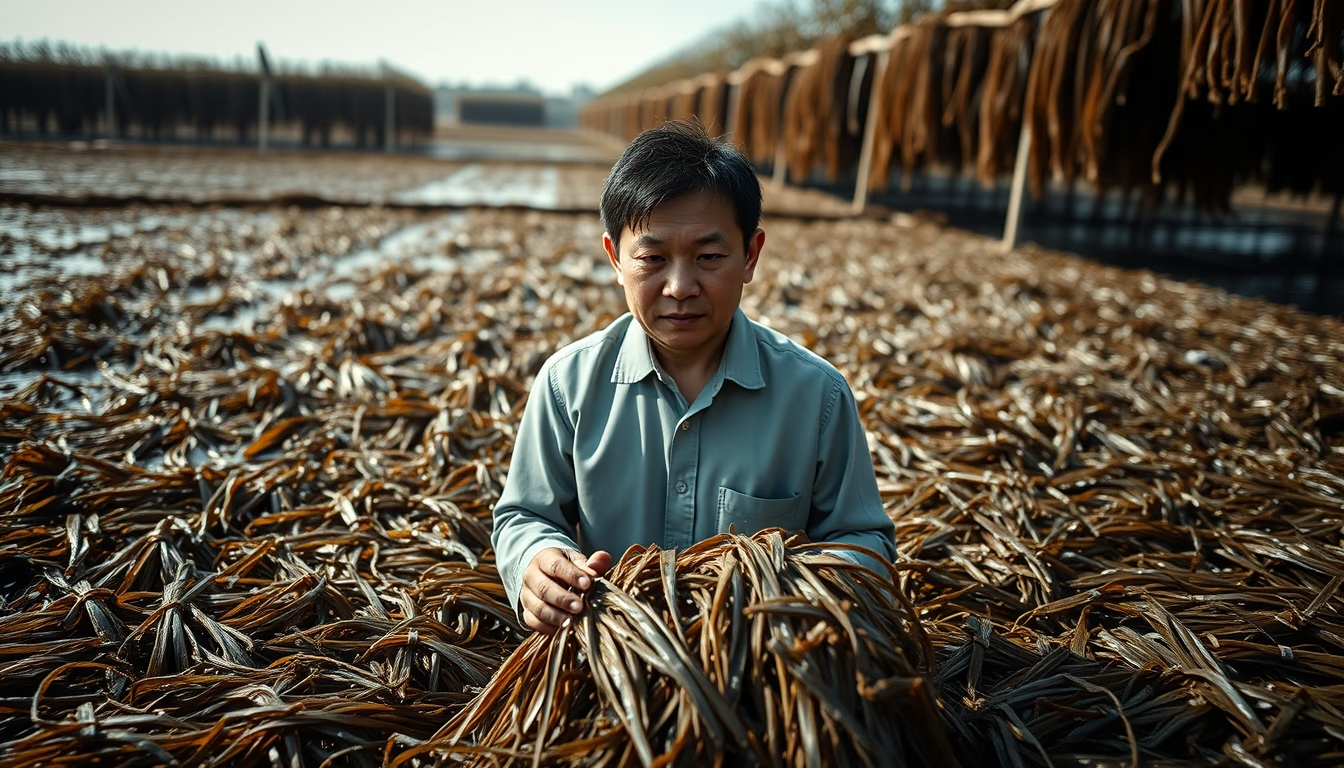
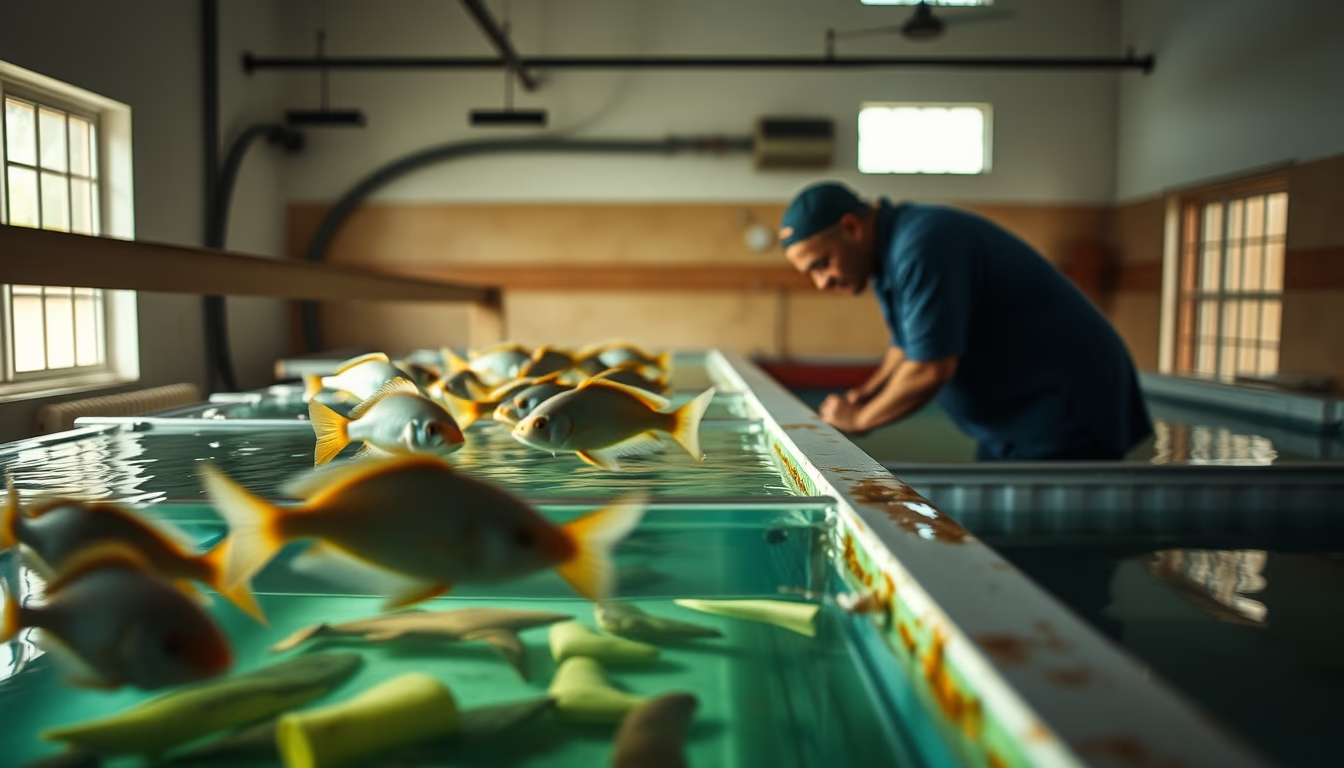
Seaweed farm asian
1344×768 · AVIF · CC BY 4.0
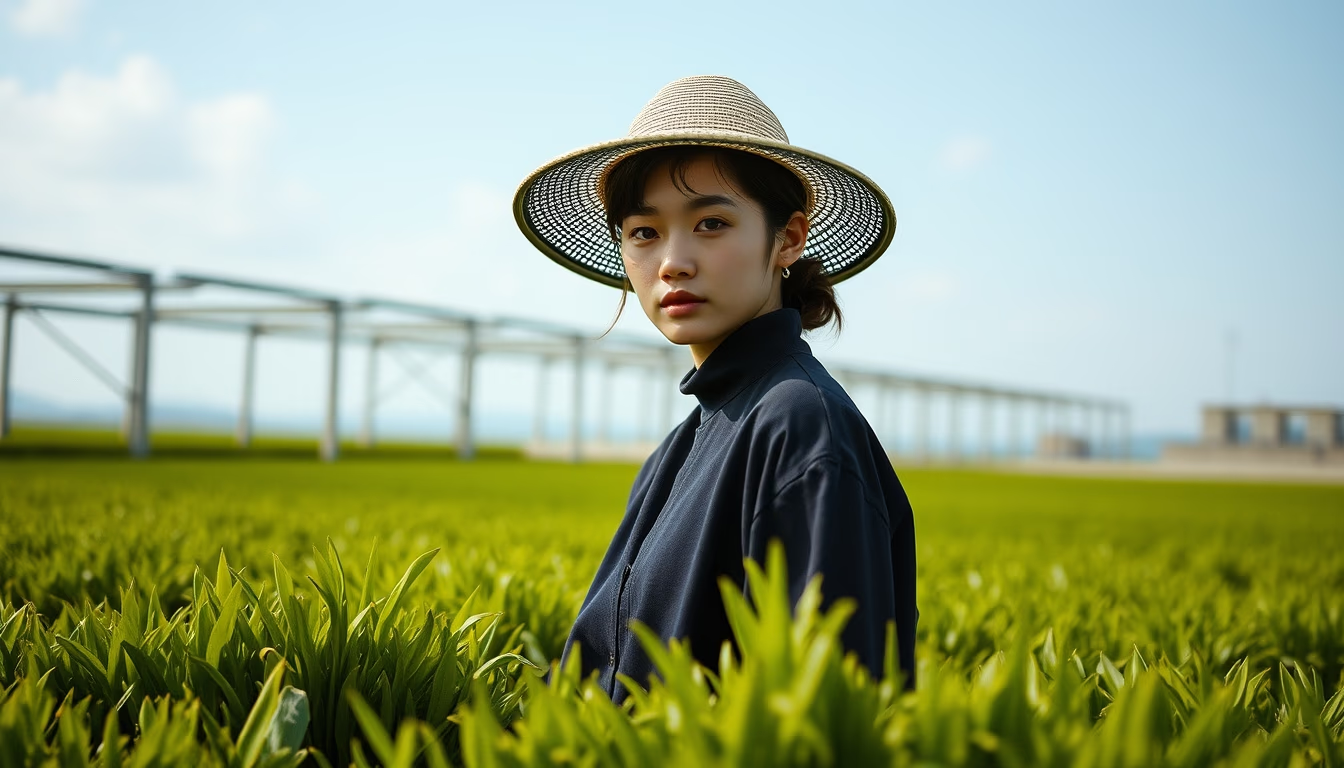
Seaweed farms across Asia support a billion-dollar industry for food, cosmetics, and biofuels, with Indonesia as the world's largest producer.
About this subject
Seaweed aquaculture is an ancient practice in Asia, with records dating back to the 17th century in Japan, where nori (Porphyra) was cultivated for sushi production. Today, Asia accounts for over 99% of global seaweed output, led by Indonesia (about 38% of total), China, and the Philippines. Major species include Kappaphycus alvarezii (for carrageenan), Gracilaria (for agar), and Saccharina japonica (for kombu). Farms are typically located in shallow coastal waters, using long-line systems or bamboo rafts.
Cultivation holds significant economic and social value. Over 6 million smallholder families across Asia depend on this activity, especially in remote areas of Indonesia and the Philippines. Seaweeds provide food (salads, soups, sushi), thickeners (carrageenan in dairy, agar in desserts), and cosmetic ingredients. Studies also show that seaweed farms can sequester carbon and reduce local ocean acidification, acting as temporary CO₂ sinks.
Environmentally, farmed seaweeds absorb nitrogen and phosphorus from aquaculture effluents, mitigating eutrophication. The farms serve as habitat for fish and invertebrates, boosting local biodiversity. However, challenges like diseases (ice-ice), climate change, and price volatility require constant innovation. Genetic improvement programs and integrated multi-trophic aquaculture are being implemented to enhance resilience.
Culturally, seaweeds are integral to Asian cuisine. Kombu is the base of Japanese dashi, nori is essential for sushi, and sea lettuce (Ulva) is used in Korean salads. In China, hijiki (Sargassum fusiforme) has been consumed for centuries for its medicinal properties. Emerging markets such as biofuels and bioplastics are expanding the potential of Asian seaweed aquaculture for a low-carbon economy.
Frequently Asked Questions
Which country produces the most seaweed in the world?
Indonesia is the world's largest seaweed producer, accounting for about 38% of global output, followed by China and the Philippines.
What are the main uses of cultivated seaweed?
Seaweed is used in food (nori, kombu, sea lettuce), as thickening agents (carrageenan, agar), cosmetics, fertilizers, and increasingly for biofuels and bioplastics.
Is seaweed farming sustainable?
Yes, seaweed farming provides environmental benefits such as carbon sequestration, nutrient absorption, and habitat creation. However, challenges like diseases and climate impacts require responsible management.
Direct URL
https://pub-c7d6a6ea828543ac903a74a341ccb2e1.r2.dev/imagens/seaweed-farm-asian-high-fashion-editorial-fresh3.avifHow to credit
Include a visible link back to UtilizAí. Copy one of the snippets below:
<a href="https://xn--utiliza-eza.com/en/midia/imagens/seaweed-farm-asian-high-fashion-editorial-fresh3">Seaweed farm asian</a> by <a href="https://xn--utiliza-eza.com">UtilizAí</a>, licensed under <a href="https://creativecommons.org/licenses/by/4.0/">CC BY 4.0</a>.
[Seaweed farm asian](https://xn--utiliza-eza.com/en/midia/imagens/seaweed-farm-asian-high-fashion-editorial-fresh3) by [UtilizAí](https://xn--utiliza-eza.com), CC BY 4.0
License: CC-BY-4.0